

Exclusive Interview with Rachel Kroes, Executive Director of Down Syndrome Association of the Northern Territory
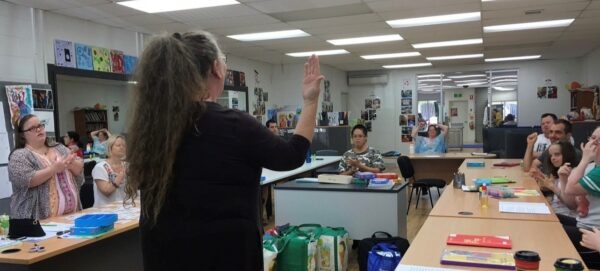
The Down Syndrome Association of the Northern Territory of Australia has a range of information, services and supports for families and people with Down syndrome.
Recently, GLOBAL Vice President – Strategic Alliances, David Tolleson, met with Rachel Kroes, Executive Director of Down Syndrome Association of the Northern Territory (DSANT), to learn more about how they connect families and promote community inclusion.
DAVID: G’day and thank you for joining us from Australia! To begin with, please tell us a bit about yourself.
RACHEL: I have a daughter with Down syndrome, Molly. We live with my husband, John, here in Darwin. I have another daughter who lives in our national capital, Canberra. We’ve lived in the Northern Territory for nearly 35 years. I came from England in the 1980’s to discover what Australia was all about and fell in love with the country and with Darwin. We’re in the very northern part of Australia. In fact, some Australians don’t even visit Darwin, so it’s understandable if people elsewhere in the world don’t know where we are. Our geography makes a very remote and vibrant community, self-sustaining and independent. I run the Down Syndrome Association here and we cover a vast territory. My husband is a train driver on the Darwin to Adelaide route, so he goes back-and-forth through the center of the country.
DAVID: Wow, that’s a long route! How long does it take to make that round trip?
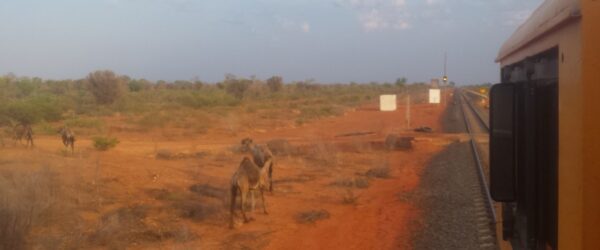
RACHEL: It takes six days to go up and down, so he spends a lot of time in the real Outback bush. We live on the coast, which is lovely, but we don’t go swimming because of the crocodiles. Ironically, we do a lot of fishing, but you have a lot of red eyes staring back at you in your boat!
DAVID: How old is Molly?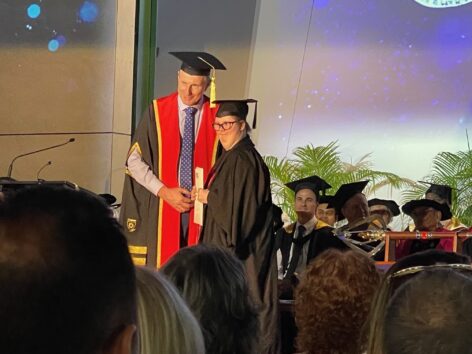
RACHEL: Molly is 30 now. Her younger sister, Jane, works for the Federal government in Canberra, which is an amazing capital and a beautiful place to visit. She comes home from time to time. Molly misses her. I think that can be hard for people with Down syndrome, when their sibling moves on. It leaves a spare bedroom and an empty place at the dinner table, which can be hard to adjust to. Routines are important and when one goes away, we normally replace it with another. But there’s no replacement for an absent sibling or other loss. I wish I had the magic elixir for that. We are working on independence for Molly, but we’re not quite there, yet. We’ll get there.
 DAVID: Can you please tell us a bit about Darwin and why you love it so?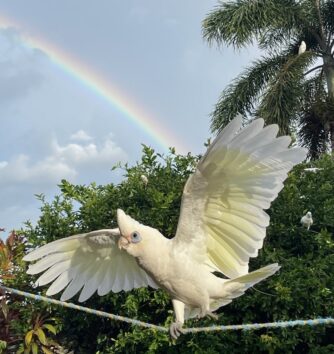
RACHEL: We’re Australia’s tropical capital. It’s beautiful. The flora and fauna are amazing, though the wildlife is definitely wild. There are only about 250,000 people in the entire Northern Territory, which is about twice the size of Texas or four times the size of California. We have the greatest number of aboriginal communities in Australia. We live relatively quiet lives because we’re so spread out. People often move here to get away from the weather in the South. Here we have a wet season (November – April) and a dry season (May – October). There’s a certain resilience to the people who live here.
Australia has 6 states and 2 territories. We’re one of the latter, which means we don’t have as much local control over our affairs. However, this gives us very good access to our national and local leaders. DSANT, like many other non-profits here, doesn’t have any competition – we’re the only ones doing our work – so local officials value us and give us access.
DAVID: So, if I get a diagnosis in Alice Springs, am I calling you?
RACHEL: Yes, and we’ll be visiting you. We go to Alice Springs about 4 times a year.
 DAVID: That’s quite a distance, isn’t it?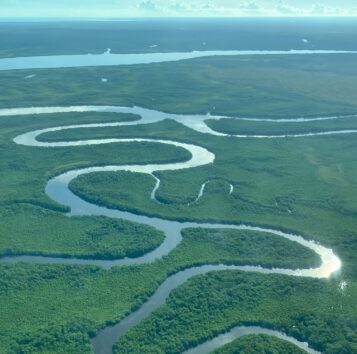
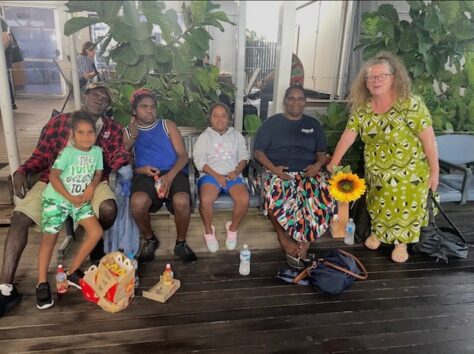
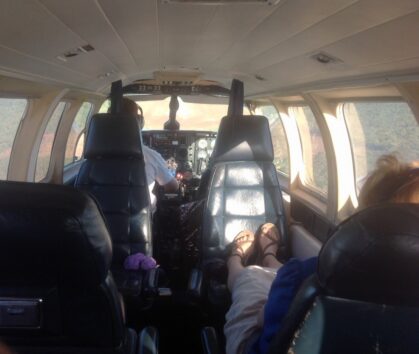
RACHEL: Yes, it would take about 17 hours to drive. The flight is just over 2 hours. It’s part of our services. My colleagues and I visit 9 indigenous communities. The furthest away, we have to fly into Alice Springs and then drive another 4 to 5 hours towards the Queensland border, at which point you arrive in about the most remote place you could possibly get to. We sleep in a shipping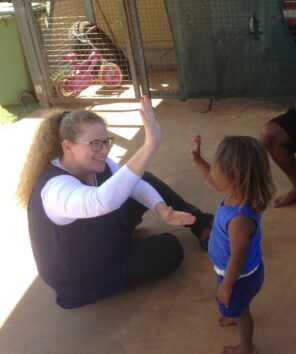
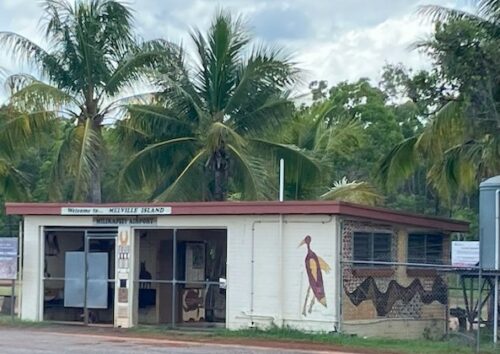 container. There are no streets, but lots of donkeys. We find the school and the mother of the child with Down syndrome. Our ability to communicate through language is compromised, but your visual capacity to be a peer and to share is as clear as with any mother I sit with. Their concerns for their child are exactly the same as mine for Molly, so you can instantly speak in that shared language we have. Over time and multiple visits – which the culture requires – if you’re accepted, someone will invite you to see the baby. They’ll take you an hour or so down the road in a truck and you get to meet the baby with Down syndrome. There are a lot of people in the aboriginal communities who are undiagnosed. That they’ve survived and lived a life that is pretty hard is both stunning and heartwarming.
DAVID: Just again for folks to realize the distances involved, how long does it take to fly from Darwin to, say, Sydney?
RACHEL: About 6 and a half hours. When I flew across America, it was really interesting looking down at the changing geography. We do that, too, but we’re flying over masses of nothing – just mile after mile of red bush. We’ve done everything. We’ve traveled through creeks with crocodiles at window level. We’ve been in small planes that have cracked windshields from bird strikes and had to land. We’ve been through floods and whirlies. We’ve had a lot of adventures!
DAVID: Well, God bless you for going where you’re needed.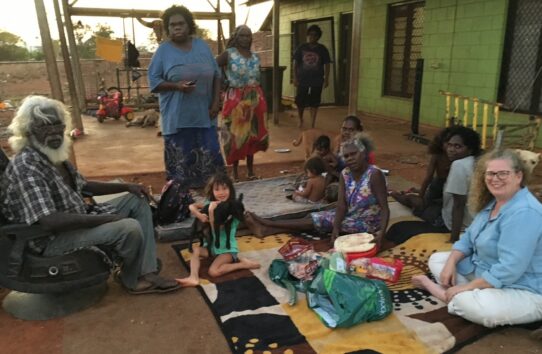
RACHEL: It’s been a privilege. When people fly in and fly out of Darwin for business, no one thinks anything of it. But when you drop in on an aboriginal settlement, it’s critically important that you’re culturally aware. If you don’t get the relationships right, the locals won’t engage with you. You’re coming to tick your box, not theirs. You want to make yourself feel better, but you have nothing to offer them. I’m grateful for the woman who fly down with me and before me. If we can go and stay overnight, we do. Like I said, I’ve slept in a shipping container, a school, a church, a teacher’s home just trying to be accepted with the information we bring about Down syndrome. The families we serve often don’t know the words “Down syndrome”. But they know what it’s like to be different and to be alienated within their community. And, if your community only has 120 people, that’s tough for that mom. Lots of aboriginal communities don’t even have a word for disability. It’s not seen culturally the way we see it, so we help how we can. We always take things – toys, food, gifts. We took a bed once to a lad who, years later, still shows us his bed. The rest of the family sleeps on the floor, but he has a bed. I’ve been doing this for 17 years, so now I’ll see teenagers that I held as babies. Their parents will literally walk for hours if they hear we’ll be in the nearest town because they know us, so we count that as a success. I feel comfortable serving the populations I work with. I’m not sure I’d feel the same in a city where every event has 60 people, though I suppose I’d have more people to help me.
DAVID: You’re flying across the Outback, sleeping in a shipping container and bouncing across the bush in a truck, dodging crocs in the creek, and I complain about going downtown because there’s too much traffic. I’m such a lightweight next to you. You’re doing God’s work!
RACHEL: You live at both a slow and fast pace when you have a child with Down syndrome. The slow kind of suits me. From birth I was hearing impaired and that has gotten worse as I’ve gotten older. I temper my own exposure to the world and the city because I have to pace myself just to get through the day and communicate. I’m ideally suited for what I do – a slow pace works for me. I lived 7 years – the “Yuppie” years in the 80’s – in London before moving here and I don’t need to do that anymore.
 DAVID: How did you get involved with DSANT?
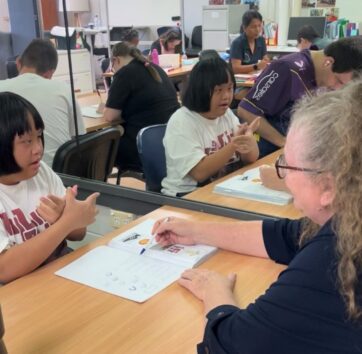
RACHEL: My first contact with the organization was when a mom came to visit me in hospital 30 years ago when I had Molly. She’s still my dear friend now. Her advice at the time was to just go home, love my baby, and get on with it, not to necessarily get involved with an organization. It was good advice, because primarily you’re a mother to a baby and she was my first, so you need to let that settle and not good too overloaded with everything else. I got involved with DSANT when Molly was around 4 or 5, when I realized, school wasn’t going to look the way I thought it should look. Later, after I quit working, I started volunteering with DSANT. My first project was to develop a program for our schools. I developed a presentation and went to the government and said I need some money. Luckily, they agreed and so around 2010 we started our Down Syndrome School Support Program, which joined our existing Computer Aided Learning Program, which worked on literacy and mathematics through apps.
When the storefront next to our office became vacant, we opened WIMS (Walking in My Shoes), which sells recycled shoes. Our DSANT families started giving us all their secondhand shoes. I couldn’t believe it, but people started coming to buy those secondhand shoes! More importantly than the money it generated was the retail sales experience it provided the self-advocates in our community. It was fascinating watching people give their money to a person with Down syndrome as a transactional equality. We’ve really lost something with the tap to pay.
DAVID: That sounds like a great approach to fundraising and providing real work experience and community interaction.
 RACHEL: We had to find more ways to make money. My husband had been doing barbeques to raise funds, and he said he wasn’t going to do them anymore. Our next venture was to gather plastic bottles for the 10-cent recycling refund. We thought that would be better than doing barbeques – they’re too much work and too hot! That little project is now a recycling depot with 12 or 13 employees. We call it Cash for Containers (C4C). It provides work and income, but also awareness, because we’re going to people’s homes every week.
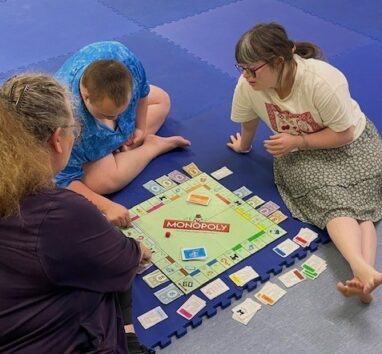
We started seeing too many of Molly’s friends be underemployed or hitting too many barriers related to attending college, so we started our own college. We found the space, developed it, and then brought in people from the government and got their support. Before that, we didn’t have a transition to independence program for people in Darwin. Now we do – Project 21 – that serves adults from high school graduation to age 30. People have come from other states wondering how to replicate what we have, but it’s hard for them in the bigger cities. There are too many barriers and perceived competition that makes it difficult to do what we’ve done because we’re so isolated. We don’t have those boundaries up here. We create it, open it, then bring the government in to help support it. We’ve gone from a separate, store front operation to now having a suite of classrooms in our local Charles Darwin University, where our students have been accepted as an integrated part of that community, taking classes across campus, using the library, canteen, and buses. I’m very proud of that.
DAVID: You should be! Not only is it important to the people you’re serving, but that representation is having an impact on the other people on campus and in your community. They’re seeing people with Down syndrome, and it becomes normal. It’s not something unusual, it’s just one more student who happens to have Down syndrome.
RACHEL: That’s right. And we go to the parties, and they walk across the stage at graduation to get their Certificate One in Hospitality alongside people getting their PhDs. The Vice Chancellor says that’s one of his proudest moments, seeing Project 21 students can walk along just like everyone else. I loved seeing the photo in the lobby of GLOBAL headquarters of Regis University students in their caps and gowns, because we’re a tiny little pinprick in the world, but we do that, too. I have a real affinity with GLOBAL because you’re proud of the GLOBAL Inclusive College Certificate Program at Regis, just as we are of Project 21.
 DAVID: We don’t think you’re small at all. You’re doing amazing, amazing work. We’re very proud and grateful to be connected to you as a GLOBAL Organization Member. I believe you also have other programs. Anything else you’d like to share?
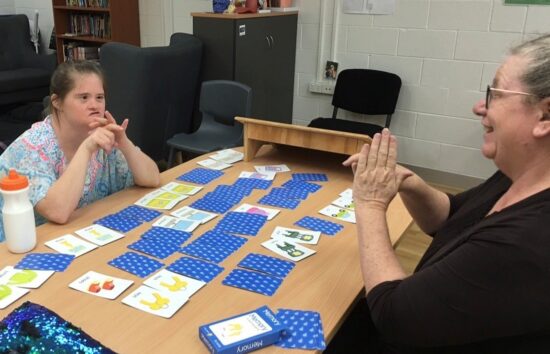
RACHEL: Thank you – that’s kind of you to say. Yes, we’ve really returned to basics in some ways. As younger generations are moving from handwriting to using devices and apps, we are seeing a decline in both hand dexterity and verbal communication skills from one generation to the next. We’re too reliant on emojis, so we’re concentrating again on learning to sign, to read, to speak. Back to the basics.
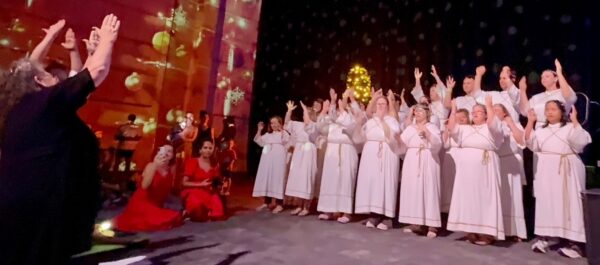
We also have our Sing Song Signers, a signing choir I started back in 2000. It initially began as a group of Molly’s friends from her transition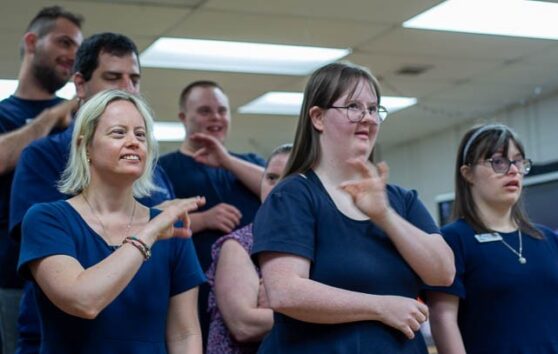 class at school who wanted to learn how to communicate with her, and grew into a strong friendship group of young people who meet every Saturday to learn the art of sign and of performance to familiar songs and carols. Each year, the Sing Song Signers perform at the Darwin Carols by Candlelight event in front of an audience of 5,000 locals. This year for the first time we held it in our convention center. Many choir members without disabilities have gone on to pursue careers in allied health, teaching, advocacy and the wider disability community. For now, approximately 20 young people gather at Project21 each Saturday and it’s a really fun class to be in.
DAVID: Last year, you and several folks from your community had the opportunity to visit Denver and tour GLOBAL’s headquarters, as well as our affiliates, the Linda Crnic Institute for Down Syndrome and the Anna & John J. Sie Center for Down Syndrome. What did you think?
RACHEL: Oh, I was blown away. First of all, the quality of all 3 places – their presentation, their intent, the staff we met who were both knowledgeable and at ease with talking about things that are so close to our heart. I have to credit everybody that we met and every building that we went in with thoughtfulness, good intention, and quality.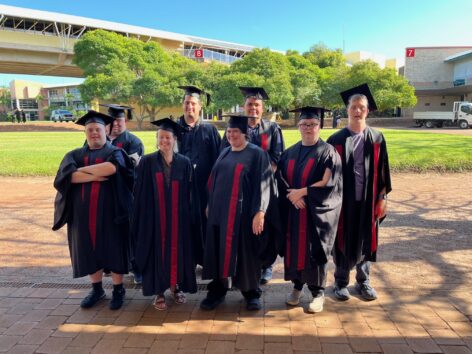
Also, just an aligned kinship. Here’s something that structurally operates and exists which I live and breathe in my daily life. This is what I was invented to do, so there was a real affinity when meeting person after person who could all articulate what they were doing and why they were doing it. As a mother, it was wonderful to know that you’re doing it for people like my daughter.
Perhaps the best thing is that the messaging there is around the future. The intention for scientific research is a proactive approach to what the future will look like. The future is my biggest fear. I’ve lived the 30 years Molly has been alive and we’ve survived, but what happens next? Let’s discover what that looks like and how to protect it, augment it, strengthen it, stabilize it, and make it safe for those with Down syndrome in the future and their parents. To see somewhere filled with people who want that and are working toward that is what I’ve dreamed of and wanted and prayed for. Those are my first three impressions.
One interesting development – when I was in America, I was given an Oura ring. When having lunch with GLOBAL President, Michelle Whitten and Crnic Institute’s leader, Dr. Joaquín Espinosa, we discussed the rings he and I were wearing. That led us into a discussion about women’s health and me wondering if during pre- or peri-menopause or menopause we should be giving women with Down syndrome Hormone Replacement Therapy. The next step we discussed was to get some rings and have a small cohort of women wear them and map sleep first, and then daytime activity. It looks like my benefactor wants to supply those rings. It’s really ideal – we’re a closed, small cohort and we see one another every day. I’m excited to work with Dr. Espinosa, Crnic, and GLOBAL to see where that goes. Perhaps a new breakthrough!
DAVID: We are very grateful for your support as a GLOBAL Organization Member. Why is it important to you to support our work even though we’re just about on opposite sides of the planet?
RACHEL: It’s important because you’re leading where I can’t, but I’m applying what you’re doing. So, we might be on opposite sides of the planet, but we’re part of a circle and it makes absolute sense to support GLOBAL, to support those who are passionate about what I’m passionate about. I wish we had more to give, but whatever we give is given with full support, intent, and appreciation for what you’re doing.
 DAVID: Thank you again for your support and your time today. Is there anything else you’d like to share?
RACHEL: The fact that we have families who live in the Northern Territory with children with Down syndrome who are passionate about sharing that with their communities is phenomenal. I also want to give a shout out to all the families who came before me. DSANT is 45 years young, so I’m standing on their shoulders.
Additionally, I want to recognize our Ministers around disability and health. People don’t always compliment their governments enough but given that the population of people with Down syndrome is small, we are still given the respect, affirmation, and inclusion that we want for our young people, so I’m grateful to them. I’m grateful to the teachers in our schools as well. We don’t have many special schools so many of our students are mainstreamed, and the teachers work very hard for our families.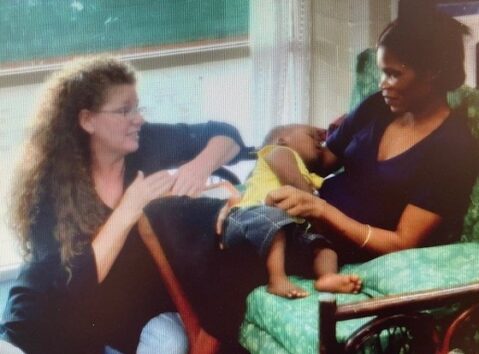
Internationally and nationally, it’s about GLOBAL, and Down Syndrome UK who provided me all the resources when Molly was born back in the 1990’s. I don’t know what I would do trying to Google search everything now. That would scare me. It would be overwhelming seeing every possible thing that could happen when she was just a newborn. That’s why our resources need to be spot on and appropriate. We don’t want to stop people from looking ahead into their future life, but it needs context, so you don’t stop the thing you want to encourage – the strength and support throughout their lives.
Recent Posts
- A Roadmap for Families: Expanding Access to Down Syndrome Health Information in Ukraine
- GLOBAL Announces 2026 Education Awards to Advance Down Syndrome Research, Medical Care, and Healthcare
- 5 Ways to Start the School Year Strong with Education Expert Jennifer Harris
- Exclusive Interview with the DSA of Southern New Jersey’s Co-Executive Directors #2
- U.S. Senate Passes DeOndra Dixon INCLUDE Project Act
 Experience our inspirational and groundbreaking videos and photos. Our children and self-advocates are beautiful AND brilliant!
 Make sure your local Representatives are on the Congressional Down Syndrome Task Force.