

Exclusive Interview with Sheryl Arno, Executive Director, Down Syndrome Association of Atlanta
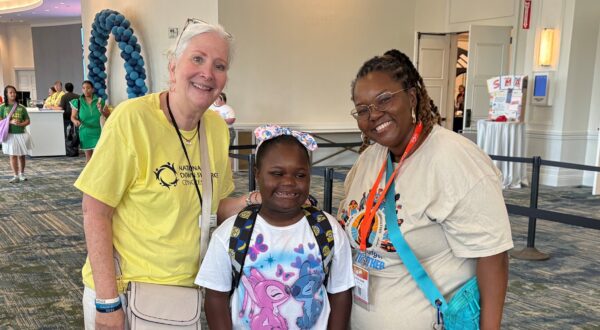
Throughout her years as Executive Director of the Down Syndrome Association of Atlanta (DSAA), Sheryl Arno has pursued partnerships to maximize outcomes for the families she serves. GLOBAL Vice President – Strategic Alliances, David Tolleson, recently sat down with Sheryl to learn more about her incredible career and her focus on helping self-advocates achieve the independence they deserve.
DAVID: Tell us a bit about how you got involved with DSAA.
SHERYL: Well, that’s a funny story. I have an art degree and when I graduated, it seemed like everything I was doing was a search for more meaning in life. I was volunteering a lot. My dad ran a childcare center and his was one of the few that accepted children with disabilities and they were always my favorite kids. He was consulting with a daycare for children with disabilities called Special Care, and they were smart enough to hire me, because they got him for free when I started working there! I got married, changed careers and moved all within 3 weeks, and the rest is history.
When I was working with the Jewish Community Center (JCC), we took groups of people with intellectual disabilities to Civil Rights Museum in Birmingham. We also had 3 months of classes on the Holocaust before visiting the Holocaust Center, not shying away from the fact that people with disabilities were the first victims. We built up to taking adults with intellectual disabilities on 4 educational trips to Israel. This led me to start the inclusive post-secondary education program at Kennesaw State University (KSU), because we required those going on our Israel trips to be able to learn about things like the Middle East conflict, money, basic Hebrew, because this wasn’t just about fun, I wanted them to learn.
I tried several colleges and universities in the Atlanta area, but they all wanted statistics on prior programs. I didn’t have that, but with the help of an influential state legislator, I was able to meet KSU’s president, who said, “Absolutely, we’ll do that!” So, post-secondary education has been a big passion of mine.
I went out on my own, as a consultant, trying to help people dealing with illnesses. Then 9 years ago, the Executive Director position at DSAA opened up.
 DAVID: One of the things that you and DSAA have been recognized for across the nation is your warm and mutually beneficial relationship with GiGi’s Playhouse Atlanta. How did that come about and why is it important to the community?
SHERYL: After I got my job at DSAA, one of the first things I did was to go meet with the organizer of GiGi’s Playhouse Atlanta, who said that he was looking for an Executive Director, so I called Howie Rosenberg, someone I worked with for many years at the JCC. Like me, Howie didn’t have a background in disability but had learned so much at the JCC and developed a great passion for this community. I worked well with Howie for years and knew that would be important for the relationship between Gigi’s and DSAA, and it’s turned out great. We were both so new in our positions, we didn’t know that we were supposed to hate each other. We could’ve gone down that road, and unfortunately, that seems to be the norm. But we didn’t, and that has made a positive difference for our community. Bottom line, we both put the people we’re here to serve first. It doesn’t matter if Gigi’s is serving them or DSAA is serving them, as long as a family has all the support they can get. We disagree at times and have different strengths, but we’ve made a commitment to the community to put families first. Howie is all about removing barriers and I’ve trusted him since well before we assumed our current positions. We try to make sure that people in Atlanta know we work together. No matter what I’m doing, I try to add GiGi’s name, because I think it’s important for the community.
 DAVID: You also have a great relationship with Adult Disability Medical Healthcare (ADMH).
SHERYL: Well, similarly to what happened with GiGi’s, I called ADMH and told them that I had Tamara Pursley, who would be great as their new Executive Director. I first got to know Tamara when all of you were at the National Down Syndrome Congress, and we became trusted colleagues and fast friends. I trust her and she’s really good at what she does. She refers families to DSAA, and I refer families to ADMH. I know that Tamara will get them the medical expertise they need quickly.
 DAVID: You’ve set up an amazing summer camp and an incredible drama camp. Tell us a bit about those programs.
SHERYL: These are highlights in my career! With the drama camp, I contribute by staying out of the way. The gal who runs the program is exceptional and a great actress in her own right. Our participants are age 10 to 21.
 Regarding the summer camp, I believe that a residential camp is one of the best tools in our toolbox. If you can get a parent comfortable with sleepaway camp, then the idea of postsecondary education on a college campus, and/or independent living with or without a college education, will be less of a stretch. We’ve been working on this for a long time and in partnership with Camp Twin Lakes, which hosts our program, we’ve set up a weeklong overnight camp.
We had a kid at camp this year who is 17 and had never been away from his parents before. I won’t say that it didn’t take a lot  of work, but it’s so cool! We’re only the second camp in the country that has a longer program for people with Down syndrome. There’s one in Charlotte that does a 3-night stay. This year we had 60 campers! You can see how the campers come in on Sunday versus how independent they are on Friday and it’s so cool. It’s also gratifying to see how rested and happy the parents look on Friday! Going back to that 17-year-old I mentioned, I asked his sister if she was excited to spend the week alone with her parents. She was and said that had never happened before.
 We limit our camp to those ages 14 through 21. Our counselors are trained to ensure that this isn’t a “babysitting” camp. Our two directors have both had their master’s in social work and the current one actually counsels some of our campers throughout the year. During camp, we talk about independence, going to college, getting a job. Our goal is to move them towards independence. We don’t do life skills – they have to have those before they come to camp. It was very gratifying that out of all our campers, 54 signed up to be part of the end of week talent show. It was long, but worth every minute!
 DAVID: You also are deeply involved in the annual Down Syndrome Conference at Emory University. How do you support that event and why?
SHERYL: Well, who doesn’t want to hang out with Emory University? It lends credibility to my organization. I can call medical and research experts, and they won’t necessarily know who I am, but calling in conjunction with the Emory Conference offers access I may not have otherwise. I’m very passionate about ensuring the people in my community are served. Not everyone can afford to attend a national conference, but Emory works very hard to put together an affordable, top-notch experience. We only charged $50 and bring in the top 6 doctors in the topics we’re covering to Atlanta each year – and provide lunch! We had Dr. Nicole Baumer, the Director of GLOBAL’s affiliate, the Sie Center, last year. Attendees came from other states. It’s a great conference and the folks at Emory are a dream to work with. Every year we see new families who wish they had known about the conference before. Of course, it’s not just DSAA and Emory. ADMH, GiGi’s and all the organizations who support our families in this community are involved as well. It’s a no brainer to me.
DAVID: Congratulations – I understand you’ve announced your retirement! One of the best things a leader can do is plan for, and execute, a smooth transition when they’re leaving an organization. What have you done to help DSAA plan for life after Sheryl?
 SHERYL: I gave my board three years notice to ensure a proper transition, because Joan Garry, the nonprofit leadership expert said that is what’s best for a small nonprofit. So, I let the board know at our retreat this past January. I did it because I want this organization to last past me. I’m passionate about that. It’s funny – I feel like I’m working harder since I announced my retirement, but I want to set them up for success. We’ll be doing strategic planning this coming January. I want to make sure all our collaborations are good and safe going forward. I’m not worried about being replaced, because everyone can be.
DAVID: Well, that’s true, but you bring a unique set of skills and experience and love for this community. The next person may be fabulous, but they’ll be different.
SHERYL: I do think that our generation of mature leaders in this field aren’t doing a great job of looking at what’s coming next. My best friend and mentor, Robin Burger, could look back at her mentor, who could say “Robin’s next” and then Robin was able to look forward and say “Sheryl’s next”. However, the human services industry has been hit really hard, and I look around and get really scared. I’ve been trying to mentor folks to ensure we have a next generation of leaders, but fewer people are willing or able to choose this career path. My successor will have their own way of doing things, but I hope they continue the collaborations I’ve started.
 DAVID: It seems that oftentimes after a strong, long-term Executive Director leaves, boards lose their minds and choose someone who turns out to be a disaster.
SHERYL: I call that the “transition boyfriend” and I’ve seen that happen at a lot of agencies where the very first person they hire has not worked out, and then the second one is the key. I won’t be the one making the decision, but I’m trying to help mentor the next generation. We’re from a generation where we had to do everything – fundraising, legislative advocacy, family support, events. We were taught to do it all. Now, people are very specialized in what they do, which isn’t altogether a bad thing. I admire that the younger generation has better boundaries than we did.
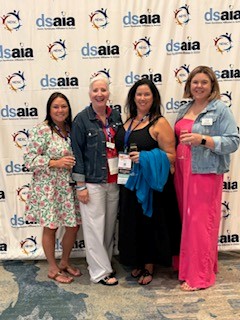 DAVID: You’ve always been supportive of the work happening on the national scene, through your involvement with Down Syndrome Affiliates in Action (DSAIA) and DSAA’s generous gifts to support the updating and expansion of GLOBAL’s Medical Care Guidelines for Adults with Down Syndrome. Why do you think it’s important for families and local, regional, and statewide organizations to support the work going on at the national level?
SHERYL: DSAIA changed my career in what I was able to do. I started Black Family Connection because of DSAIA. I’ve learned so much through the connections formed at DSAIA. My drama camp is the result of a DSAIA conference. Our financial bookkeeping system is the result of what we learned through DSAIA. I strongly believe in the power of us working together as leaders.
One of the things that I was surprised to learn is that people often thing we receive funding from the national organizations or that we’re a chapter of a national when, in fact, we’re all independent 501 (c) 3 organizations.
DAVID: We’re one of the few non-profit communities where that isn’t true. For most diagnoses – liver, kidney – the local chapters are units of the national organization. In Down syndrome, some of the local affiliates predate or grew in conjunction with the nationals, so our community developed more as a confederation of the willing.
SHERYL: That’s fascinating. I had a donor tell me he was attending a national event and wanted to know what percentage DSAA received from that. I told him nothing, which was a big surprise to him! It would help if someone from the national organizations would write an article to let people know they should also support their local organizations.
I believe that every organization has its own lane. I believe that if we all go back to why it is we do what we do, it can be a perfect world in the Down syndrome community. It is why (GiGi’s Playhouse Atlanta Executive Director) Howie and I are successful – we put the families we serve above our separate organizations.
DAVID: Is there anything else you’d like to share? 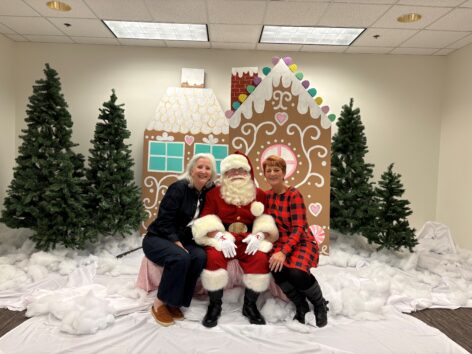
SHERYL: I’d say Santa Bradley is one of my biggest achievements.
DAVID: No doubt – probably your biggest achievement! Everyone loves Santa Bradley!
SHERYL: I walked away from a holiday party a few years ago and thought how do we not have a Santa with Down syndrome? Bradley is an actor in our community, and I thought he’d be great, which he is. Representation matters and it means so much to the families. Now Santa Bradley is well-known in the local and national Down syndrome community and beyond!
Recent Posts
- Exclusive Interview with Sheryl Arno, Executive Director, Down Syndrome Association of Atlanta
- Global Down Syndrome Foundation Dancers Make Their Debut in Colorado Ballet’s The Nutcracker
- Happy Thanksgiving from Our GLOBAL Team: Thank You for Being Part of Our Family
- Hollywood & Sports Royalty Show Up for the Global Down Syndrome Foundation Fashion Show
- Justin Timberlake Set to Walk the Runway with Niece Zaya Biel at Upcoming Global Down Syndrome Foundation Fashion Show
 Experience our inspirational and groundbreaking videos and photos. Our children and self-advocates are beautiful AND brilliant!
 Make sure your local Representatives are on the Congressional Down Syndrome Task Force.