

Exclusive Interview with Black Down Syndrome Association Co-Founders Kelli Caughman & Crystal Lotterberry
In celebration of Down Syndrome Awareness Month, GLOBAL Vice President – Strategic Alliances David Tolleson and Senior Project Manager, MaryKate Vandemark met with Kelli Caughman and Crystal Lotterberry, co-founders of the Black Down Syndrome Association. These dynamic leaders shared their thoughts on creating spaces where families can learn, find community, and make an impact through research and advocacy.

DAVID: Thank you for joining us today! To start off, would you please share a bit about yourselves and your families?
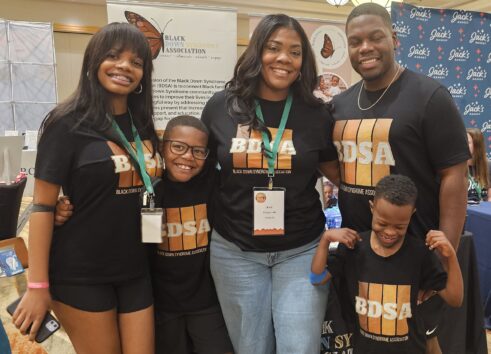 KELLI: I have a family of 5. We have an 18-year-old daughter who is going off to college this year, studying biology. She has wanted to be an OB/GYN since she was 9. Over the years since we found out about her brother’s diagnosis of Down syndrome, she has said that she’s so excited to be able to give that diagnosis to families like ours. So, we’re excited about that journey! We also have 8 and 10-year-old sons. Our 10-year-old, Cree, has Down syndrome and keeps us dancing to the latest trends. He loves good dancing songs and Disney karoake! Knox, our 8-year-old, keeps us busy with baseball. My husband and I are both from South Carolina, but we currently live in Fishers, Indiana. In addition to being a wife, mom, BDSA president, and advocate, I’m also a kindergarten teacher.
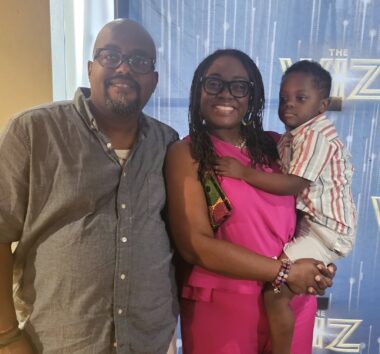
CRYSTAL: I’m married to my husband, Bartley, and we have a beautiful, lovely son, Griffin, who is 5 and has Down syndrome. We also have 2 dogs rounding out our family – Sugar Bear and Loki. I work for the U.S. Department of Justice where I’m a Community Treatment Coordinator. I work in the Reentry Division, where we assist offenders after they’re released from prison to help ensure successful reentry back into society.
DAVID: That’s so important. People need a good start to move on with their lives.
CRYSTAL: Ninety-five percent of people who are incarcerated will return home and they’re going to be your neighbors. So, it’s important to make sure these folks have the skills and tools they need so they can come back and be successful and stay out of prison and contribute to society in a meaningful way.
DAVID: How did you two meet and what led you to found the Black Down Syndrome Association (BDSA)?
KELLI: We live in different states but connected while doing advocacy work for a national non-profit organization. We had seen each other online but then attended a conference together where we started talking about all the similarities in stories we heard from moms who look like us. They led us to realize that there was something missing. As I told Crystal, ever since Cree was born, I wanted to create spaces where parents were connecting. I was able to do that through our local Down syndrome organization, but even there other moms were asking why there weren’t more people who looked like us showing up and being seen and celebrated. Crystal felt the same and had heard similar stories, so we decided to start BDSA.
DAVID: When was the BDSA founded?
CRYSTAL: August 29, 2022, so we’re celebrating 3 years!
DAVID: Congratulations! Now that you’ve been up-and-running while, what is your focus, how do you serve families, and how many families do you serve?
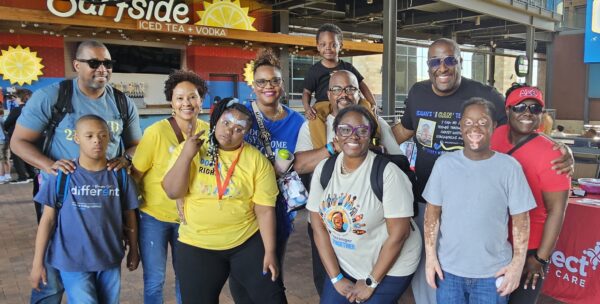
CRYSTAL: We serve about 1,500 families worldwide through our online support group. We have families across America, but also in Africa, Trinidad & Tobago, and various Caribbean islands. If they find us and they’re supporting and loving black children or other family members with Down syndrome, we welcome them into our online support group. It’s a phenomenal group!
KELLI: When people join, they often say it feels like family. We hear the phrase “family reunion” a lot so when we decided to host a conference, we knew it had to be called a family reunion where we can all come together – moms, dads, kids, aunts, uncles, grandparents, and other caregivers. Our online support group is limited to parents, legal guardians, and caregivers, so it will be fun to have a broader group when we meet in person. Our focus is on education and celebration. We encourage our families to be seen and heard and to participate with their local organizations. We see ourselves as an extra layer of support but want them to show up in their local communities and be the change that they want to see. Our families just want to be seen and represented. BDSA has been doing this work through webinars and a monthly newsletter of resources. We also encourage our families to participate in research.
DAVID: The BDSA Family Reunion Conference sounds like a great next step in your programming!
KELLI: It really is the culmination of our online work. We’re all coming together to talk about it all – education and medical, for example. We’re going to have a sibling panel, and 2 different opportunities to participate in research onsite. We’ll have a mental health expert there. I’m proud that we’ll have many speakers who look like us. I think it’s important for our families to hear from speakers who reflect our community.
 DAVID: We appreciate what you do to connect folks to our resources, because you can have all the best information, medical care, and research in the world, but if people don’t know about it, it doesn’t do them any good. So, we are grateful for you making that connection with your members. And, also on federal advocacy. It’s more important now than ever. One of the motivations for GLOBAL’s advocacy around the DeOndra Dixon INCLUDE Project Act is the fact that, sadly, people who are black and have Down syndrome tend to die at a much younger age than their counterparts. We need to figure out what’s going on there, because that’s not good for anyone.

KELLI: So true. That’s one of the things that I love that GLOBAL does. We’re a small organization and we can’t do everything that GLOBAL does, but we love the fact that you invite us to the table. We have really enjoyed doing advocacy on Capitol Hill and being represented. It has opened a lot of doors for us for networking, but it’s also great for our families to see that it’s something they can do, too. We’re glad to have families connected to BDSA, but to also know they can connect with GLOBAL.
DAVID: We’re excited to hear more about your conference. Give us more details, please!
CRYSTAL: We’ve capped attendance at 200 to try to keep our first event on the smaller side. It’ll be November 7-9 in Grand Prairie, Texas, about 15 minutes from Dallas-Ft. Worth International Airport. We’ll be at Epic Central, which is a new convention, dining, and entertainment space. We know our families are going to love it!
DAVID: We are very proud to support this year’s inaugural conference with a GLOBAL Education Grant, which will help pay for two keynote speakers one from the UT – Southwestern Down Syndrome Clinic and the other who is Director of the Developmental Behavioral Pediatric Clinic at Children’s Medical Center in Dallas. Also, our GLOBAL affiliate, the Linda Crnic Institute, will be there with the Human Trisome Project (HTP), alongside their colleagues with the Boys Town National Research Hospital Hearing Bus. Tell us a little bit more about the decision-making process on that and why you think it’s important to ensure families in your community have the opportunity to participate in research.
CRYSTAL: Black and brown folks are underrepresented in research, so we wanted to make it easier for families to participate. It made sense to bring the researchers to where our families will already be gathered. Also, families will be able to ask the researchers questions themselves so they can get their own confirmation that this is something that’s right for them and learn more about how this research will benefit our families. I always tell folks that Kelli and I have already vetted the research, and my family has either participated or we’re going to soon because I know how important it is. Not everything will benefit our children today, but it will help those who come behind us and we’ve got to be part of making that happen.
KELLI: We want to make sure that if people are going to spend their hard-earned money to come to this conference, it’s packed with great information, and they can also participate in research if they want. Both Crystal and I and our families have participated in HTP. We want to remove barriers to research participation for others while ensuring that our conference is well-rounded and a place where they feel celebrated and leave with really great information.
DAVID: Thank you both for participating in HTP. Crystal, I believe you’ve also been up to visit our GLOBAL affiliate, the Sie Center for Down Syndrome, haven’t you?
CRYSTAL: Yes, I took Griffin last year! It was an absolutely incredible experience. I put everything on social media and when I came back, I posted that EVERYONE needs to try to get to the Sie Center at least once to have their children seen. Even though I’m okay with the care Griffin receives here locally, going to the Sie Center let me know things to be on the lookout for. It was well worth the plane ride to Denver. We’ll be back!
DAVID: I really encourage families that are able to go to do so, particularly when things are going well, because you never know when things might go wrong – such as regression cropping up. You really want to be an established patient if you suddenly need that extra help. Plus, it can take awhile to get into any specialty clinic, so there’s an advantage to already being in the system.
CRYSTAL: It took us 3 months to get into the Sie Center, but we had a 6 month wait to get into our local Down syndrome clinic, so that was a lot better.
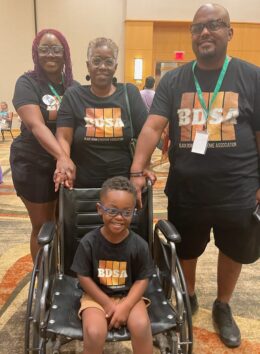 DAVID: We’re grateful to you and the BDSA Board for supporting our work as a GLOBAL Organization Member. Why is GLOBAL’s federal advocacy, research, and medical work important to you and the families you serve?
KELLI: After I had the opportunity to go advocate in Washington, DC, meet Members of Congress and talk to families, I remember going home and telling my husband this is something we must do. It’s good for our families to see that it’s something they can do, too.
MARYKATE: It’s all so important. GLOBAL is really leading the way on advocacy related to research and medical care. Like you said, it’s so important to get your families to DC so they can see what it’s all about and for them to bring it home like you did, Kelli.
KELLI: It was great for our families to see us on Capitol Hill with GLOBAL for the DeOndra Dixon INCLUDE Project Act, but they also got to see us with Jamie Foxx! It’s good to see people who look like you supporting the cause – that means a lot to us. Crystal, do you want to tell them about our celebration while we were there?
CRYSTAL: While we were with GLOBAL in DC, Kelli and I were talking about having a BDSA conference, but I told her we needed to raise a lot of money to make it happen. She said to just have faith. Well, we don’t know if it was because we were in DC with GLOBAL, or because Jamie Foxx asked us up on the stage, but we were up there dancing and my phone pinged and Ludacris had given us a big donation! I just went into a corner and cried. Kelli said, “Why are you surprised? I told you to have faith!”
KELLI: Whenever we’re in the room with GLOBAL, we’re always networking. You never know where the next opportunity will come from. It means a lot to us as BDSA when GLOBAL asks us to come to an event or to repost or share your resources. We’ve not only been able to vet GLOBAL for our families, we can tell them that we know the heart of the people running the organization and that what’s important to those of you at GLOBAL is also important to us.
DAVID: Is there anything else you’d like to share?
KELLI: We’re always meeting people who are interested in BDSA. They ask us our “why”, so we share our mission and share our stories. But I want people to know that BDSA is another layer of support for families. For some families, we’re their everything, but for many families we’re one of many things. We do have families that are represented locally, but we also have families that we want to encourage to participate locally. We want them to show up and show out – not just for BDSA events, but also events with their local Down syndrome association. That’s your home and that’s where you can have the biggest impact.
CRYSTAL: The BDSA will always be here for our families, but we want them to go out into the world, too. We’ll still be right here if they need us.
KELLI: We also want local Down syndrome affiliates and national organizations to know that BDSA wants to work with them. I think partnering is beneficial to both parties, so don’t be afraid to reach out!
Recent Posts
- A Roadmap for Families: Expanding Access to Down Syndrome Health Information in Ukraine
- GLOBAL Announces 2026 Education Awards to Advance Down Syndrome Research, Medical Care, and Healthcare
- 5 Ways to Start the School Year Strong with Education Expert Jennifer Harris
- Exclusive Interview with the DSA of Southern New Jersey’s Co-Executive Directors #2
- U.S. Senate Passes DeOndra Dixon INCLUDE Project Act
 Experience our inspirational and groundbreaking videos and photos. Our children and self-advocates are beautiful AND brilliant!
 Make sure your local Representatives are on the Congressional Down Syndrome Task Force.