

My Adult Daughter Has Down Syndrome. Her Life is Entirely Different From What Experts Expected
Parents Facing Prenatal Down Syndrome Diagnoses Deserve Accurate Facts, Not Fearmongering
| Read Full Article on STAT News |
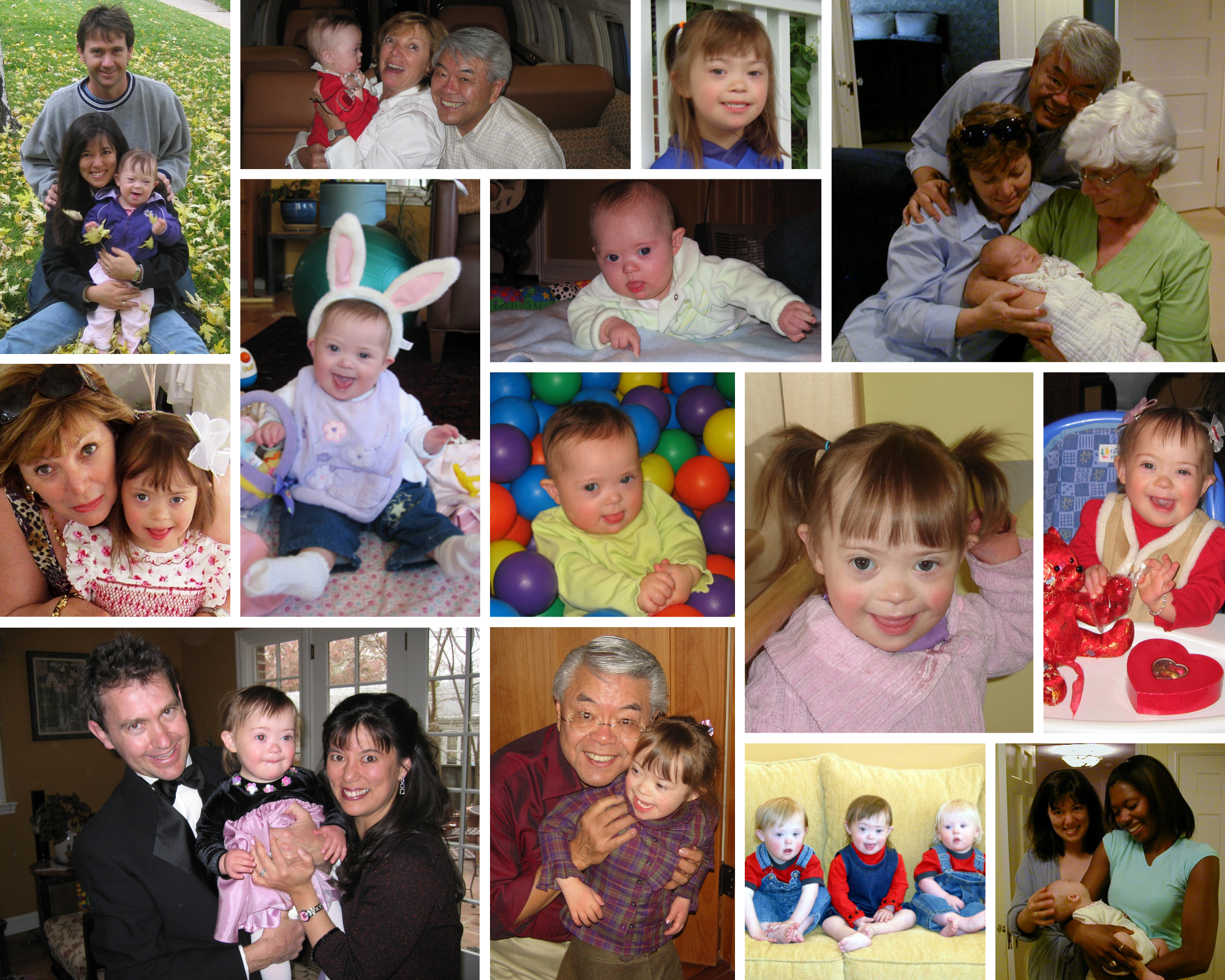
The genetic counselor handed me a tissue.
“Don’t worry, Mrs. Whitten,” she said. “Eighty to ninety percent of people terminate these pregnancies. You can, too.”
Twenty-three years ago, my husband, Tom, and I had just received prenatal screening results indicating our unborn child probably had Down syndrome. Instead of offering us actual counseling, she played a video about Down syndrome — and it was terrifying.
It suggested our baby could die before birth. It listed the chances of death in infancy and before age 3. If the child survived, a seemingly endless list of medical problems scrolled across the screen.
I sat there crying and upset, largely because I was scared. But having spent my career in television and film, I also could not stop wondering who had produced such an awful video. The production quality was terrible. The information was worse. It turned out, the doctor who was about to perform the amnio to confirm the prenatal screening had made the video himself.
I recently found myself thinking about that video in the wake of social media influencer Jesse Ridgway and his wife, Ashley, announcing that they had decided to terminate a wanted pregnancy after test results indicated that their unborn child was likely to have had Down syndrome.
Their decision has been met with the full spectrum of responses, including outrage and even death threats, according to reports.
Families facing difficult diagnoses deserve compassion, not condemnation. But the conversations and debates happening — whether within families, in clinics, or on public platforms — should be based on facts, not judgment.
As a woman, one of the most difficult experiences I encountered after the test results was realizing that the professionals counseling me were not providing me any evidence-based facts.
I am fiercely pro-woman. Women are fully capable of making difficult decisions, but meaningful choice requires trusted, vetted information. Otherwise, it stops being counseling and becomes coercion.
Even the statistic I was given lacked critical context. This often-cited 90% rate made it sound like nearly all fetuses with Down syndrome were terminated in the U.S.
But that figure referred only to women who got an amnio, which was roughly 1% of all pregnancies. Yes, 90% of those people terminated. But many declined to get an amnio, even after a prenatal screening suggested their baby might have Down syndrome. Those women who already knew they would be happy to have a kiddo with Down syndrome, or who might have thought it would be tough but would never consider termination — they weren’t being counted.
Yet the 90% figure was presented as if everyone did it — and what I should do, too.
The landscape and numbers have changed in the more than 20 years since then, with the rise of noninvasive prenatal testing. But as I’ve learned from my role as an advocate for people with Down syndrome, the core problem of misinformation remains.
That night, I went home and did something that should never have been necessary. I looked for information myself. Within minutes, I learned something no one had bothered to tell me: People with Down syndrome were living into their 50s.
Not 3. Fifty.
Then, about 30 weeks into my pregnancy, we learned that our daughter, Sophia, had a congenital heart defect.
Like many expectant parents facing a serious prenatal diagnosis, Tom and I rolled up our sleeves and did our homework. We interviewed surgeons and asked endless questions.
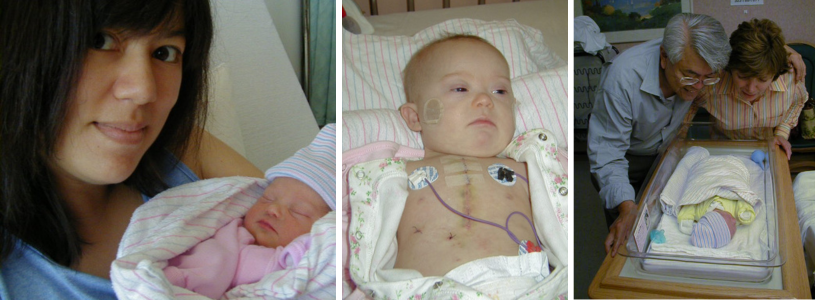
What we learned was reassuring. Roughly one-third of congenital heart defects in children with Down syndrome resolve naturally, and many need only a minor intervention. About half need open-heart surgery during infancy. The survival rate for the various open-heart surgeries in all children was and remains between 95% and 99% — the same as with children without Down syndrome.
The diagnosis was frightening, but the facts were not.
I mention this in part because congenital heart defects have recently been cited in public discussions and among social media influencers as a reason to terminate pregnancies involving Down syndrome.
When we were preparing Sophia for her surgery during her first three months, I read that babies placed on a heart-lung machine could experience cognitive impacts and that follow-up with a neurodevelopmental pediatrician was often recommended.
Wanting to do everything possible to support my daughter, I asked our pediatric cardiologist which specialist he would recommend. He stared at me in disbelief and said, “Mrs. Whitten, the only thing that is going to influence your daughter’s IQ is the fact that she is mentally retarded.”
We fired him. But I’ll never forget his exact words and his insulting assumptions: that Sophia’s future already had been written, that her life could be reduced to a diagnosis, that low expectations were somehow scientific, and that somehow what is good for a person without Down syndrome is not appropriate for a person with Down syndrome.
Discrimination and biased assumptions are among the greatest barriers facing people with Down syndrome.
It was not long ago in the United States that babies with Down syndrome were denied lifesaving health care, which was thankfully outlawed after the horrifying “Baby Doe” case in 1984, when a child with Down syndrome was starved to death in a hospital over the course of six days, at the suggestion of a doctor and with the parents’ support. And it wasn’t until 1987 that the infamous Willowbrook State School in New York — which warehoused people with intellectual disabilities who were neglected, abused, and used for medical experimentation — was closed.
While we have made extraordinary progress, people with Down syndrome still face discrimination. People with Down syndrome are still denied medical care based on unfounded medical bias. Adults with Down syndrome continue to face wrongly held views about their quality of life and their ability to pursue employment and education. Health care decisions are still too often influenced by stereotypes rather than evidence.
The fact is, people with Down syndrome today are living longer, healthier, fuller lives. They attend school, work, build relationships, contribute to their communities, and pursue their dreams. Importantly, they define themselves.
The progress we’ve made in research and medicine has seen an increase in 10 years of lifespan.
Too often, however, the information given to expectant parents has not kept pace. Families are still receiving outdated information and, in some cases, being counseled as though there is only one reasonable path forward.
That reality is one of the reasons that the Global Down Syndrome Foundation created the Prenatal and Newborn Pamphlet. We had a simple conviction: Parents should never leave their doctor’s office and have to rely on a Google or now an AI search to get accurate information about their child.
When Sophia was born, I could not have predicted the woman she would become or that she would graduate this year from Regis University with certificates in advocacy and communications as well as health and exercise science. Or that she would inspire me, my family, and others to catalyze research, medical advances, and advocacy efforts that have improved the health and lives of people with Down syndrome around the world.
No doctor, genetic counselor, or test could show me her future — they could only tell me that Sophia had an extra chromosome.
Michelle Sie Whitten is the president and CEO of the Global Down Syndrome Foundation and the proud mom to Sophia Kay Whitten, a 23-year-old Regis University graduate who happens to have Down syndrome.
Recent Posts
- My Adult Daughter Has Down Syndrome. Her Life is Entirely Different From What Experts Expected
- GLOBAL Recap of 2025 NDSC Annual Convention in Dallas
- Down Syndrome Regression Disorder vs a Mother’s Love: A Washington Post Mother’s Day Feature
- 2023 AcceptAbility Gala Social Media Images
- Science MINDS: Michelle Sie Whitten, President, CEO & Co-Founder of Global Down Syndrome Foundation
 Experience our inspirational and groundbreaking videos and photos. Our children and self-advocates are beautiful AND brilliant!
 Make sure your local Representatives are on the Congressional Down Syndrome Task Force.