

Pizza, Pasta — And Purpose In Life
January 2nd, 2018 by Global Down Syndrome Foundation
The Sunflower Inn Near Rome Provides Jobs While Serving Up Favorite Italian Dishes With A Side Of Happiness.
In Italy, the sunflower represents happiness. So in 2000, when the parents of a teenager with Down syndrome opened a restaurant near Rome with the aim of employing people with the condition, they named it La Locanda dei Girasoli, or “The Sunflower Inn.” The idea was that people with Down syndrome are happy and would bring customers much happiness as well. The restaurant, the only one of its kind in Italy, quickly became a national phenomenon and garnered international press.
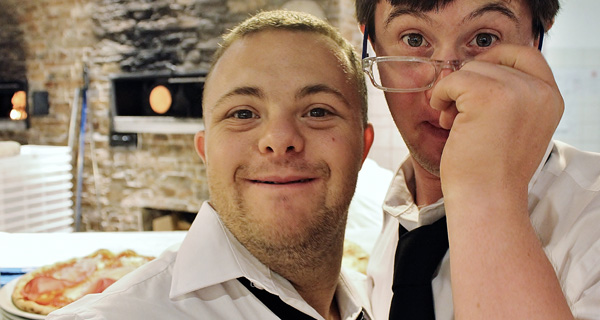
However, starting a business is not for the faint of heart. During an economic crisis in 2013, the owners were faced with the possibility of shutting down. Luckily, a social cooperative called Consorzio SINTESI was able to take over the restaurant and even expand its r each. Consorzio SINTESI specializes in giving jobs to people who are differently-abled and also manages call centers and tech support services for large companies.
People working at The Sunflower Inn have a work contract, and the goal is to employ them for the long-term. They are part of a network of people who are differently-abled whom the cooperative helps in many settings. For those interested and qualified to cook, there is a special program that allows them to learn f rom some of the top chefs in Italy.
BENEFITS OF A RIGOROUS CULINARY EDUCATION
Today, the restaurant’s staff includes eight people who are differently-abled, five of whom have Down syndrome. Of those five, two work as sous, or assistant, chefs.
Employees must be 18 years old, have Down syndrome or some other intellectual disability, be unemployed, have a lower secondary school diploma, and have receivedcertification for work eligibility from the Italian government.
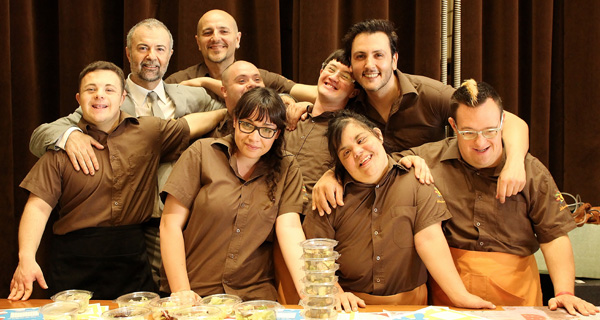
All employees begin as interns and complete a combined 600 hours of orientation, classroom training, and practical experience, which makes up more than 400 of those hours.
All the positions at The Sunflower Inn, including internships, are paid. “These jobs provide some financial security and a sense of autonomy,” said Enzo Rimicci, President of Consorzio SINTESI. “All the employees work hard, are extremely professional and have great pride in their work. This has led to increased confidence, which in turn leads to other growth, such as improved language skills or the ability to take public transportation.”
The employees themselves agree. When asked what they like best about their jobs they reply, “Teamwork!” and, “It’s like a family!”
A MOVEABLE FEAST
The Sunflower Inn has many regulars, according to Rimicci, and it has earned a 4.5 rating on TripAdvisor, where glowing reviews have given it a reputation as being a place that locals and tourists alike enjoy visiting. For some international tourists, it has become somewhat of a mecca.
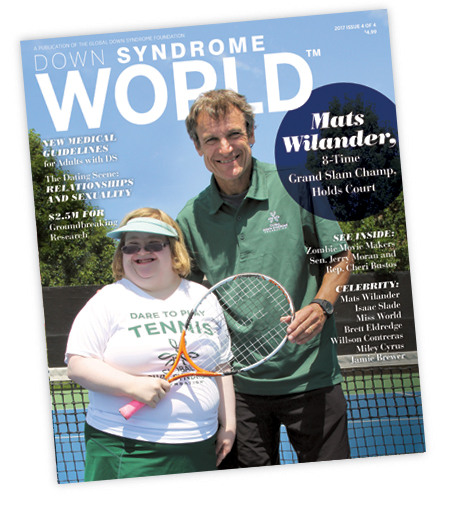 This article was published in the award-winning Down Syndrome World™ magazine. Become a member to read all the articles and get future issues delivered to your door!
The restaurant and the cooperative don’t receive any state aid and have to be selffunding. Catering is their main source of revenue, with their primary work focused on private events, sporting events, and restaurant collaborations. They have also launched an anti-bullying campaign in schools.
Rimicci represents the energy for his community, “We never stop! We have not yet managed to realize the dream of opening a second restaurant in southern Italy. It’s a big economic investment for our pockets today, but we’re sure that will come true tomorrow!”
GLOBAL CHALLENGES, LOCAL SOLUTIONS
In Italy, as in the U.S. and other countries, people who are differently-abled struggle to find jobs or meaningful activities after their public school education.
Enzo Rimicci, president of social cooperative Consorzio SINTESI, believes that this situation is dangerous for the well-being of those who are differently-abled and for our society. In addition to creating employment opportunities for people with intellectual disabilities in restaurant and catering settings, Consorzio SINTESI also provides employees the opportunity to become self-advocates. For example, in 2015, Consorzio SINTESI established the Inclusive Schools program. The program has been embraced by the local community. It provides the restaurant employees the opportunity to co-present at schools where they emphasize anti-bullying and teach children respect for diverse abilities.
Visit lalocandadeigirasoli.it to learn more and for links to the restaurant’s Facebook page and YouTube channel, where you can learn their easy recipe for Cacio e Pepe (cheese and pepper pasta).
Like this article? Join Global Down Syndrome Foundation’s Membership program today to receive 4 issues of the quarterly award-winning publication, plus access to 4 seasonal educational Webinar Series, and eligibility to apply for Global’s Employment and Educational Grants.
Register today at downsyndromeworld.org!
National Down Syndrome Adoption Network
November 6th, 2017 by Global Down Syndrome Foundation
All Children Deserve The Safety And Security Of A Loving Home.

In 1981, Robin and David Steele visited a children’s home in Cincinnati and fell in love with a little girl named Martha. After initially being told Martha was not available for adoption because she w as born with Down syndrome, the Steeles persisted — both adopting Martha and establishing the National Down Syndrome Adoption Network (NDSAN) so no other child with Down syndrome would ever be considered “unadoptable.”
This article was published in the award-winning Down Syndrome World™ magazine. Become a member to read all the articles and get future issues delivered to your door!FOREVER HOMES
A program of the Down Syndrome Association of Greater Cincinnati (DSAGC), NDSAN is a free registry (not an adoption agency) that connects birth and adoptive families across the U.S. The Steeles — who eventually adopted four more children with Down syndrome and six other children who are differently-abled — recently stepped back from the organization but are still committed supporters. Since 2010, NDSAN has been under the capable leadership of Stephanie Thompson, who spent the previous 11 years working for DSAGC.
When birth parents call NDSAN, Thompson answers their questions and provides educational resources about raising children with Down syndrome to help allay any fears that might accompany the diagnosis. If they decide to give a child up for adoption, she helps them develop a birth plan.
Families interested in adopting a child with Down syndrome can contact NDSAN after completing a home study. Thompson then searches NDSAN’s database for children who might be a good fit. Children with Down syndrome often have unique medical and developmental needs, and it is important that the family be a good fit for the child and vice versa. Thompson also helps get an adoption agency involved, if necessary, and continues to provide support after a child joins his or her new family.
“I can empathize with both adoptive and birth parents,” said Thompson, who has a 25-year-old son with Down syndrome. “I know how it feels to get a diagnosis of Down syndrome, and through that connection, birth parents feel comfortable asking me questions. If they want to make an adoption plan, I have a wonderful relationship with all of the adoptive families on our registry, whom I’m helping as well. It means the world to me these folks feel called to adopt a child with Down syndrome.”
“When we first learned of our son’s condition, we felt that there was little choice for us,” one family wrote in a letter to Thompson. “We may have made a very different decision if it w as not for your organization.”
EDUCATION AND OUTREACH
Thompson wants everyone involved in the adoption process to have the most up-to-date information about Down syndrome, and that includes medical professionals. NDSAN publishes booklets for healthcare providers so they can educate patients about all their options.
“If termination is talked about, we want adoption talked about as well,” she said.
She’s also reaching out to Down syndrome organizations that can help spread the word to members about both adoption and the many foster children with Down syndrome in their areas looking for forever homes.
“This can be a very emotional job,” Thompson said.
“But I can’t imagine doing anything else.”
Each year, the National Down Syndrome Adoption Network is contacted by approximately 125 expectant families, birth families, and agencies and helps 40 children find their adoptive families.
The article was published in Down Syndrome World™ magazine. Become a member to read the whole magazine and get future magazines delivered to your door!
Like this article? Join Global Down Syndrome Foundation’s Membership program today to receive 4 issues of the quarterly award-winning publication, plus access to 4 seasonal educational Webinar Series, and eligibility to apply for Global’s Employment and Educational Grants.
Register today at downsyndromeworld.org!
Improving Quality of Life for Adults with Down Syndrome
October 25th, 2017 by Global Down Syndrome Foundation
A Lifetime Of Good Health Begins With Evidence-Based Guidelines
In the U.S., the life expectancy of an individual with Down syndrome has more than doubled in the last three decades, from 25 years in 1983 to 60 years today.
The reason for this increased lifespan is two-fold. First, the inhumane institutions where the overwhelming majority of people with Down syndrome were forced to live were dismantled in the 1980s and 1990s. This dismantling was a product of the human and civil rights movements of the 1960s and 1970s, which resulted in children with Down syndrome being raised in their homes and receiving education and medical care — basic rights they were deprived of in institutions.
Second, in the 1980s, there were considerable advancements in pediatric heart surgeries, as well as a legal battle that rightly ended with doctors being required to perform lifesaving procedures, including open-heart surgery, for children with Down syndrome.
Although people with Down syndrome are enjoying a significantly increased lifespan, their longevity is revealing some challenging age-related medical diagnoses. For example, it is estimated that approximately 70 percent of people with Down syndrome will develop Alzheimer’s disease. As they age, they are also at increased risk of many immune system disorders and obesity. Conversely, they are highly protected from several diseases, including most solid tumor cancers, such as breast cancer, as well as certain types of heart attacks and strokes. It is clear that people with Down syndrome have a different disease spectrum than typical people.
The American Academy of Pediatrics does an excellent job of periodically updating guidelines pediatricians should follow for their patients with Down syndrome. However, the last medical care guidelines for adults with Down syndrome were published in 2001. They provide many excellent insights and recommendations, but are in need of updates based on the increased lifespan of people with Down syndrome and advances in medical science.
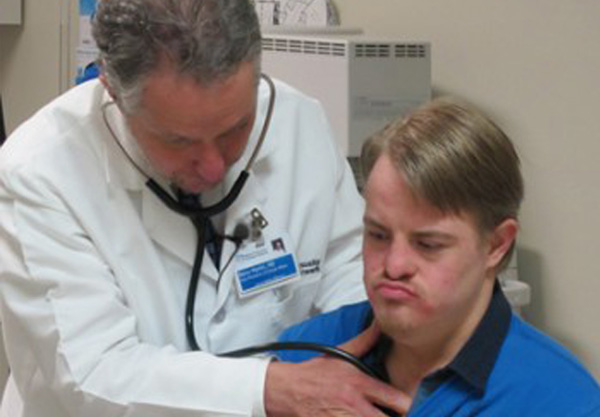
In 2015, the Global Down Syndrome Foundation’s Task Force for Adults with Down Syndrome, a team of more than 60 self-advocates, their family members, and medical professionals, unanimously voted for Global to make updating medical care guidelines for adults with Down syndrome a priority.
“The primary purpose is to improve the physical and behavioral health of, and medical care for, people with Down syndrome. That’s absolutely why we’re doing this,” said Dennis McGuire, Ph.D., LCSW,
Senior Consultant at Global. He helped create the first adult medical care guidelines and is tasked with helping galvanize some of the leading medical professionals in adult care to establish new, comprehensive guidelines. “When we’re talking about health care and behavioral health, we’re talking about improving people’s quality of life. That’s our goal.”
EMPOWERING DOCTORS TO PROVIDE BETTER CARE
The new Medical Care Guidelines for Adults with Down Syndrome will provide medical professionals with updated information about adults with Down syndrome and a checklist of recommended screenings and tests that cater to the unique medical profile of this special population.
This article was published in the award-winning Down Syndrome World™ magazine. Become a member to read all the articles and get future issues delivered to your door!Ideally, the guidelines will allow adults with Down syndrome to receive the best possible car e, regardless of where they live.
“There are only a few clinics in the entire country serving teens and adults with Down syndrome,” Dr. McGuire said. “So there are huge numbers of them without access to specialty care. They go to local doctors, who may see just a few people with Down syndrome over the course of a year. The guidelines can provide those physicians with a resource they can tr ust, which will help them deliver better care.”
ADDRESSING KEY AREAS OF MEDICINE
Initially, the new guidelines will cover medical car e across multiple disciplines, including cardiology, immunology, behavioral and mental health, and obesity/metabolism.
“We want to eventually cover many more areas,” said Michelle Sie Whitten, President and CEO of Global. “Unfortunately, Down syndrome is still one of the least-funded genetic conditions by our federal government. As a result, we won’t have enough evidence-based research to provide definitive guidelines in some areas but will rather be able to make recommendations. However, in identifying the research gaps, we can also prioritize such research so when we go back to update the guidelines in five years, we have targeted, more comprehensive research to rely on.”
“New health guidelines could prove beneficial for many reasons,” said Dr. McGuire, who worked for 25 years as a behavioral health expert at the Adult Down Syndrome Center at Advocate Lutheran General Hospital in Chicago. “For example, we’ve found that people with Down syndrome have a tendency toward depression. We also know there’s an overlap between physical and behavioral health. If people have thyroid problems, those can present as behavioral change. When people come in with changes in behavior, behavioral health professionals will recommend a thorough physical exam to make sure there are no physiological issues. If we’re treating depression without treating its physical causes, we’re not really helping [someone with Down syndrome].”
VETTING THE DATA
The first step in the creation of the new guidelines is a rigorous research process by the ECRI Institute, a nonprofit organization that conducts research to create evidence-based medical guidelines. ECRI works closely with the U.S. Department of Health and Human Services’ National Guideline Clearinghouse, which validates the guidelines.
“After that, we’ll gather information from the researchers and clinicians, put it into the form of actual guidelines, and make certain they are published in medical journals,” Dr. McGuire said. “ECRI’s role is to make sure that the quality of this process is extremely high.”
The project has attracted leading medical professionals from throughout the U.S. who provide clinical care to thousands of adult patients with Down syndrome every year. These clinicians will use the ECRI-vetted data as a basis to apply their vast knowledge in different areas and help craft guidelines and recommendations.
The entire process is expected to take two years, and the anticipated completion date is the end of 2018 with the guidelines being available for publication in early 2019.
A VALUABLE RESOURCE
The goal is to have the guidelines published in major medical journals to r each specialty fields and as many medical professionals as possible. The guidelines will be free to parents, caregivers, healthcare providers, and local Down syndrome organizations.
“Parents have always been, by far, the best advocates for people with Down syndrome,” Dr. McGuire said. “We’ve made certain to have a version available to families so they can use them to advocate for their sons and daughters .”
WORTH THE COST
The two-year-long process of creating the new Medical Care Guidelines for Adults with Down Syndrome is costly. Global Down Syndrome Foundation has committed to funding this important initiative, translating the guidelines into 10 languages, and updating them every five years. Global is reaching out to the Down syndrome community for donations, and so far, 28 Down syndrome organizations and multiple individuals have contributed. Their generosity will be recognized in the published guidelines.
“Research is expensive,” said Dennis McGuire, Ph.D., LCSW, Senior Consultant at Global. “Many groups have already stepped up to help fund the guidelines. They know how important this is and are very excited.”
Your ongoing support is crucial to ensuring the best-quality guidelines. To donate, visit
www.globaldownsyndrome.org/donate/
“Tens of thousands of people with Down syndrome reach adulthood each year, and this increases the importance of and need for evidence-based guidelines in this expanding group. Recommendations applied to a person with Down syndrome as a child may not be relevant in adulthood,” said Kent McKelvey, M.D., who leads the Adult Medical Genetics and Down Syndrome Clinic at the University of Arkansas for Medical Sciences. “The presence of three copies of chromosome 21 has implications for development and aging in every organ system. This seems logical and we have some understanding of the processes on a molecular level. We see patterns of disease predisposition with age but we have not translated this into a comprehensive medical management approach. A systematic process such as this is needed to find the gaps in the evidence and order the current evidence into usable guidelines for primary care doctors.”
Like this article? Join Global Down Syndrome Foundation’s Membership program today to receive 4 issues of the quarterly award-winning publication, plus access to 4 seasonal educational Webinar Series, and eligibility to apply for Global’s Employment and Educational Grants.
Register today at downsyndromeworld.org!
We Keep Working
October 20th, 2017 by Global Down Syndrome Foundation
The Ankar Family Of Chattanooga, Tennessee, Has Achieved Their American Dream. Now, The Next Generation Is Using The Secret Of The Family’s Success — A Relentless Work Ethic — To Carry That Dream Forward.
 This article was published in the award-winning Down Syndrome World™ magazine. Become a member to read all the articles and get future issues delivered to your door!
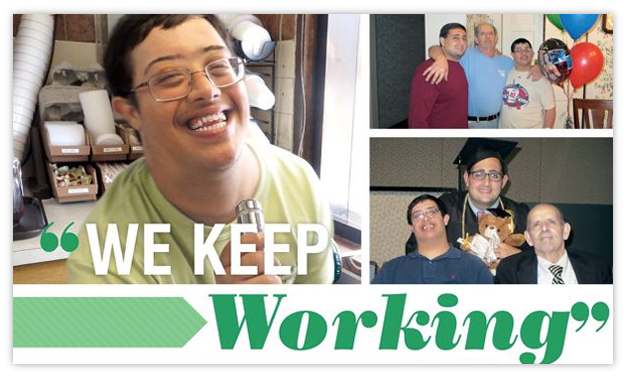
Twenty-one-year-old Andrew Ankar, who has Down syndrome, cheerfully shoulders the responsibility of Ankar’s Hoagies, a family restaurant chain serving Middle Eastern and American food started by his late father in 1979. He and his mother, Judy, arrive by 8:15 every morning and don’t leave until 9:30 at night. Andrew works wherever he’s needed, whether it’s manning the grill or greeting customers.
“Burgers are my favorite thing to make,” he said. “I ask how the customers are doing. When it gets really busy, we keep working. All the hard work is worth it.”
ALL IN THE FAMILY
As soon as George Ankar, an immigrant from the Palestinian West Bank, opened the first Ankar’s Hoagies 37 years ago, it became a popular local staple and grew entirely by word of mouth — the family has never spent a cent on advertising — to include two locations.
When George lost his battle with cancer in 2015, he left the business to his two sons. Older brother Alex, a medical school student, has little time to devote to the restaurant and therefore is happy to leave Andrew in charge.
“Dad always said, ‘Take care of your mom and your brother,’” Andrew explained. “I do. I work hard, like Dad. I want to make him proud.”
IN THE PUBLIC EYE
Earlier this year, a customer complained to the local health department about Andrew’s being allowed to prepare food. Judy was furious. Alex, in a Facebook post defending his brother that was shared 7,000 times, said the complaint “made his blood boil.”
Andrew, however, took it in stride.
“He said, ‘Mom, stop,’” Judy said. “He was telling me to get over it, that it w as no big deal. I thought about not letting the customer back in, but that’s not whatAndrew would do.”
The incident was a reminder that progress never comes easy, but the Ankars won’t stop working for it. “Life has been good,” Judy said. “It’s been hard, but it’s been really good.”
PLAYING FAIR
When Andrew was born, Judy Ankar’s grandmother in Jerusalem told her, “We never see things like this. Kids aren’t born that way.” Hearing that, Judy knew she was going to have to fight to overcome entrenched stereotypes and make sure
Andrew had a fair shot in life.
“I never treated Alex and Andrew differently,” Judy said. “I wanted them to know they were equals. Now, they’re not that different. Andrew was a bit slower in learning. Sometimes, though, he could run circles around his brother. I used to joke that Alex is book smart, but Andrew is common sense smart.”
Like this article? Join Global Down Syndrome Foundation’s Membership program today to receive 4 issues of the quarterly award-winning publication, plus access to 4 seasonal educational Webinar Series, and eligibility to apply for Global’s Employment and Educational Grants.
Register today at downsyndromeworld.org!
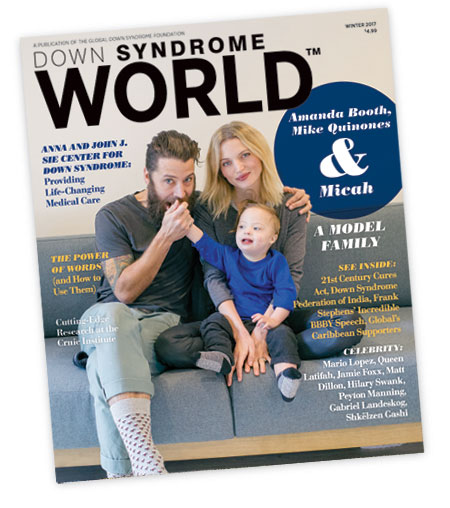
A Model Family with Fashion Model Amanda Booth
October 13th, 2017 by Global Down Syndrome Foundation
Fashion Model Amanda Booth And Her Husband, Photographer And Creative Director Mike Quinones, Are No Strangers To The Camera — Which Is Why They Decided The Best Way To Advocate For Their Son, Micah, Was To Stay In Front Of One.
 This article was published in the award-winning Down Syndrome World™ magazine. Become a member to read all the articles and get future issues delivered to your door!
TWO YEARS AGO, Amanda and Mike were globe-trotting creative types — she, modeling in Lancôme commercials with Julia Roberts, photo essays in GQ U.K., and ad campaigns for Target and True Religion, among dozens of other brands, and he, a creative director and brand strategist — when they decided to start a family.
“I have six siblings, five of whom are younger than me,” Amanda said. “I couldn’t wait to have my own child, and I knew I was going to be a good mother.”
“When Amanda told me she was pregnant, I instantly felt a change,” Mike added. “There is nothing else that gives that sense of responsibility and honor. Bringing life into this world is an amazing commitment.”
AN EMOTIONAL PATH
Amanda’s pregnancy began, as most do, with excitement. She and Mike created an Instagram account so they could share their nine months of waiting with friends, family, and fans, and Amanda even scored a modeling contract with a maternity line called Wildfox.
However, things started to “go wrong,” as she recalled, toward the end. The couple had made plans for a home birth, but ultrasounds in the last few weeks revealed that Micah had a weak heartbeat and wasn’t growing as he should be, both of which concerned Amanda’s midwife and doctors. Worried her son might be suffering from a serious health issue, she agreed to be induced and give birth in a hospital. It was not a decision she or Mike relished.
After Micah’s birth, as the new family was bonding in the recovery room, the on-call pediatrician stopped by and asked if they had done genetic testing. The doctor told Amanda and Mike she suspected- Micah had Down syndrome.

“We’d just had this intense birth, not how I wanted it to be, and we had this tiny baby who was not even five pounds,” Amanda said. “She just comes in and blurts this out.”
The doctor had seen Micah’s slanted eyes, which Amanda attributed to Mike’s part-Mexican heritage, and folded ears, which Amanda suspected might have come from Micah being growth-restricted in the womb. But the doctor wanted to confirm the diagnosis. Still recovering from heightened emotions of the birth and feeling overprotective of her new infant, Amanda didn’t want to subject Micah to having four vials of blood drawn, a requirement of genetic screening.
“We did an echocardiogram knowing 50 percent of babies with Down syndrome have a heart defect,” Amanda said. “Micah didn’t have one, so we felt relieved that the doctor was probably wrong.
At that point, we were medically cleared to go home, so we did.”
Nevertheless, during Micah’s three-month checkup, his pediatrician noticed he had low muscle tone and reiterated that first doctor’s suspicions that Micah had Down syndrome. This time, Amanda and Mike agreed to the screening. The results were positive.
“I think, on some level, we always knew Micah had Down syndrome,” Amanda said. “We should have found out for sure much sooner, but when you don’t know about something, it’s scary. I think that’s why we waited. Knowing what we know now about Down syndrome and life with a child who has it, we realize there wasn’t anything to be afraid of.”
FINDING A COMMUNITY
During those initial months after Micah’s diagnosis was confirmed, Amanda began gravitating to Instagram to learn from other families whose children have Down syndrome.
“I figured, what better way to learn about something than from another person?” she said. “I instantly fell in love with the babies I was seeing, their encouraging parents, and the love they were sharing. I needed to be a part of that.”
She and Mike began sharing their own family pics depicting everyday life at home, such as enjoying the pool or brushing teeth together, and before long, Micah’s fame was growing as fast as his mother’s. His Instagram feed, @lifewithmicah, eventually gained more than 52,000 followers.
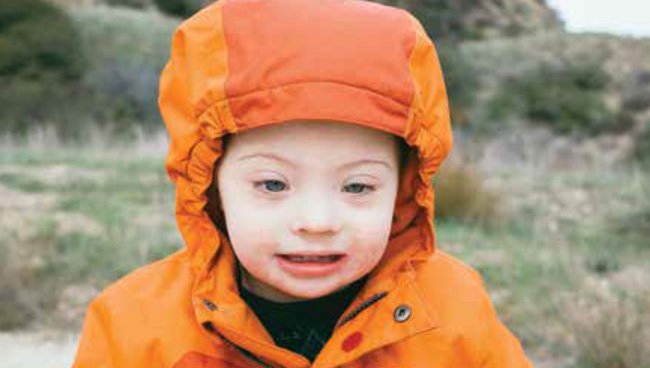
“Mike and I are doing what everyone else is doing: taking photos of our child, sharing them with the world, and hoping someone will write back and say, ‘Your son is adorable,’ and spark a conversation,” Amanda said. “Sharing our story is a way to let other parents and families in the Down syndrome community know we’re all in this together.”
AT HOME WITH MICAH
Now 2 years old, Micah is a warm, rambunctious, food-loving, outdoorsy toddler. Amanda, Mike and Micah’s pediatrician have found a daily regimen of medications to help combat hypothyroidism and vitamins to bolster his immune system. Physical and speech therapy sessions help him build fine motor and communication skills.
“A perfect day for Micah includes running around and watching Elmo’s World,” Amanda said. “He goes to preschool in the morning, has lunch at home, and then attends a one hour therapy session. He doesn’t nap, so we keep him busy during the rest of the day. He loves being in the water, whether it’s in the pool, ocean, or bathtub. He’ll even spill a drink intentionally just so he can splash it everywhere.”
Balancing their careers and parenthood can be difficult for Amanda and Mike, who now works as global creative director for the tech accessory company Incase. But that just makes the everyday family moments they spend with Micah even more valuable.
“We really enjoy spending time outside as a family, whether we’re mountain biking or going on a hike,” Mike said. “We tow him behind our mountain bikes in his carrier — he wasn’t too sure about riding in his carrier deep into the Angeles mountains at first, but he’s really warmed up to it now.”
The busy parents are grateful for the presence of Amanda’s mother, MaryAnn Wylam, who quit her job and moved across the country to help her daughter and son-in-law care for Micah.
“My mother keeps the wheels of this family turning,” Amanda said. “I’m able to pursue my dreams and my career because I know he’s being well cared for. None of this story would seem as magical without her help.”
THROUGH A MOTHER’S LENS
The lines between the most important threads of Amanda’s life — motherhood, advocacy, and modeling — often blur. Amanda and Micah have appeared together on the cover of Parents magazine and in photos for clothing company Dôen. Mike joined them in photos for Sakura Bloom, which makes baby slings.
The entire family has been featured in People, Harper’s Bazaar, and Mother magazines and numerous online blogs. Amanda and Mike see any opportunity for Micah to take the spotlight — Micah has gone on a few modeling auditions of his own, and according to Amanda, loves being photographed — as a way to break down barriers and stereotypes.
“When Micah is included in a photo shoot, that’s advocacy,” she said. “It means companies aren’t afraid to feature someone with Down syndrome.”
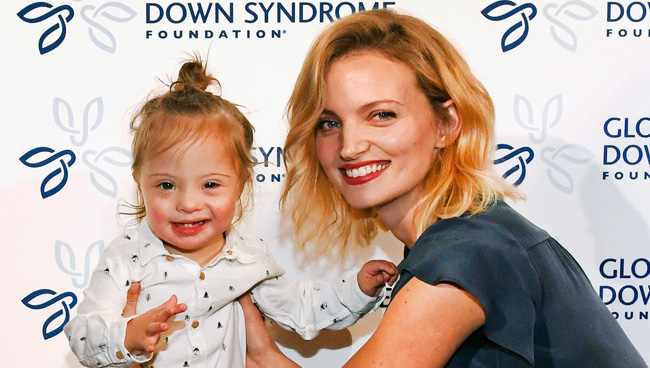
“Our path as parents forked after Micah was diagnosed,” Mike said. “We had to choose between living in fear of Micah’s future or helping him define it. We chose the latter by agreeing to not let standards and expectations prevent us from presenting opportunities and choices to him.”
Modeling also affords Amanda the opportunity to speak out for the Down syndrome community as a whole.
“It’s a gift that I’m able to be a voice for this community because of my child,” she said. “I’m lucky that I’m heard and people are interested in what I have to say, and it’s my duty to make sure I do my best to keep that going.”
You can follow the adventures of Micah (@lifewithmicah), Amanda (@amanda_booth), and Mike (@mikerunt) on Instagram.
SHARING HER EXPERIENCE
Model Amanda Booth and her husband, Mike Quinones, opted to forgo prenatal testing when they were pregnant with Micah. Since Amanda was younger than age 35, the age at which the chances a mother might have a child with Down syndrome begin to significantly increase, they knew the results of a prenatal test wouldn’t have made them want to terminate the pregnancy and didn’t expect the test to reveal anything.
“I realize now that a lot of people like to just have information,” Amanda said. “For those people who decide to test, I believe strongly that the correct and current information needs to be accessible.”
Amanda has become an ambassador for the Down Syndrome Prenatal Testing Pamphlet, a joint publication of the Global Down Syndrome Foundation and National Down Syndrome Congress. Available as a free download at downsyndrometest.org, the publication provides accurate, concise information that helps parents who are considering or have had prenatal testing make informed decisions for their children.
“I hope to get the pamphlet into as many hands as possible,” Amanda said. “There’s no reason women shouldn’t receive the most up-to-date information about Down syndrome.”
FASHION (SHOW) FORWARD
Nowadays, Amanda Booth is more selective with the modeling jobs she chooses because she wants any time away from Micah to feel worthwhile.
But this past November, there was one gig she had no qualms about taking: walking the runway alongside two models in the Global Down Syndrome Foundation’s 2016 Be Beautiful Be Yourself Fashion Show.
“It was so much fun,” Amanda said. “I’ve modeled for a long time, and I try not to take it for granted because it’s something others dream of doing. The excitement the children got from walking the runway reminded me of that. I hope my son can be in the show one day.”
Amanda and her husband, Mike Quinones, used their connections in the fashion industry to obtain some of the clothes the models showed off during the event, and they plan to do so again next year.
“What’s been the most rewarding about working with Global has been seeing the walls they’ve steadily been breaking down,” Mike said. “I’d love to see this event in new cities throughout the world so they can continue breaking down those walls.”
Like this article? Join Global Down Syndrome Foundation’s Membership program today to receive 4 issues of the quarterly award-winning publication, plus access to 4 seasonal educational Webinar Series, and eligibility to apply for Global’s Employment and Educational Grants.
Register today at downsyndromeworld.org!
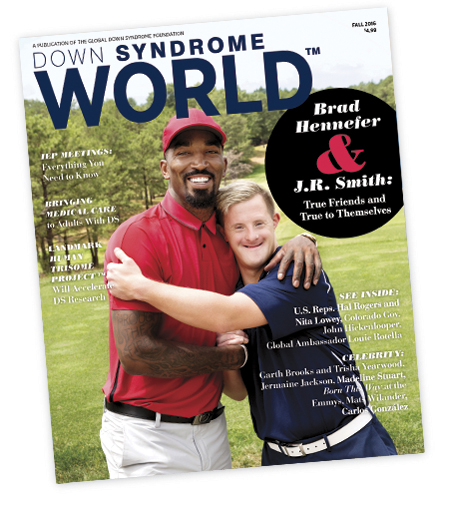
A GLOBAL Bromance With NBA Champion J.R. Smith
October 13th, 2017 by Global Down Syndrome Foundation
From Issue Fall 2016
NBA Champion J.R. Smith And Accomplished Athlete And Self-Advocate Brad Hennefer Are Proof Positive That No One Should Judge A Book By Its Cover.
One of Brad Hennefer’s favorite sayings is a tagline often repeated in the Down syndrome community: “We’re more alike than different.” It certainly applies to 6-foot-6-inch J.R. Smith and 5-foot-10-inch Brad Hennefer. They’re athletes, change agents — and two people whose first impressions tell a fraction of their stories.
J.R., 31, a guar d for the NBA championship-winning Cleveland Cavaliers, has a tow ering physique, sports tattoos, and is often judged by the national media due to his out ward appearance. But, when not in the public eye, he devotes himself to family and friends. Brad, 27, who has Down syndrome, would appear to be a quiet and unassuming sports fan you’d expect to see in the stands, not setting records on the fairway during the Special Olympics USA Games or breaking down barriers as the first student with Down syndrome in the United States to letter in two high-school varsity sports.
This article was published in the award-winning Down Syndrome World™ magazine. Become a member to read all the articles and get future issues delivered to your door!
Yet when these two good friends are together, as they were for a friendly game of golf on a r ecent summer day, they show their true colors — friends who love sports and, even more, love to see each other succeed. J.R. and Brad, joked, laughed, and talked sports on the green, where their friendship first took root.
SPECIAL BOND
Nine years ago, during a chance encounter at a casino in Atlantic City, New Jersey, their fathers, Earl Smith, Jr., and Bob Hennefer, started talking sports and families. The conversation ended with Earl inviting Bob to bring Brad, who was already a star on his high school’s varsity golf and basketball teams, to the annual J .R. Smith Youth Foundation golf tournament to benefit underprivileged and differently-abled children.
Brad’s golf prowess was eye-opening to the Smiths.
“Brad was surreal,” Earl said. “We didn’t see his disability. We just looked at him as a person.”
From the moment J.R. and Brad met, they had a connection and, over the years, became really close friends.
“People tend to look at those with Down syndr ome differently,” J.R. said. “But ever since I met Br ad, I’ve just seen him as Br ad. He’s a fan of mine and loves me for what I do, but he loves me as a person, too .”
The two see each other often. Br ad attends as many of J.R.’s games as he can and had no difficulties shifting his team loy alties from the New York Knicks to the Cleveland Cavaliers when J.R. was traded during the 2014–2015 season. They talk on the phone regularly, play video games at J.R.’s house, and, of course, they golf.
“Brad loves to have fun,” J.R. said. “He happens to be a hell of an athlete, too. If he hits a bad shot, he just hits another and keeps playing. He understands everything is not going to fall in his lap . He works for it.”
“J.R. is a great man, and we’re great friends,” Brad said. “He’s a goodathlete and a good person.”
DRIVEN TO COMPETE
Throughout their friendship, Brad has gotten to know the J.R. Smith the American public doesn’t always get to see — a man who may appear to have a rough exterior but remains committed to his friends and family and to making sure everyone around him has a fair shot at success.
“I started playing basketball at age 3, when my dad put a ball in my crib,” J.R. said. “I always set my goals toward sports. From the time I understood what the NBA was and watched Michael Jordan and the other players, I wanted to be like those guys. I always believed I’d have an opportunity if I worked hard enough.”
A highly rated prep prospect from suburban New Jersey, he entered the NBA out of high school in 2004 . His professional journey has included playing for the New Orleans Hornets, Denver Nuggets, New York Knicks, and most recently, Cleveland Cavaliers. Nevertheless, his career has had its share of bumps.
Early in his NBA career, J.R. sometimes clashed with coaches, endured suspensions, and fought perceptions of underachievement and a bad-boy persona. He knows he’s not the person some may think he is.
“I’ve been through a lot, but I don’t let that deter me f rom being who I am,” he said. “People can say what they want to say about me until they meet me and talk to me . I’m just a family guy who likes to hang out with my wife, kids, parents, and siblings, and I work hard. I just like to express myself in different ways, like getting tattoos. I’m just me.”
Earlier this year, J.R. reached the pinnacle of his profession when the Cleveland Cavaliers made history by overcoming a three-gamesto-one deficit to defeat the Golden State Warriors for the NBA championship.
“It was the highlight of my life, other than having kids and getting married,” he said. “To actually achieve something that w as always my goal has been unbelievable. It’s something I truly cherish.”
Even that victory was overshadowed somewhat by his larger-than life personality, when photos of him celebrating shirtless at nightclubs and on an airplane circulated through cyberspace and attracted the attention of bloggers, paparazzi, and even President Obama.
“People can look at you a certain way, but with hard work and dedication, you can do anything you want to do,” J.R. said. “Don’t let anyone say you can’t do something — that’s what Brad has taught me. Both of us have the platform to share that message with others. We’re just people who want to help other people.”
SHAPED BY SPORTS
J.R.’s close-knit extended family — his parents, siblings, grandparents, uncles, and cousins — provided the supportive environment he needed to succeed, and likewise, Brad can trace his passion for athletics back to his family.
“It’s about my brother, Bob,” Brad said.
“Bob is a PG A golfer and five y ears older than Brad,” Nancy Hennefer, Brad’s mother, said. “When Brad was very young, he was always watching, practicing with, and learning from his brother.”
Brad tried several different sports as a child, but golf and basketball were his favorites. He participated in Special Olympics, which caught the attention of the basketball coach at his high school, Cherry Hill East in Cherry Hill, New Jersey.
“The coach had heard that Brad played basketball in Special Olympics and was intrigued to see what he could do,” Brad’s father, Bob, said. “He gave Brad an opportunity, and his teammates, their parents, and the entire school embraced him. It was amazing to watch.”
In addition to lettering in both golf and basketball, Brad played in more than 30 basketball games during his senior year. His athletic abilities attracted media attention from the likes of Good Morning America, Sports Illustrated, ESPN, and CNN.
“I did great in high school, but it w as all about my teammates,” Brad said. “I was happy to have the opportunity to play both sports. I’m in my high school’s hall of fame.”
Brad’s athletic success did not come without plenty of hard work and sacrifice.
“Brad’s ability to play sports in high school took y ears of preparation, not only in terms of his learning to play the games, but also learning to act appropriately in social settings, pick up on social cues, and interact with others,” Nancy said.
“There were definitely challenges. We chose to be at every game and practice for four years so if Brad got tired and needed our assistance, we could facilitate that without taking away from what the coaches and other players were doing.”
Brad’s playing days didn’t end with high school graduation. When he’s not working at a local Wegmans supermarket — he just received his 10-year anniversary pin — he enjoys competing in the Special Olympics and won the gold medal in golf at the 2014 USA Games with his older brother as his coach.
He also promotes golf to other individuals with Down syndr ome through the Brad Hennefer Golf for Life Foundation, has advocated at the state and national levels on behalf of people who ar e differently abled, and has delivered numerous keynote addresses, including at the National Down Syndrome
Congress Annual Convention and the Children’s Hospital of Philadelphia. In 2014, he earned the Global Down Syndrome Foundation’s 2014 Quincy Jones Exceptional Advocacy Award.
“That was the best award I ever received,” Brad said. “People with Down syndrome can do amazing things if they have the opportunity to try.”
TRUE TO THEMSELVES
“When you peel back the layers and look at Brad and J.R., you see they’re both full of heart, and that’s what it’s all about,” Nancy said. “There’s a deep love between them. They’re two people who truly relate to one another.”
J.R and Brad are both real life proof that no one should be prejudged based on their outward appearance.
THE POWER OF OPPORTUNITY
Bob and Nancy Hennefer have always taught their son, Brad, to recognize and seize opportunities. Nothing has had a more profound effect on Brad’s life than the opportunity to attend school in an inclusive environment. It was a hard-won victory.
“Twenty years ago, it wasn’t common for children with Down syndrome to enter a typical kindergarten class in their neighborhood school,” Nancy said. “Our biggest challenge
was advocating to get Brad into the Cherry Hill [New Jersey] Public Schools. As the first family in the district to attempt to send a child with Down syndrome through typical classes (rather than segregated), we were in uncharted territory, and it was difficult to break down those barriers.
It was worth it, though. By the time Brad got to high school, the school embraced him. Getting him into a typical kindergarten class changed the entire trajectory of his life.”
Brad blazed a trail for other students with Down syndrome to follow. In 2008, he became the first person with Down syndrome to graduate from Cherry Hill High School East.
Like this article? Join Global Down Syndrome Foundation’s Membership program today to receive 4 issues of the quarterly award-winning publication, plus access to 4 seasonal educational Webinar Series, and eligibility to apply for GLOBAL’s Employment and Educational Grants.
Register today at downsyndromeworld.org!
Game On – With Super Bowl Champion Ed McCaffrey
September 1st, 2017 by Global Down Syndrome Foundation
Taking the field is a momentous, confidence-building event for any young athlete. Super bowl champion and former Denver Broncos wide receiver Ed McCaffrey is dedicated to ensuring children and young adults with down syndrome don’t miss out.
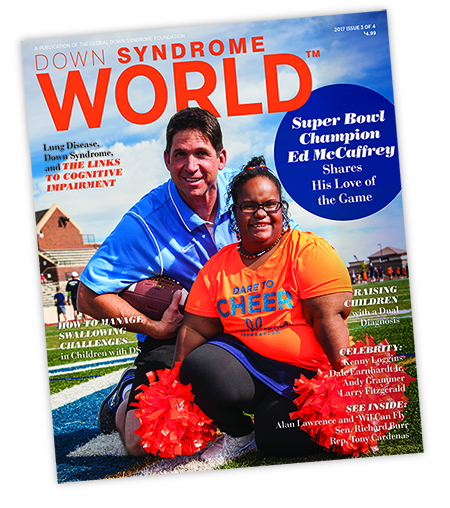 This article was published in the award-winning Down Syndrome World™ magazine. Become a member to read all the articles and get future issues delivered to your door!
When Global Down Syndrome Foundation President and CEO Michelle Sie Whitten first met McCaffrey, there must have been an electric force field around them. The two high-energy, get-thingsdone people started discussing their passion for equality and fighting discrimination. The conversation turned to making Colorado the best place for people with Down syndrome to live and resulted in Global establishing the Dare to Play Football Camp with Ed McCaffrey as its featured coach.
“I’ve played football my whole life, and I’ve been coaching camps for 10 years,” McCaffrey said. “When I found out from Michelle that there aren’t many opportunities for kids with Down syndrome to play team sports, specifically football, we got together and decided, ‘Let’s make a football camp for them.’ They’re having fun, they’re making friends — they’re playing football for the same reasons we all started playing football.”
LEARNING FROM A LEGEND
Global’s Dare to Play Football Camp lets participants learn from the best, including McCaffrey, who’s no ordinary instructor. The 13-season NFL all-star has played with the New York Giants, San Francisco 49ers, and Denver Broncos. A three-time Super Bowl champion, McCaffrey is one of only 31 NFL pla yers to win a Super Bowl with two different teams. He’s been a cornerstone of Global’s Dare to Play Football Camp every year since it started in 2010.
“I look forward to it every year,” McCaffrey said.
“What a blessing. Global organizes such a great opportunity for so many individuals with Down syndrome to play the great game of football, while also spreading awareness in the community about all the wonderful things individuals with Down syndrome can do. We’re working to dispel a lot of negative stereotypes.”
Each year, the camp attracts other professional volunteer coaches. In addition to McCaffrey, the star studded 2017 roster included Brandon Stokley, Tyler Polumbus, Shaquil Barrett, and Todd Davis, who have eight Super Bowl rings between them. Past pros include Ben Garland, Danny Trevathan, Chris Kuper, Britton Colquitt, Orlando Franklin, Malik Jackson, Ben Hamilton, Jack Del Rio, Brian Dawkins, and Joel Dreessen, who had nothing but praise for McCaffrey’s coaching and their experience at the event. “I’m blown away by it,” Dreessen told The Denver Post. “Ed McCaffrey was one of my heroes growing up, too. I always wanted to be just like him. So, to see him have his hand in something that gives back like this, it gives me more reason to really like it.” Global’s Dare to Play Football Camp is held at Valor Christian High School in Highlands Ranch, Colorado, and each participant is paired with a high school football player, or “Pal,” for camp practices and the big game day. The Denver Broncos Cheerleaders are equally important partners for Global’s Dare to Cheer Program, which runs simultaneously with the football camp.
The big game day has a dramatic opening, with the Denver Broncos Thunderstorm skydivers landing on the field, and it goes on to feature two scrimmages, lots of cheerleading, cheering from hundreds of fans, and the Denver Broncos mascot, Miles.
“It’s the smiles on the campers’ faces when they catch a ball or score a touchdown,” McCaffrey said, when asked about his favorite moments from the camps. “When they pick their teammate up who has fallen down, when they show compassion and joy and enthusiasm, it’s just that look that you see from them.”
“Ed makes fun of me because I don’t know a lot about football or who the celebrity coaches are,” Whitten said. “But it is obvious even to me what an impact this has on our self-advocates . The one thing that took me aback w as several of the fathers in par ticular getting teary eyed because they thought their sons with Down syndrome would never play football. I’m so glad w e turned that stereotype on its head!”
LET’S HEAR IT FOR THE TEAM!
Studies have shown that physical activity builds self-esteem and boosts feelings of well-being, and so do connections.
“My favorite part is the practice time with my buddies and Pal and the game day,” said self-advocate Ben.
“I truly enjoyed helping coach the campers and getting to know them,” said Tanner, a Valor Christian Pal. “It was an amazing experience — one I will never forget. I can’t wait for next year!”
Twenty-one-year-old Maya, who has attended every Global Dare to Cheer Camp since 2010, is another shining example of the confidence physical activity offers. “My favorite part is the football team!” she shared. “What I like most about Dare to Cheer is my friends. My favorite cheer is ‘Blue and White, Fight Team Fight’.”
When asked who her favorite Bronco is, there was no hesitation. “Ed McCaffrey!”
ALL IN THE FAMILY
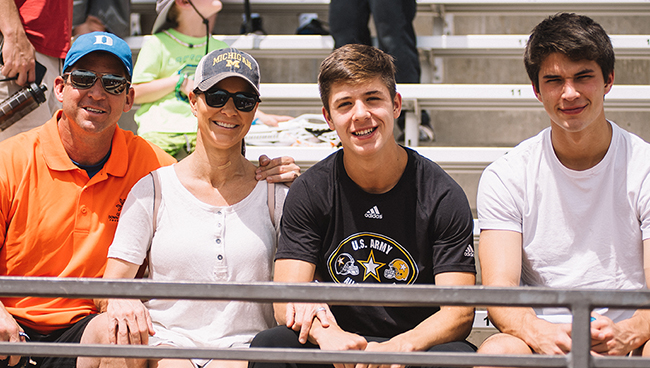
For Ed McCaffrey, sports and giving back is a family affair. His wife, Lisa, was a soccer star at Stanford University, and their four sons are following in dad’s footsteps. Max is a wide receiver for the Green Bay Packers. This fall, Christian began his first season with the Carolina Panthers, and Dylan began playing in the Big 10 as a University of Michigan Wolverine. Luke, the youngest, still plays quarterback, receiver, and defensive back for Valor Christian but has received scholarship offers from eight college football heavyweights, including Michigan, where his brother plays, and The Ohio State University.
The four siblings have been Pals for Global’s football camps every year, and last year, Christian flew back from Stanford to help coach. Christian shared with ESPN and Down Syndrome World™ magazine how the camp has enriched his life and helped him create a lifelong friendship with camper Dusty, who happens to have Down syndrome (these stories are available at globaldownsyndrome.org/daretoplaymccaffrey). The key with the McCaffreys is that they don’t treat people with Down syndrome any differently, and they believe deeply in Ed McCaffrey’s wisdom.
“Kids with Down syndrome want to play sports for the same reasons everyone else does,” he said. “They want to have fun, they want to make friends, and they want to be part of a team.
A VEHICLE FOR OUTREACH
Global Down Syndrome Foundation’s Health and Wellness Programs include the Dare to Play Football Camps, the Dare to Cheer Camps, the Be Beautiful Be Yourself Dance Class, the Dare to Play Soccer Camp, and the Dare to Play Tennis Camp. Nearly 50 percent of the participants are on full or partial scholarships. The programs provide a great sports experience and allow Global an opportunity to provide information about life-changing medical care and research and connect families with resources. Nearly 100 percent of children and young adults involved in Global’s Health and Wellness Programs have received medical services at Global’s affiliate, the Anna and John J. Sie Center for Down Syndrome at Children’s Hospital Colorado.
Like this article? Join Global Down Syndrome Foundation’s Membership program today to receive 4 issues of the quarterly award-winning publication, plus access to 4 seasonal educational Webinar Series, and eligibility to apply for Global’s Employment and Educational Grants.
Register today at downsyndromeworld.org!
Exploring the Roots of Lung Disease in Down Syndrome
July 2nd, 2017 by Global Down Syndrome Foundation
Could factors that prevent the formation of new blood vessels in the lungs account for the high prevalence of pulmonary disease in infants with down syndrome? The answer could have far-reaching implications that extend beyond lung health.
This article was published in the award-winning Down Syndrome World™ magazine. Become a member to read all the articles and get future issues delivered to your door!
Conditions such as underdeveloped lungs, known as pulmonary hypoplasia, and high blood pressure in the arteries of the lungs, known as pulmonary arterial hypertension (PAH), occur in approximately 20 percent of children born with Down syndrome, according to data collected by Csaba Galambos, M.D., Ph.D., a pediatric pathologist in the Children’s Hospital Colorado Department of Pathology and Laboratory Medicine and Associate Professor of Pathology at the University of Colorado School of Medicine.
A group of researchers led by Dr. Galambos is exploring, for the first time, why individuals with Down syndrome are more susceptible to these conditions. His lab has hypothesized that central to the development of pulmonar y hypoplasia and PAH is the suppression of the process that prompts the growth of new blood vessels, a chain of events called angiogenesis. Their discoveries could lead not only to therapies for pulmonary disease in individuals with Down syndrome, but also to treatments that may improve lung development and function in all patients.
A DOUBLE-EDGED SWORD
Dr. Galambos’ fascination with angiogenesis began y ears ago, he read a paper by late angiogenesis r esearcher Judah Folkman, M.D., of Harvard University. Dr. Folkman’s research showed that solid tumors depend on newly formed blood vessels for their growth. Overexpression of chemical signals that block the process — known as angiogenesis inhibitors — may occur in people with Down syndrome. According to Dr. Galambos, that protective property may come with a downside in the form of pulmonary underdevelopment and dysfunction.
“Chromosome 21 has many genes that act as anti-vascular or antiangiogenic factors,” he said. “In people with Down syndrome, there is an excess of anti-angiogenic factors that could significantly block normal vessel development in all organs, including the lungs. Our goal is to explore a previously unrecognized role of the chromosome 21-specific anti-angiogenic factors that may lead to lung immaturity and increase the risk for severe PAH in infants and children with Down syndrome.”
MODELING ANGIOGENESIS
Using banked lung tissue samples, Dr. Galambos and colleagues created a number of different models to re-create angiogenesis and observe the effects of its impairment.
“We measured the messenger RNA expression levels of 84 angiogenesisrelated genes in Down syndrome fetal lung samples and typical controls, and we also looked at microscopic signs of impaired lung vascular growth,” Dr. Galambos said. “Not only did we discover that three potent chromosome 21-related anti-angiogenic factors are overexpressed significantly in the lung in utero, we also identified two other potent anti-angiogenic factors with significant overexpression that were unrelated to chromosome 21. Significantly, our analysis showed features of impaired vascular growth in these lungs.”
The next step for Dr. Galambos and his group was to develop cell-culture and animal models in which they could further test the effects of anti-angiogenesis.
“There are Down syndrome mouse models that carry three copies of portions of chromosome 21,” Dr. Galambos said. “We are excited that we are able to show, for the first time, that one of these models develops features characteristic of impaired lung development seen in the lungs of humans with Down syndrome.”
Dr. Galambos plans to use the mouse model to fur ther investigate the unique ways that Down syndrome affects angiogenesis, as well as the anti-angiogenic pathways that may play a role in abnormal pulmonary development and function. A 2017 C rnic Institute Grand Challenge Grant underwritten by the Global Down Syndrome Foundation will support his work. Dr. Galambos believes this research could produce findings — and point the w ay to novel therapies — that are applicable not only to patients with Down syndrome, but also to individuals in the gener al population with pulmonary hypoplasia and PAH.
THE NEXT FRONTIER?
Even as he explores the role of angiogenic impairment in lung disease, Dr. Galambos is pondering the possibility that it could also affect cognition in individuals with Down syndrome.
“It is well known that proper angiogenic signals are required for optimal nerve growth, supporting intellectual development,” he said.
“In Down syndrome and Alzheimer’s disease, nerve development and function are compromised. It has been shown that the thre edimensional vascular network of the brain is impaired in Alzheimer’s disease. It’s a realistic possibility that impaired angiogenesis not only causes underdeveloped lungs and PAH, but may also affect the development and function of neural networks of the brain in people with Down syndrome.”
Dr. Galambos believes a future in which clinicians use angiogenic therapies to treat lung disease and improve cognitive function in people with Down syndrome is possible — and he is doing his part to accelerate its arrival.
NEW INSIGHT INTO NEONATAL HYPOXEMIA
Infants born with lung disorders who do not respond to advanced respiratory therapies usually have low blood oxygen content, or hypoxemia, according to Csaba Galambos, M.D., Ph.D., a pediatric pathologist in the Children’s Hospital Colorado Department of Pathology and Laboratory Medicine and Associate Professor of Pathology at the University of Colorado School of Medicine.
Dr. Galambos and his colleagues recently identified a group of blood vessels in infants with hypoxemia, including those with Down syndrome, that permit nonoxygenated blood to enter the lungs, therefore contributing to potentially life threatening hypoxemia. Now, they want to learn how these vessels function.
“Our next step is to design animal models that can help identify the regulating mechanisms that open and close these vessels in lung disease, including pulmonary arterial hypertension (PAH),” Dr. Galambos said. “These data will allow us to test interventions that aim to close the vessels, and that will lead to better oxygenation, less severe lung disease, and improved survival of infants with lung disorders, including PAH.”
Csaba Galambos, M.D., Ph.D., a pediatric pathologist in the Children’s Hospital Colorado Department of Pathology and Laboratory Medicine and Associate Professor of Pathology at the University of Colorado School of Medicine, has received many notable grants to further his research into the links between lung disease and Down syndrome, including:
2014–2016 Jérôme Lejeune Foundation Grant, $39,000 “Role of Impaired Angiogenesis in the Pathogenesis of Severe Cardiopulmonary Disease in Children with Down Syndrome”
Role: Principal Investigator
2017 Crnic Grand Challenge Grant, $50,000 “Overexpression of Anti-angiogenic Genes Impairs Lung Development in Dp16 Mice”
Like this article? Join Global Down Syndrome Foundation’s Membership program today to receive 4 issues of the quarterly award-winning publication, plus access to 4 seasonal educational Webinar Series, and eligibility to apply for Global’s Employment and Educational Grants.
Register today at downsyndromeworld.org!
Decoding Dysphagia: Understanding Swallowing Challenges
June 22nd, 2017 by Global Down Syndrome Foundation
From Down Syndrome World Issue 3 of 4
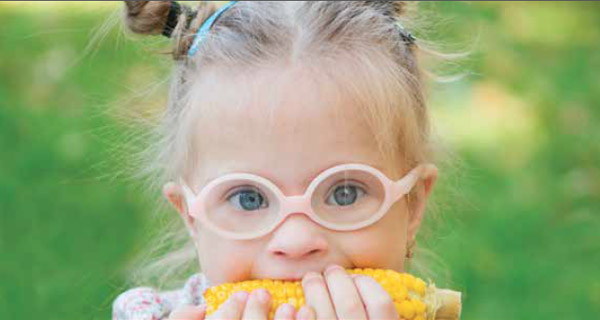
Research shows that more than 50 percent of children with down syndrome who are referred for a swallow study are identified with swallowing problems, also known as dysphagia.
Since dysphagia can impact growth, nutrition, lung health, and participation in regular mealtime experiences, it is important for parents of children with down syndrome to know the potential signs of dysphagia and where to get help if a problem is suspected.
WHAT IS DYSPHAGIA?
Dysphagia can include difficulties in any of the three phases of swallowing:
- The oral phase, when the food/liquid is chewed and/or manipulated in the mouth to make it ready to swallow. Oral phase difficulties can include problems with extracting liquid from a breast, bottle, or cup, chewing, or controlling food/liquid in the mouth.
- The pharyngeal phase, when the food/liquid passes through the throat. Pharyngeal phase difficulties may include delay in starting the swallowing reflex, poor timing of closing off the airway before or during the swallow, and having residual material left in the throat after the swallow. These problems can lead to aspiration or entry of food/liquid into the airway.
- The esophageal phase, when the food/liquid passes from the throat through the esophagus to the stomach. Esophageal difficulties may include food/liquid moving slowly through the esophagus or getting stuck.
This article was published in the award-winning Down Syndrome World™ magazine. Become a member to read all the articles and get future issues delivered to your door!
Signs of dysphagia may include coughing, choking, having red/watering eyes, or sounding congested during or after feeding. Swallowing problems can also be silent, with no obvious signs or symptoms. In children who have frequent upper respiratory illnesses, pneumonia, or persistent oxygen requirement, doctors may suggest having swallowing evaluated, even if there are no clear signs of a problem.
HOW IS DYSPHAGIA DIAGNOSED?
If the child appears to be having problems only in the oral phase of the swallow, a feeding evaluation, during which a child’s feeding skills are observed by a specialist or team of specialists, may be recommended.
If compromised airway protection is suspected, the child’s doctor may order an imaging study. The two most common imaging studies used to diagnose swallowing problems are the videofluoroscopic swallow study (VFSS) and the fiberoptic endoscopic evaluation of swallowing (FEES). The VFSS is done in the radiology department and looks like a “moving X-ray” of the head and neck.
The FEES is typically conducted in the office of an ear, nose, and throat doctor, also known as an otolaryngologist. During the FEES, a small, flexible tube called an endoscope is inserted into the child’s nasal passages. The endoscope is attached to a bright light and a camera, which allow the team to view the inside of the nose and throat.
During the VFSS and the FEES, the swallow team, including a speech-language and/or occupational therapist and a physician (either a radiologist for VFSS or an otolar yngologist for FEES) observes aspects of the child’s swallowing function, such as his or her ability to clear the throat between swallows and protect the airway during swallowing. If a problem is detected, the swallow team may try different strategies to improve swallowing, such as offering a slower-flowing bottle nipple or changing the child’s position.
If difficulties of the esophageal phase of swallowing are suspected, an imaging study completed in radiology called an upper GI or esophagram may be ordered.
HOW CAN I HELP MY CHILD WITH A SWALLOWING PROBLEM?
The most important way that parents and medical providers can help children with dysphagia is to take steps to protect their children’s lungs, as ongoing aspiration can negatively impact pulmonary health. An evaluation with a pulmonologist for further assessment of lung health may be beneficial. Children with severe or persistent dysphagia may be referred to other medical specialists, such as an otolaryngologist or neurologist, for further evaluation as to the cause of the swallowing problem.
Maintaining adequate nutrition and hydration is another critical component of caring for children with swallowing problems. A dietician and/or gastroenterologist may be involved in the child’s care. After the swallow study, the evaluating team will provide recommendations about types of food and liquid that the child is able to swallow most safely. Modifying the child’s diet by minimizing exposure to foods that are more likely to be aspirated and offering foods that can be swallowed safely is an important step that can be taken to give the child the consistent experience of swallowing food and liquid with minimal aspiration.
For children who have severe dysphagia and are unable to swallow any food or liquid without aspirating, providing ongoing positive stimulation to the mouth through play, textured toys, and controlled experiences with small amounts of food and liquid (if approved by the medical team) can help the child maintain and develop skills for using his or her mouth.
Feeding and other developmental therapists can provide helpful services to children with swallowing disorders by teaching skills that support safe and functional feeding and swallowing. Those skills may include teaching the family appropriate positioning and pacing of the mealtime, working on underlying control and strength at the core of the body, and helping children control food or liquid more effectively in the mouth. It is important that therapy for feeding and swallowing issues is individualized for each child and addresses the areas of difficulty identified during the child’s feeding or swallowing evaluation.
PARENT TIPS FOR SWALLOW STUDIES
BEFORE THE STUDY:
- Find out what to expect during the swallow study. For example, will it be a videofluoroscopic swallow study or a fiberoptic endoscopic evaluation of swallowing? Will you be able to feed your child? What will
your child be eating and drinking? - Contact the swallow team ahead of time to make a plan that will work best for your child if you are concerned about whether your child will participate. Many hospitals have child life specialists who can help children be more comfortable during medical tests.
- Be aware that the swallowing team may make recommendations to change your child’s diet to help them swallow more safely.
DURING THE STUDY:
- Help the swallow team to support your child. Bring preferred cups, plates, utensils, foods, and drinks from home. Tell the team if your child has special routines that help him or her eat or drink.
- Make sure you understand the results and recommendations before you leave the appointment. Ask for clarification if you are unsure how to follow the recommendations at home.
AFTER THE STUDY:
- Discuss the results with your child’s doctor and/or medical team.
- Find out who to contact if your swallowing recommendations are not working or if you have follow-up questions.
—-
If your child’s pediatrician recommends a swallow study, visit a medical care center that specializes in treating patients with Down syndrome. Find one at bit.ly/global-medical-care.
About the Authors
Arwen Jackson, M.A., CCC-SLP, and Jennifer Maybee, OTR, M.A., CCC-SLP, are both speech-language pathologists and feeding and sw allowing specialists at the Anna and John J. Sie Center for Down Syndrome at Children’s Hospital Colorado. They work with parents and individuals with Down syndrome to manage dysphagia through the Sie Center’s weekly Feeding Clinic.
References
- Frazier, J. B., and Friedman, B. (1996). Swallow function in children with Down syndrome: a retrospective study. Developmental Medicine & Child Neurology, 38, 695–703.
- Jackson, A., Maybee, J., Moran, M. K., Wolter-Warmerdam, K., and Hickey, F. (2016). Clinical characteristics of dysphagia in children with Down syndrome. Dysphagia, 1–9.
- O’Neill, A. C., and Richter, G. T. (2013). Pharyngeal dysphagia in children with Down syndrome. Otolaryngology – Head and Neck Surgery, 149(1), 146–150.
Like this article? Join Global Down Syndrome Foundation’s Membership program today to receive 4 issues of the quarterly award-winning publication, plus access to 4 seasonal educational Webinar Series, and eligibility to apply for Global’s Employment and Educational Grants.
Register today at downsyndromeworld.org!
Born this way
July 15th, 2016 by Global Down Syndrome Foundation
 Experience our inspirational and groundbreaking videos and photos. Our children and self-advocates are beautiful AND brilliant!
 Make sure your local Representatives are on the Congressional Down Syndrome Task Force.
Keep up with research news, upcoming programs, events and educational conferences.
Find us online here: