Archive for the ‘Research & Medical Care’ Category

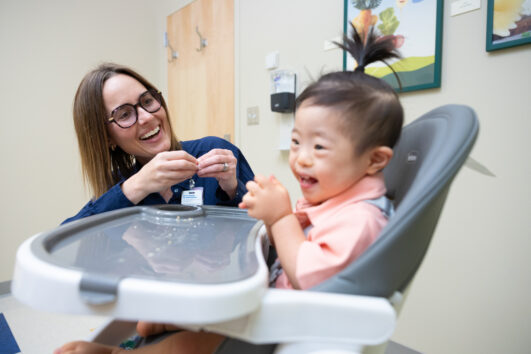
Arwen Jackson, a speech language pathologist at the Sie Center at Children’s Hospital Colorado (CHCO), along with her colleagues Jennifer Maybee (speech language pathologist) and Jenna Mathews (occupational therapist), were awarded the inaugural Sie Center Pilot Research Grant. The research team will utilize the grant to validate a screening tool that aims to better identify children at risk of developing pediatric feeding disorders during the transitional feeding stage. This period typically occurs in toddlerhood when complementary foods are introduced. It is also one of the developmental stages where children with Down syndrome often face significant feeding challenges and require targeted interventions. Children with Down syndrome are at a higher risk of experiencing pediatric feeding disorders than their peers without Down syndrome. These challenges include differences in chewing and swallowing, mealtime behaviors, and difficulty with intake or nutrition.

This study holds exciting promise for both research and clinical practice. Better understanding feeding development in children with Down syndrome has the potential to lead to earlier interventions and more innovative treatment plans. A screening tool targeted at the transitional feeding stage of development has never been validated for use in children with Down syndrome. Having a valid screening tool would enable future researchers to better design studies with clearly measurable outcomes related to feeding and swallowing in Down syndrome. The study is expected to run for a year.

“We are deeply grateful for this grant, which empowers us to advance research that can meaningfully improve quality of life and access to essential resources for young children with Down syndrome,” said Jackson. “Through this support, we aim to bridge research and practice, translating scientific knowledge into tangible benefits for the community we serve.”

This study also encourages important interdisciplinary research collaboration among specialists in Down syndrome, feeding development, swallowing, and food science. Notably, Dr. Carolyn Ross, a food scientist who has already conducted research on food texture acceptance in individuals with Down syndrome, is involved.

While clinicians and medical providers in Down syndrome clinics often have the most expertise in caring for people with Down syndrome, their ability to amplify their impact through research participation can by limited by a lack of time and/or funding. The Sie Center Pilot Grant hopes to address some of these issues by providing recipients with seed funding up to $50K and mentorship through the clinical research process.

GLOBAL Webinar with DS-Connect 2025

May 21st, 2025 by Global Down Syndrome Foundation

Recap of the DS-Connect and GLOBAL Webinar 


On May 6th, GLOBAL and DS-Connect hosted two important webinars in English and Spanish with over 150 attendees!

In the pivotal webinar (in English and Spanish) co-hosted by the Global Down Syndrome Foundation and DS-Connect, Dr. Joaquín Espinosa, Executive Director of the Linda Crnic Institute for Down Syndrome, dove into the newly enhanced DS-Connect®: The Down Syndrome Registry. This upgraded platform aims to empower individuals with Down syndrome and their families to contribute valuable health information, thereby accelerating research and improving health outcomes. Dr. Espinosa emphasized that participation is voluntary and confidential, providing a secure environment for sharing health data. He also highlighted the importance of this registry in connecting participants with research opportunities and clinical studies. This webinar underscored how collective contributions can lead to a deeper understanding of Down syndrome and inform better healthcare practices.  He gave a demonstration on just how user friendly the system is.  To learn more and sign up, please, click here.


English Presentation: Click Here

Video de la Presentación: Haga click aquí 


Joaquín Espinosa, PhD, is the Executive Director for Science at the Linda Crnic Institute for Down Syndrome. He is also a Professor in the Department of Pharmacology at the University of Colorado Denver School of Medicine and the founding Director of the Functional Genomics Facility at the University of Colorado. Under Dr. Espinosa’s leadership and in collaboration with the Global Down Syndrome Foundation, the Crnic Institute’s Human Trisome Project was launched and has become one of the largest cohort studies of people with Down syndrome to date. In addition, his team is leading clinical trials testing immunomodulatory therapies for autoimmune conditions, Down syndrome Regression Disorder, and improved early neurodevelopment. He also serves as the Leader of the Administrative and Outreach Core of the INCLUDE Data Coordinating Center, an NIH-funded resource aiming to accelerate discoveries by facilitating access to and analysis of large scale datasets form cohort studies of the population with Down syndrome.


Important Notice: GLOBAL Down Syndrome Foundation employees and/or volunteers DO NOT act as your medical professional or attorney. Responses you receive by email, telephone, or in any other manner DO NOT create or constitute a physician-patient or attorney-client relationship between you and GLOBAL Down Syndrome Foundation (GLOBAL), or any employee or other person associated with GLOBAL.

Information received from GLOBAL employees or volunteers, or from this website, should NOT be considered a substitute for the advice of a medical professional or attorney. GLOBAL DOES NOT provide any medical or legal advice. You should consult your own physician or attorney for medical or legal advice. This website is a general service providing information via the Internet. The information contained on this website is general information and should not be construed as medical advice to be applied to specific factual situations.


Historic First Win: House Passes DeOndra Dixon INCLUDE Project Act

September 18th, 2024 by Global Down Syndrome Foundation

Groundbreaking Legislation for Transformative NIH Down Syndrome Research is a Legacy for GLOBAL Ambassador DeOndra Dixon, Representatives Rodgers, DeLauro, Cole, DeGette and Other Congressional Champions

DENVER – September 18, 2024—The Global Down Syndrome Foundation (GLOBAL) is proud to announce that the game-changing DeOndra Dixon INCLUDE Project Act (H.R. 7406) passed the U.S. House of Representatives by voice vote.

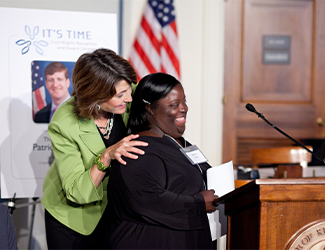
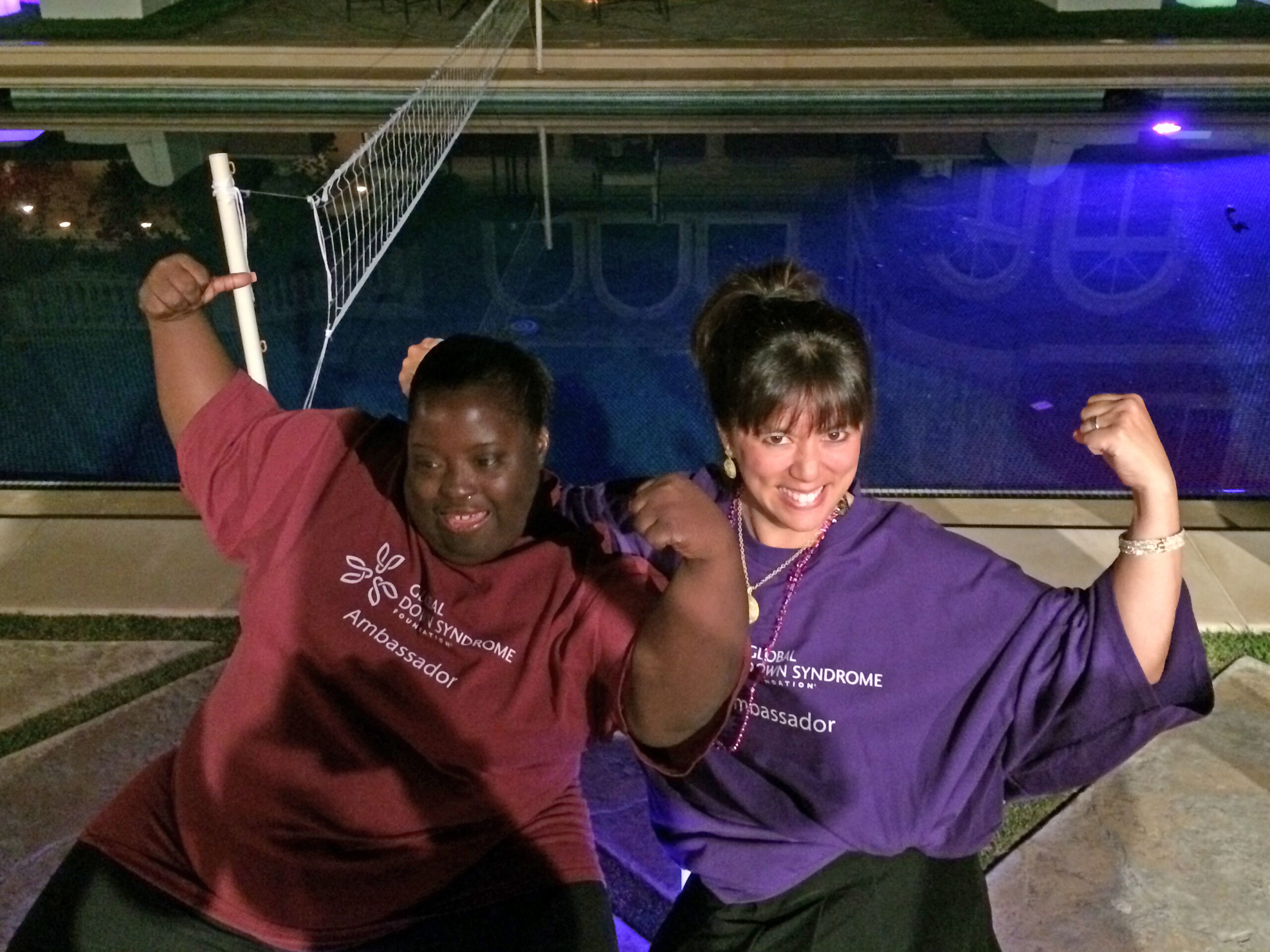
This bill is named in honor of the life and legacy of DeOndra Dixon, beloved GLOBAL Ambassador and inspiration behind GLOBAL’s highest honor, the Quincy Jones Exceptional Advocacy Award. DeOndra keynoted at conferences around the country and the world, and was a fixture at GLOBAL events along with her big brother Jamie Foxx as well as her loving extended family. She was a talented dancer and musician who performed at the 52nd Grammy Awards.

The DeOndra Dixon INCLUDE Project Act was introduced by House Energy & Commerce Committee Chair, Representative Cathy McMorris Rodgers (R-WA) and is co-sponsored by Representatives Rosa DeLauro (D-CT), Tom Cole (R-OK), Diana DeGette (D-CO), Pete Stauber (R-MN), Eleanor Holmes Norton (D-DC), David Trone (R-MD), and Frank Pallone (D-NJ). GLOBAL urges the Senate to pass their version of the DeOndra Dixon INCLUDE Project Act (S. 3981) and to sign it into law this year.

“GLOBAL is truly overwhelmed by the strong bipartisan support for the DeOndra Dixon INCLUDE Project Act that will formally authorize the INCLUDE Project at the NIH for five years,” says Michelle Sie Whitten, President and CEO of the Global Down Syndrome Foundation. “We couldn’t have come this far without the leadership of Chair Cathy McMorris Rodgers and many other key Congressional champions. We also owe so much to our unwavering self-advocates with Down syndrome and their families! GLOBAL continues to work with our Senate champions, Senators John Hickenlooper, Jerry Moran, and Cory Booker to build bipartisan support so this important legislation becomes law in 2024.”

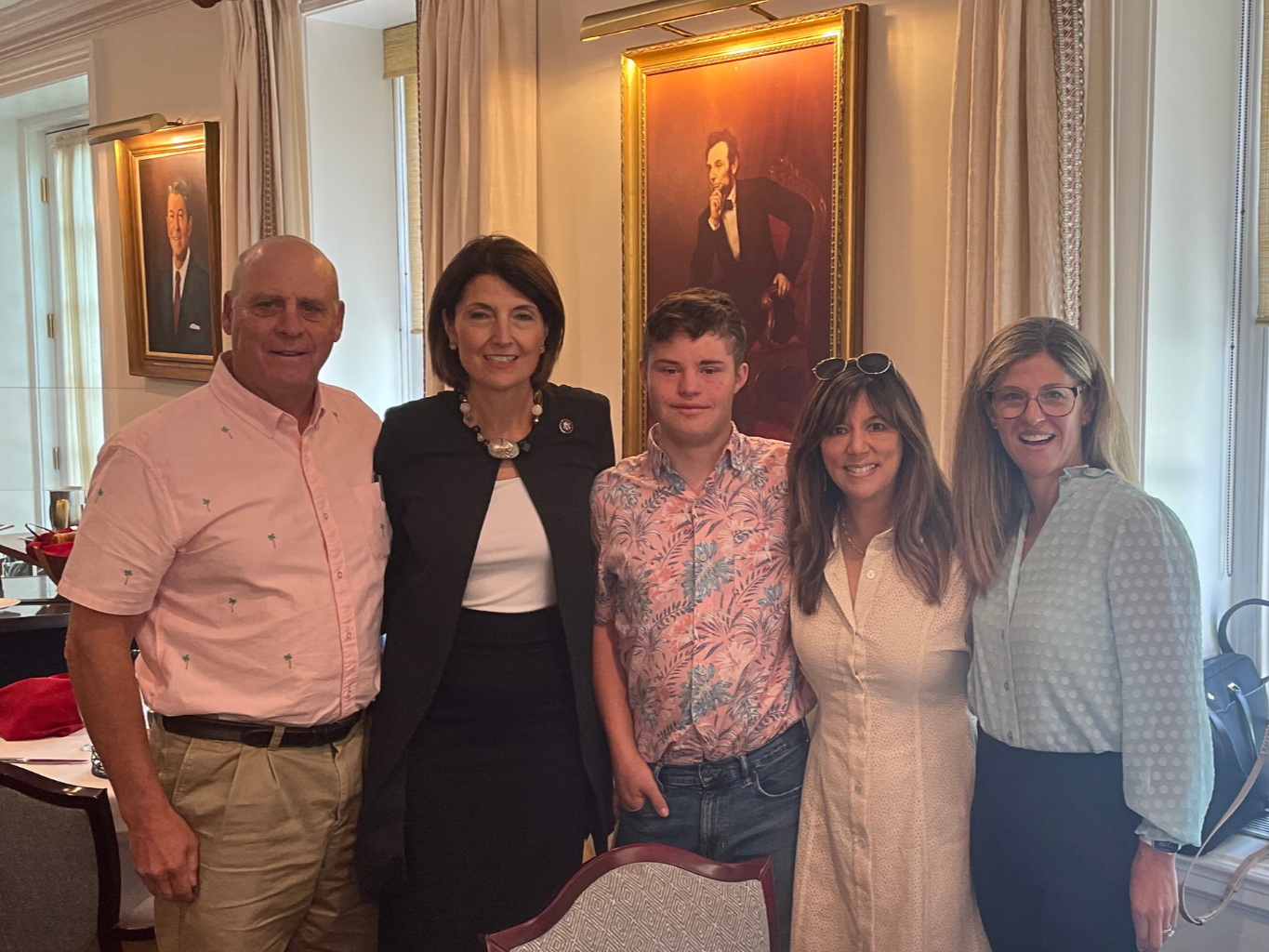
“This bipartisan legislation will support research into Down syndrome, which has been dramatically underfunded despite affecting one in every 700 babies,” said Rodgers. “Better understanding individuals with this disability–and truly valuing the unique gifts they possess–will help unleash their potential and benefit every American who knows someone battling other diseases like cancer and Alzheimer’s. As the proud mom of a child with Down syndrome, it has been deeply rewarding to partner with Michelle and her team at GLOBAL. Moving forward, I remain committed to working with my colleagues on both sides of the aisle to see this bill signed into law.”

GLOBAL had advocated for a trans-National Institutes of Health (NIH) Down syndrome research program since its inception in 2009. In 2017, three GLOBAL senior leaders, including board member, Frank Stephens, testified at the hallmark House Appropriations Subcommittee on Labor, Health, and Human Services, Education, and Related Agencies Hearing: Down Syndrome: Update on the State of the Science and Potential for Discoveries Across Other Major Diseases. Frank’s testimony went viral that evening with 1 million views and today has over 200 million views. Shortly after the hearing, GLOBAL’s long-time advocacy goal was fulfilled and the NIH established the INCLUDE (Investigation of Co-occurring conditions across the Lifespan to Understand Down syndrome) Project.

Since the INCLUDE Project was established in the FY2018 Labor-HHS appropriations bill, the program has funded 556 unique awards within 18 of the 27 NIH institutes. Eleven of these institutes did not participate in Down syndrome research prior to this program. The INCLUDE Project has also supported the development of the clinical trial infrastructure. Prior to the program, there were only two NIH clinical trials focused on people with Down syndrome. In just six years, the INCLUDE Project is funding thirteen promising clinical trials with possible immediate or short-term impact for people with Down syndrome.

“DSA of Central Oklahoma is a long-time supporter of the Global Down Syndrome Foundation, and their government advocacy work that resulted in the establishment of the trans-NIH Down syndrome research program called the INCLUDE Project,” says Sarah Soell, Executive Director of the Down Syndrome Association of Central Oklahoma. “We know first-hand from our families that the increased research funding is making a difference. We see real progress in the treatment of the many co-occurring conditions that we see in people with Down syndrome, including autoimmune conditions, regression disorder, sleep apnea, Alzheimer’s and more. Given the nearly twenty years of Down syndrome being the least funded genetic condition at the NIH prior to the INCLUDE Project, it is so important to pass this bill at the $250 million cap.”

Formally authorizing the DeOndra Dixon INCLUDE Project Act beyond an annual congressional directive will ensure that people with Down syndrome are not left behind when it comes to participating in clinical trials; it will improve health outcomes and improve their quality of life; and it will send a strong message that our society values and wants to invest in the future of our children and adults with Down syndrome and their families.

Please contact your U.S. Senators and urge them to cosponsor the DeOndra Dixon INCLUDE Project Act (S. 3981).

GLOBAL Affiliate, the Crnic Institute for Down Syndrome, has five clinical trials specifically for patients with Down syndrome: Two in Alzheimer’s and Down Syndrome, one in Down Syndrome Regression Disorder, and two in autoimmunity and inflammation.

To read about the impactful research that the INCLUDE Project has funded visit the NIH Down Syndrome Coordinating Center Website.

###

About Global Down Syndrome Foundation

The Global Down Syndrome Foundation (GLOBAL) is the largest non-profit in the U.S. working to save lives and dramatically improve health outcomes for people with Down syndrome. GLOBAL has donated more than $32 million to establish the first Down syndrome research institute supporting over 400 scientists and over 2,500 patients with Down syndrome from 33 states and 10 countries. Working closely with Congress and the National Institutes of Health, GLOBAL is the lead advocacy organization in the U.S. for Down syndrome research and care. GLOBAL has a membership of over 100 Down syndrome organizations worldwide, and is part of a network of Affiliates – the Crnic Institute for Down Syndrome, the Sie Center for Down Syndrome, and the University of Colorado Alzheimer’s and Cognition Center – all on the Anschutz Medical Campus.

GLOBAL’s widely circulated medical publications include Global Medical Care Guidelines for Adults with Down Syndrome, Prenatal & Newborn Down Syndrome Information and the award-winning magazine Down Syndrome WorldTM. GLOBAL also organizes the annual AcceptAbility Gala in Washington DC, and the annual Be Beautiful Be Yourself Fashion Show, the largest Down syndrome fundraiser in the world. Visit globaldownsyndrome.org and follow us on social media (Facebook & Twitter: @GDSFoundation, Instagram: @globaldownsyndrome).

GLOBAL Webinars en Español Septiembre 2024

September 15th, 2024 by Global Down Syndrome Foundation

Estrategias para Ayudar a Niños con Síndrome de Down a Desarrollar Destrezas de Habla y Lenguaje


Resumen

En este importante webinar, Jamilet Figueroa presentó estratagias para ayudar a niños con síndrome de Down a desarrollar destrezas de habla y lenguaje. Ella describió que con retrasos en habla y lenguaje, niños pueden tener baja autoestema, problemas con comportamiento, y falta de participación social.  Algunas estratagias que mencionó fue, hablarle al niño constantemente y describir actividades contidianes, usar fraces cortas y claras, repitir palabras y frases clave para refozar el patrendizaje. Mostró cómo usar su aplicación en inglés y español.  Puedes encontrar la aplicación aqui. Esta presentación resalta la importancia de abordar de manera proactiva los retrasos en el habla y lenguaje en niños con Síndrome de Down.


Presentación de Diapositivas: Haga click aquí 

Video de la Presentación: Haga click aquí 


Jamilet Figueroa, CCC-SLP es una Patóloga del Habla y Lenguaje Certificada con más de diez años de experiencia trabajando con niños con discapacidades y sus familias. La Licenciada Figueroa es la creadora de la única aplicación Bilingüe de Terapia del Habla y Lenguaje para niños (Habla y Lenguaje App). A Jamilet le apasiona trabajar mano a mano con los padres y otros profesionales de la salud para brindar el mejor servicio a la población de niños con Síndrome de Down.


Este seminario web es uno de los muchos beneficios asociados con la membresía de GLOBAL Down Syndrome Foundation. Obtenga más información sobre la galardonada revista de GLOBAL, Down Syndrome World™ , y cómo convertirse en miembro de GLOBAL hoy.


Si tiene un familiar o un amigo querido con síndrome de Down, convertirse en miembro de GLOBAL hoy.


Aviso importante Los empleados y/o voluntarios de GLOBAL Down Syndrome Foundation NO actúan como su profesional médico o abogado. Las respuestas que reciba por correo electrónico, teléfono o de cualquier otra manera NO crean ni constituyen una relación médico-paciente o abogado-cliente entre usted y GLOBAL Down Syndrome Foundation (GLOBAL), o cualquier empleado u otra persona asociada con GLOBAL.

La información recibida de los empleados o voluntarios de GLOBAL, o de este sitio web, NO debe considerarse un sustituto del consejo de un profesional médico o abogado. GLOBAL NO brinda ningún asesoramiento médico o legal. Debe consultar con su propio médico o abogado para obtener asesoramiento médico o legal. Este sitio web es un servicio general que proporciona información a través de Internet. La información contenida en este sitio web es información general y no debe interpretarse como consejo médico que deba aplicarse a situaciones fácticas específicas.

GLOBAL Webinars en Español Junio 2024

June 14th, 2024 by Global Down Syndrome Foundation

Avances científicos que benefician a las personas con síndrome de Down


Dr. Espinosa Headshot

Resumen

En este importante webinar, el Doctor Espinosa presentó nuevos resultados cientificos que demuestran la importancia de la hormona del crecimiento, la oxigenacion pulmonar y la immunidad balanceada en la salud de las personas con síndrome de Down. Estos descubrimientos estan conduciendo a ensayos clinicos para usar nuevas medicinas que mejoren el desarrollo y bienestar de las personas con sindrome de Down.  Mostró cómo la desregulación del sistema inmunológico puede causar muchos problemas de salud en síndrome de Down.  También, señaló que las personas con síndrome de Down que participan en proyectos de investigación son permitir descubrimientos transformadores que ayuden a todas las personas con síndrome de Down.


Presentación de Diapositivas: Haga click aquí 

Video de la Presentación : Haga click aquí 


Doctor Espinosa es el director ejecutivo del Instituto Linda Crnic del Síndrome de Down en la Universidad de Colorado. Su equipo de investigación ha hecho descubrimientos sobre la importancia de un sistema inmune balanceado para la salud de las personas con síndrome de Down. Estos descubrimientos han llevado a nuevos ensayos de terapias inmunes para mejorar el bienestar de las personas con síndrome de Down.


Este seminario web es uno de los muchos beneficios asociados con la membresía de GLOBAL Down Syndrome Foundation. Obtenga más información sobre la galardonada revista de GLOBAL, Down Syndrome World™ , y cómo convertirse en miembro de GLOBAL hoy.


Si tiene un familiar o un amigo querido con síndrome de Down, convertirse en miembro de GLOBAL hoy.


Aviso importante Los empleados y/o voluntarios de GLOBAL Down Syndrome Foundation NO actúan como su profesional médico o abogado. Las respuestas que reciba por correo electrónico, teléfono o de cualquier otra manera NO crean ni constituyen una relación médico-paciente o abogado-cliente entre usted y GLOBAL Down Syndrome Foundation (GLOBAL), o cualquier empleado u otra persona asociada con GLOBAL.

La información recibida de los empleados o voluntarios de GLOBAL, o de este sitio web, NO debe considerarse un sustituto del consejo de un profesional médico o abogado. GLOBAL NO brinda ningún asesoramiento médico o legal. Debe consultar con su propio médico o abogado para obtener asesoramiento médico o legal. Este sitio web es un servicio general que proporciona información a través de Internet. La información contenida en este sitio web es información general y no debe interpretarse como consejo médico que deba aplicarse a situaciones fácticas específicas.

GLOBAL Webinars en Español Abril 2024

April 30th, 2024 by Global Down Syndrome Foundation

Actualizaciones importantes de las pautas de atención médica para niños con síndrome de Down


Resumen

En este importante webinar, la Dra. Karla Adney Flores habló sobre: ¿Qué recomendaciones de la guía de 2022 son diferentes a las anteriores? ¿Qué es lo último en atención pediátrica para el síndrome de Down? ¿En dónde pueden acceder a la guía en español las familias y los médicos?


Presentación de Diapositivas: Haga click aquí 

Video de la Presentación: Haga click aquí 


Dra. Karla Adney Flores es Pediatra del Instituto Nacional de Pediatría. Realizó su posgrado en Atención Integral al Paciente Pediátrico con Síndrome de Down avalado por la UNAM. Tiene un Diploma en Tanatología y Consejería, y una Maestría en Ciencias. Actualmente es Jefa de Servicio de la Clínica para Niños con Síndrome de Down del Instituto Nacional de Pediatría, y Profesor de Alta Especialidad avalado por el Tec de Monterrey. Es fundadora y miembro de Red Down México. La Dra. Adney Flores se enorgullece de ser Miembro del Grupo de Interés Médico del Síndrome de Down y Miembro del consejo editorial internacional de la Revista Internacional del Síndrome de Down España.


Este seminario web es uno de los muchos beneficios asociados con la membresía de GLOBAL Down Syndrome Foundation. Obtenga más información sobre la galardonada revista de GLOBAL, Down Syndrome World™ , y cómo convertirse en miembro de GLOBAL hoy.


Si tiene un familiar o un amigo querido con síndrome de Down, convertirse en miembro de GLOBAL hoy.


Aviso importante Los empleados y/o voluntarios de GLOBAL Down Syndrome Foundation NO actúan como su profesional médico o abogado. Las respuestas que reciba por correo electrónico, teléfono o de cualquier otra manera NO crean ni constituyen una relación médico-paciente o abogado-cliente entre usted y GLOBAL Down Syndrome Foundation (GLOBAL), o cualquier empleado u otra persona asociada con GLOBAL.

La información recibida de los empleados o voluntarios de GLOBAL, o de este sitio web, NO debe considerarse un sustituto del consejo de un profesional médico o abogado. GLOBAL NO brinda ningún asesoramiento médico o legal. Debe consultar con su propio médico o abogado para obtener asesoramiento médico o legal. Este sitio web es un servicio general que proporciona información a través de Internet. La información contenida en este sitio web es información general y no debe interpretarse como consejo médico que deba aplicarse a situaciones fácticas específicas.

NIH Award Funds Data Coordinating Center for Down Syndrome Research

November 9th, 2020 by Global Down Syndrome Foundation

The new initiative will fuel collaboration and discovery about the biology of Down syndrome and its co-occurring medical conditions

Press Contacts:

Amanda Hilll Linda Crnic Institute for Down Syndrome | amanda.a.hill@cuanschutz.edu | C: 303.724.9907
Bobby Moulder Center for Data Driven Discovery in Biomedicine | moulderr@email.chop.edu | C: 484.258.8539

Hsiao-Ching Chou Sage Bionetworks | chou@sagebionetworks.org | C: 206.696.3663


DENVER, CO November 5, 2020 Scientists and data experts are joining forces to create the world’s first centralized platform for Down syndrome researchers to share, access, and analyze data. The goal of the new initiative, called the “Data Management and Portal for INCLUDE (DAPI) Project,” is to accelerate discoveries and advance medical care for individuals with Down syndrome. The National Institutes of Health (NIH) recently awarded a grant totaling $19.5M over five years to develop the center as part of the INCLUDE Project (INvestigation of Co-occurring conditions across the Lifespan to Understand Down syndromE).

The DAPI Project is co-led by Dr. Adam Resnick, Director of the Center for Data Driven Discovery for Biomedicine (D3b) at Children’s Hospital of Philadelphia, Dr. Joaquin Espinosa, Executive Director of the Linda Crnic Institute for Down Syndrome at the University of Colorado Anschutz Medical Campus, and Dr. Justin Guinney, Vice President of Computational Oncology at Sage Bionetworks. DAPI Project leaders will work closely with NIH INCLUDE Project staff to develop the center. This collaboration brings together strong expertise in Down syndrome research and open, data-driven science.

“We expect this new data center will be an impactful resource for the INCLUDE Project and the larger Down syndrome research community,” said Dr. Charlene Schramm, NIH Program Officer for the award. “The goal is to create a world-class portal for data sharing and analysis that will encourage innovative investigations into Down syndrome comorbidities across the lifespan.”

Dr. Melissa Parisi, one of the leaders of the NIH INCLUDE Project, added “The DAPI Project will combine data from existing research cohorts of individuals with Down syndrome with new cohorts. By building common data and shared analytic platforms, this project hopes to create a rich resource to help advance our understanding of these co-occurring conditions and support future therapeutic development.”

The INCLUDE Project is a trans-NIH initiative launched in 2018 to support research into conditions that affect individuals with Down syndrome and the general population. More than six million individuals living with Down syndrome have an increased risk of developing a wide range of medical conditions, such as certain autoimmune disorders and Alzheimer’s disease. At the same time, they are protected from some of the largest killers of the general population, including solid cancers and certain heart disease. Therefore, a key goal of the INCLUDE Project is to decode the underlying biology that alters these and many other co-occurring medical conditions in individuals with Down syndrome.

“Coordinated discovery efforts in this population not only have the potential to directly improve the lives of individuals with Down syndrome, but also to impact millions of other people affected by numerous related and co-occurring conditions,” said Dr. Espinosa of the Crnic Institute.

To enable these investigations, the mission of the DAPI Project is to create a world class platform for data sharing, data access, and integrative analysis in Down syndrome. The platform will empower scientists, physicians, and the community with tools to elicit evidence-based action in the laboratory, clinic, classroom, government, and society at-large.

“More and more, the scientific community is demonstrating the power of platforms to connect different communities with diverse areas of expertise and datasets to drive surprising discoveries and accelerated impact across a broad number of conditions in both children and adults,” said Dr. Resnick of D3b. “The DAPI Project will build on these efforts through the implementation of new technologies and platforms that will empower large-scale, diverse INCLUDE datasets on behalf of individuals with Down syndrome and other associated medical conditions and diseases.”

The DAPI Project is organized into three cores, roughly centered at each of the three partner organizations:

  • Data Portal Core.Led by Dr. Resnick at D3b, the Data Portal Core oversees the development of the web-based data portal, which will be the public-facing centralized platform for data sharing and analysis. Dr. Resnick and the team at D3b are recognized leaders in collaborative, data-driven science, with expertise in pediatric cancers and diseases and large-scale data visualization and analysis.
  • Data Management Core. Led by Dr. Guinney at Sage Bionetworks, the Data Management Core directs the overall data management practices for the DAPI Project, including protocols for data collection, governance, harmonization, processing, and sharing. Sage Bionetworks is a non-profit biomedical research organization devoted to responsible, open data-sharing practices, with broad expertise in computational and systems biology, as well as neurodegenerative diseases.
  • Administrative and Outreach Core.Led by Dr. Espinosa at the Crnic Institute, the Administrative and Outreach Core leads outreach, education, and stakeholder engagement efforts for the scientific and Down syndrome communities, as well as overall project management. Dr. Espinosa and the Crnic Institute team are leading Down syndrome researchers who also administer a large Down syndrome research program at the University of Colorado.

Additional experts from Centre Hospitalier Universitaire Sainte-Justine, Oregon Health and Science University, Oregon State University, Seven Bridges Genomics, and Vanderbilt University Medical Center will also collaborate with the DAPI Project team.

“We have created a truly exceptional team with diverse expertise to accomplish the mission of the DAPI Project,” said Dr. Guinney of Sage Bionetworks. “We are all excited and honored to work with the NIH, the Down syndrome research community, and each other on this new endeavor.”

DAPI Project operations began in early October, including efforts to identify existing Down syndrome cohorts and data already established by researchers, to engage in ‘listening tours’ to understand the needs of the researcher and Down syndrome communities, and to develop frameworks for data governance, standardization, and management. The DAPI Project team aims to release the first version of the public data portal in 2022, while continuing to refine and expand the platform thereafter.


About the Center for Data Driven Discovery in Biomedicine (D3b)

The Center for Data Driven Discovery in Biomedicine (D3b) is a translational biomedical research Center of Emphasis at the Children’s Hospital of Philadelphia Research Institute. D3b’s multi-disciplinary expertise is accelerating bench-to-bedside research on behalf of children diagnosed with cancer and other rare conditions. D3b’s seven collaborative units bring together experts in oncology and basic research, genomics, data science, bioinformatics, neurosurgery, and other research-related disciplines to discover breakthroughs for every child, every time, everywhere. To learn more about the D3b Center, visit https://d3b.center/.

About the Linda Crnic Institute for Down Syndrome

The Linda Crnic Institute for Down Syndrome is the first academic research center fully devoted to improving the lives of people with Down syndrome through advanced biomedical research, spanning from basic science to translational and clinical investigations. Founded through the generous support and partnership of the Global Down Syndrome Foundation, the Anna and John J. Sie Foundation, and the University of Colorado, the Crnic Institute administers a thriving Down syndrome research program involving over 50 research teams across four campuses on the Colorado Front Range. To learn more, visit https://medschool.cuanschutz.edu/linda-crnic-institute or follow us on Facebook and Twitter @CrnicInstitute.

About Sage Bionetworks

Sage Bionetworks is a nonprofit biomedical research and technology development organization that was founded in Seattle in 2009. Our focus is to develop and apply open practices to data-driven research for the advancement of human health. Our interdisciplinary team of scientists and engineers work together to provide

researchers access to technology tools and scientific approaches to share data, benchmark methods, and explore collective insights, all backed by Sage’s gold-standard governance protocols and commitment to user- centered design. Sage is a 501c3 and is supported through a portfolio of competitive research grants, commercial partnerships, and philanthropic contributions. To learn more, visit https://sagebionetworks.org.

About Global Down Syndrome Foundation

The Global Down Syndrome Foundation (GLOBAL) is the largest non-profit in the U.S. working to save lives and dramatically improve health outcomes for people with Down syndrome. GLOBAL has donated more than $32 million to establish the first Down syndrome research institute supporting over 400 scientists and over 2,000 patients with Down syndrome from 28 states and 10 countries. Working closely with Congress and the National Institutes of Health, GLOBAL is the lead advocacy organization in the U.S. for Down syndrome research and care. GLOBAL has a membership of over 100 Down syndrome organizations worldwide, and is part of a network of Affiliates – the Crnic Institute for Down Syndrome, the Sie Center for Down Syndrome, and the University of Colorado Alzheimer’s and Cognition Center – all on the Anschutz Medical Campus.

GLOBAL’s widely-circulated medical publications include GLOBAL Medical Care Guidelines for Adults with Down Syndrome, Prenatal Testing and Information about Down Syndrome, and the award-winning magazine Down Syndrome WorldTM. GLOBAL also organizes the Be Beautiful Be Yourself Fashion Show, the largest Down syndrome fundraiser in the world. Visit globaldownsyndrome.org and follow us on social media (facebook & twitter:@GDSFoundation)(instagram:@globaldownsyndrome).

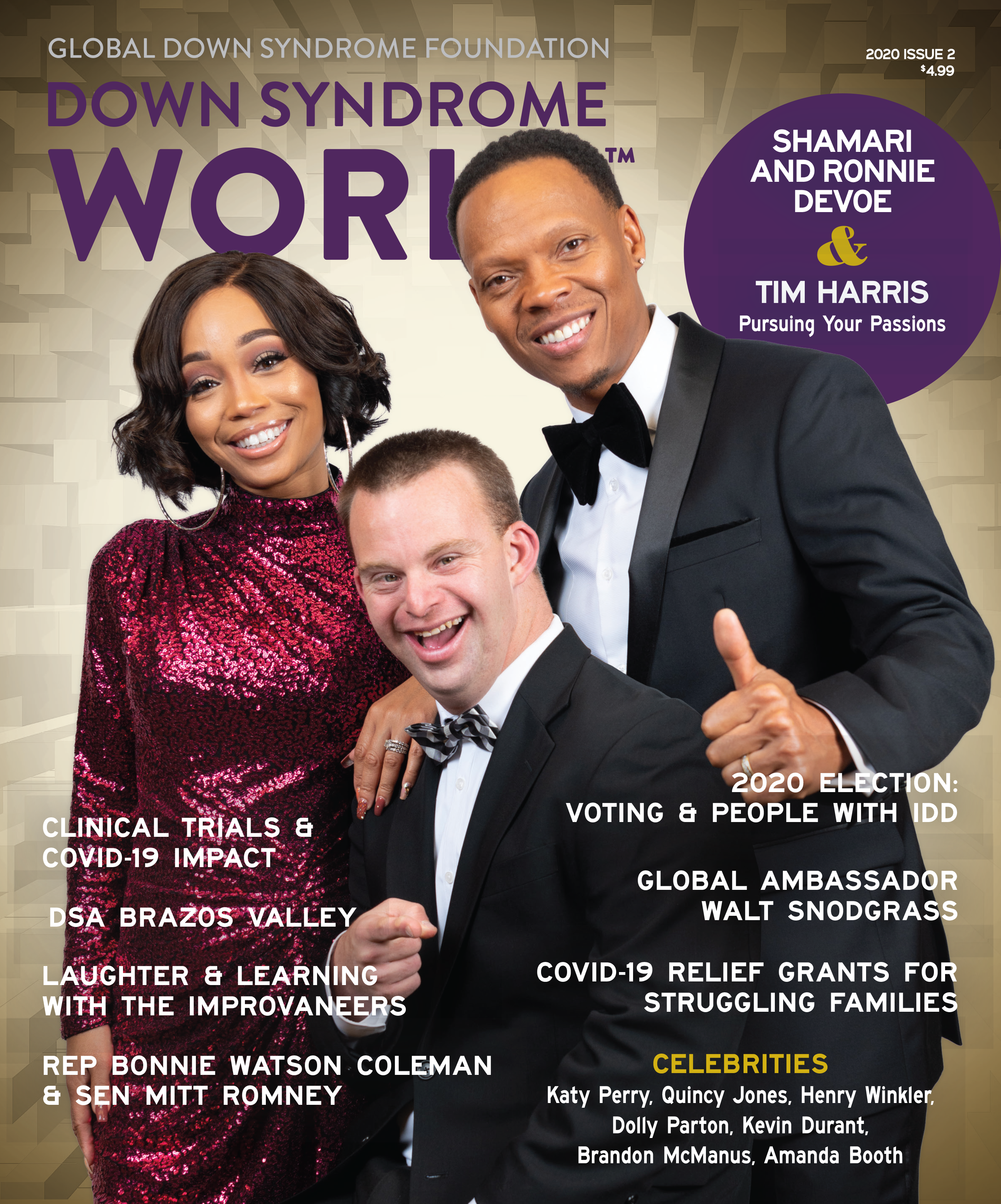
From Down Syndrome WorldTM 2020 Issue 2 of 4

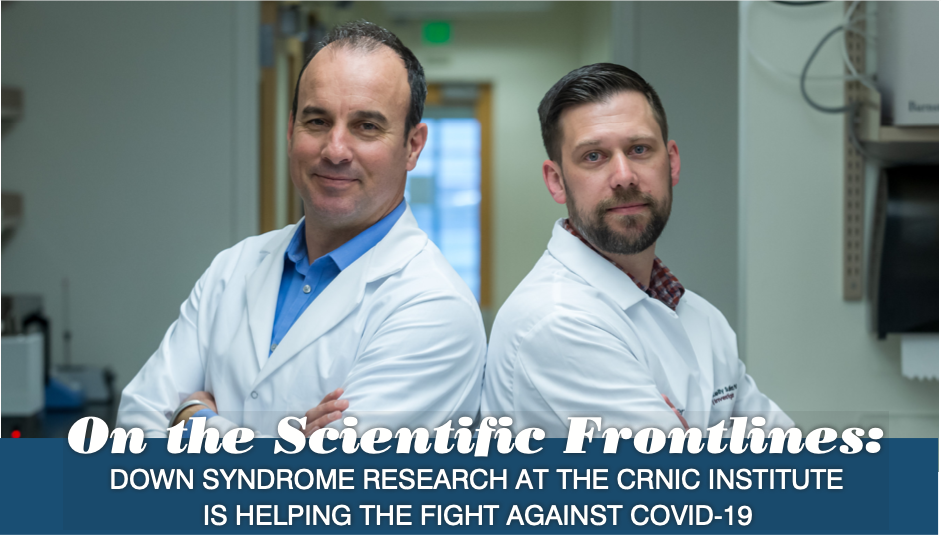
AMID A WORLD-WIDE PANDEMIC, THESE SCIENTISTS HAVE FOUND THEMSELVES IN A UNIQUE POSITION TO HELP, THANKS TO YEARS OF STUDYING THE EXCEPTIONAL BIOLOGY OF PEOPLE WITH DOWN SYNDROME.

This article was published in the award-winning Down Syndrome World™ magazine. Become a member to read all the articles and get future issues delivered to your door!

CONTRIBUTING IN A MEANINGFUL WAY to the body of science and medical practice surrounding an unprecedented world-wide pandemic is not something most people ever get the opportunity to do. It certainly was not what Executive Director of the Linda Crnic Institute for Down Syndrome, Dr. Joaquín Espinosa, and his team of scientists were thinking about in early March 2020.

During this time, the University of Colorado Anschutz Medical Campus (CU) shut down all research operations, locking scientists out of their buildings and laboratories in response to and to prevent the spread of the novel coronavirus (COVID-19) pandemic. Thankfully, Dr. Espinosa and the Crnic Institute team had their valuable experiments and supplies already gathered and stored away safely. With numerous grants from the National Institutes of Health (NIH), the National Science Foundation, and others, the team had plenty of work that could be performed remotely – analyzing data, writing up results for scientific journals, and preparing new proposals for funding.

Their biggest worry was something they could not work on remotely – the delay of their NIH clinical trial grant to treat autoimmune diseases in people with Down syndrome. In 2016, shortly after launching the Crnic Institute Human Trisome ProjectTM (HTP), the Crnic Institute made one of the most important scientific discoveries – Down syndrome can and should be characterized as an immune system disorder.

In particular, they discovered that an immune system pathway called the “interferon pathway” was “lit up” in people with Down syndrome pretty much 24/7, versus in typical people where it is only turned on when they are fighting a virus or infection and then it turns off.

The constant taxation of the immune system in people with Down syndrome creates low intensity inflammation that over time probably contributes to the co-occurrence of various diseases, including dementia. The Crnic Institute discovery was even more consequential because there are FDA-approved drugs that turn down the interferon pathway in typical people. Crnic Institute scientists were about use one of these FDA-approved drugs, a JAK inhibitor called tofacitinib, in an unprecedented clinical trial for adults with Down syndrome when the pandemic forced lab closures around the world.

AN “AH HA” MOMENT
As serendipity would have it, two days into quarantine, the Crnic team was doing a quick review of the research literature on COVID-19. Their findings revealed something that was both shocking and yet made perfect sense – it appeared that hospitalized COVID-19 patients were displaying many of the same patterns of immune system dysregulation that the Crnic Institute team had spent years studying, analyzing, and annotating in people with Down syndrome.

In COVID-19, the body’s antiviral defense system, which utilizes the interferon pathway, is sent into overdrive, causing the release of high levels of inflammatory signaling molecules known as cytokines. In COVID-19 and other viral infections, this “cytokine storm” is associated with respiratory distress, heart damage, and higher mortality rates. Similarly, people with Down syndrome have higher-than-normal levels of interferon signaling and often display more of a mini cytokine storm, even without a viral infection. Crnic Institute scientists believe this could contribute to many of the hallmarks of and co-occurring medical conditions associated with Down syndrome and are working to understand those connections.

Within a week, Dr. Espinosa and the Crnic Institute were one of a handful of research teams allowed back, with COVID-19 safety measures, into their labs to work on COVID-19 treatments for the general populations and to understand the connection and possible affects and treatments on people with Down syndrome.

Today, Dr. Espinosa is the leader of an international consortium looking at JAK inhibitors to treat COVID-19. The treatment is one of several clinical trials that Dr. Anthony Fauci, Director of the National Institute of Allergy and Infectious Disease at the NIH, has been supporting in the United States. The international consortium includes labs from the United States, China, Italy, France, Spain, Argentina, Mexico, Canada, Germany, and Denmark.

COVID-19 COULD BE MORE SEVERE FOR PEOPLE WITH DOWN SYNDROME
In reviewing the COVID-19 literature, Crnic Institute scientists also realized that people with Down syndrome should probably be considered a “high-risk” group for COVID-19. “High risk” means a person who gets COVID-19 has a higher probability of experiencing more severe illness than a member of the general population without other risk factors. This idea rests on the basis that the strength of the cytokine storm in COVID-19 correlates with disease severity and outcomes, and that people with Down syndrome will be more likely to develop a stronger, more prolonged cytokine storm due to higher levels of baseline interferon signaling. Although the direct studies of COVID-19 in Down syndrome needed to prove or disprove this idea have not yet been performed, ample supporting evidence already exists in the context of other viruses and in our basic understanding of immunology in Down syndrome.

It is also important to consider that people with Down syndrome have increased susceptibility to bacterial pneumonia. Although seemingly unrelated, it has been well documented that pandemics of respiratory viral infections are followed by a surge in cases of bacterial pneumonia, and that a large portion of deaths are actually attributed to secondary bacterial infections. Children with Down syndrome have much higher rates of viral pneumonia and bacterial pneumonia, with the latter being a leading cause of mortality in adults. Taken together, these known phenomena suggest that a person with Down syndrome who contracts COVID-19 would have an increased risk of also acquiring bacterial pneumonia.
PUTTING TOGETHER ALL THE EVIDENCE:
#1 – People with Down syndrome have higher levels of interferon signaling.

#2 – Once infected, people with Down syndrome have an increased risk of experiencing a stronger cytokine storm and thus a more severe case of COVID-19.

#3 – Both during and after infection with SARS-CoV-2, people with Down syndrome will be more likely to also contract bacterial pneumonia.

It is important to note that these are hypotheses and predictions based on existing evidence outside of COVID-19 and should be taken into consideration with caution. The studies needed to fully understand COVID-19 in people with Down syndrome are still just starting to get underway. The good news is, there are people with Down syndrome, with and without underlying conditions, who are surviving COVID-19. We simply need more data and to better understand this virus before we can definitively come to conclusion.

HOW DOWN SYNDROME RESEARCH FROM THE CRNIC INSTITUTE IS BEING UTILIZED TO STUDY AND TREAT COVID-19
Since March, every member of Dr. Espinosa’s team, from the basic scientists to the clinical researchers, and even the administrators, have been utilizing their unique skills and knowledge gained while working in Down syndrome to rapidly advance COVID-19 research at CU.

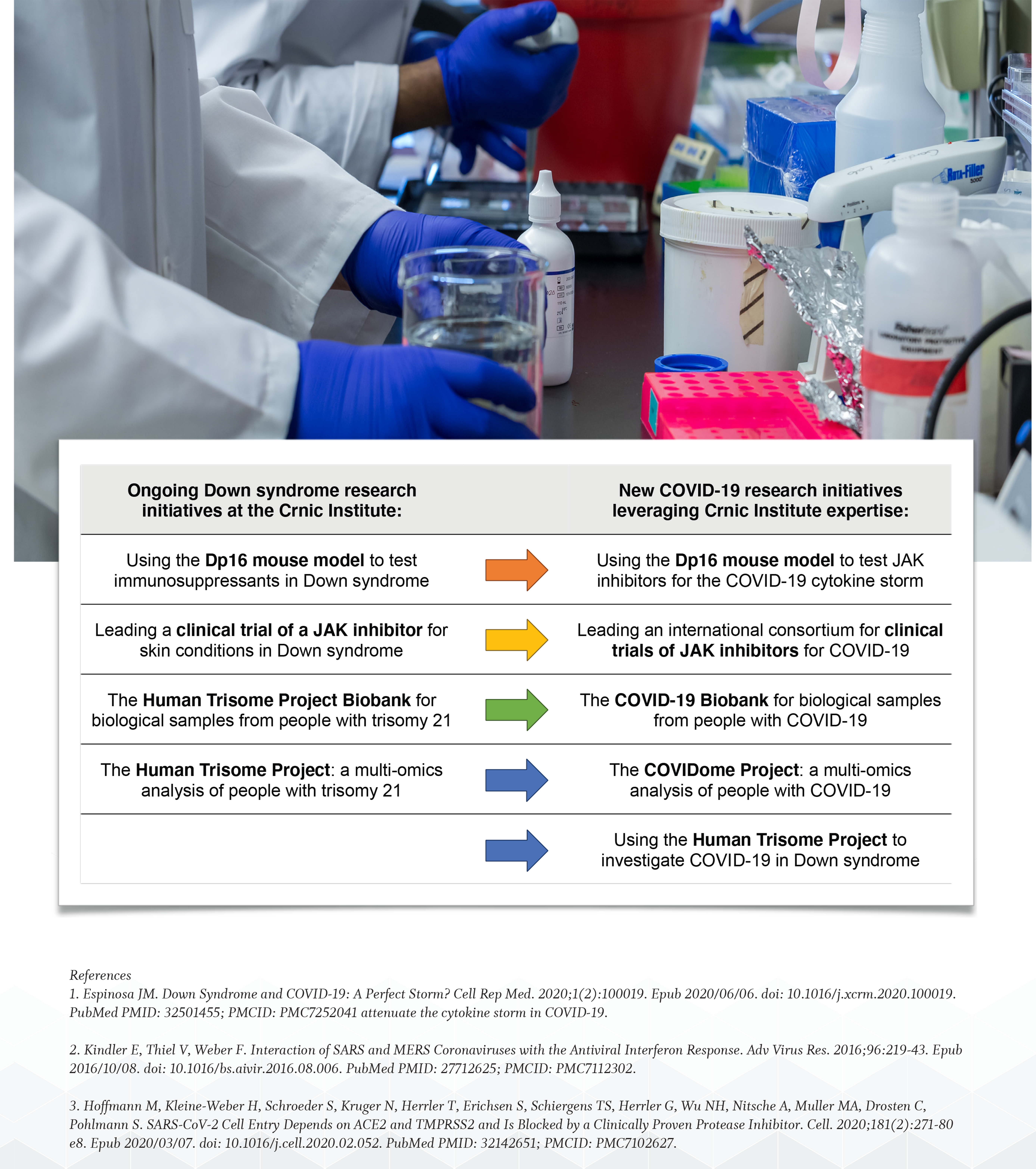
For example, Crnic Institute scientists immediately started testing potential therapeutics for the COVID-19 cytokine storm in their mouse model of Down syndrome, nicknamed Dp16. They weren’t actually exposing the Dp16 mice to SARS-CoV-2; they didn’t need to. Instead, the scientists could activate the immune system and stimulate a cytokine storm much like what is seen in COVID-19, simply by using a molecule that tricks the immune system into sensing a virus when there isn’t one. Crnic scientists then treat the mice with JAK inhibitors targeting the interferon signaling pathway that is chronically activated in people with Down syndrome and that drives the cytokine storm in COVID-19. The data resulting from these experiments will be extremely valuable because it can be interpreted and utilized in two contexts: COVID-19 and Down syndrome.

FIGHTING COVID-19 TOGETHER
Who would have ever guessed that Down syndrome research and the discovery that interferon signaling is chronically activated in people with Down syndrome would one day so greatly impact the science and research behind a historic, global pandemic? This meaningful contribution to the body of science and medical practice surrounding COVID-19 is something the Down syndrome community should be proud to be part of. Together, this community of researchers, self-advocates, families, and supporters can clearly make positive scientific impacts not only for people with Down syndrome, but also for the entire world.

THE CRNIC INSTITUTE HUMAN TRISOME PROJECTTM IN ACTION AGAINST COVID-19
At the beginning of the quarantine, CU assembled a centralized team tasked with rapidly creating a biobank to collect blood and other biological samples from COVID-19 patients. These samples would then be administered to researchers with approved projects. This model essentially replicates one of the Crnic Institute’s flagship research initiatives, the Crnic Institute Human Trisome ProjectTM (HTP). The HTP is generating multiple layers of “omics” data (think big data from sequencing all of someone’s DNA and RNA and measuring all their proteins, metabolites, immune cells, and much more) on hundreds of people with and without Down syndrome in order to understand the hallmarks of and co-occurring medical conditions associated with Down syndrome. Having heard about the Crnic Institute’s HTP and Biobank, the CU COVID-19 team reached out to Crnic scientists to tap into their expertise. The Crnic team shared detailed protocols and helped advise the CU team during the development of the CU COVID-19 Biobank.

As part of a synergized endeavor with the COVID-19 Biobank, leading researchers at CU also partnered with Dr. Espinosa and the Crnic team to replicate the experimental platform from HTP and apply it to COVID-19. The parallel effort by CU to apply the HTP platform to COVID-19 has been aptly dubbed “The COVIDome Project,” and Crnic scientists are leading the ongoing data generation to advance COVID-19 research for better diagnostics and therapeutics.

The Crnic team is also partnering with a national COVID-19 collaborative group to specifically study COVID-19 in people with Down syndrome. As explained earlier in this article, so much is yet unknown about COVID-19 in Down syndrome and numerous studies are needed to understand its impacts. The team is working with top data scientists at CU to identify differences in risk factors, symptoms, clinical course, immunological parameters, response to various treatments, and outcomes and long-term effects of COVID-19 in people with Down syndrome. Alongside these efforts, the Crnic team is also studying individuals with Down syndrome who have recovered from a SARS-CoV-2 infection as part of the HTP, in order to assess changes induced by COVID-19 across all the layers of omics data. Together, Crnic scientists hope these efforts will advance our understanding of interferon signaling and the cytokine storm in COVID-19 and Down syndrome and
inform the development of customized preventative and therapeutic solutions.
Like this article? Join Global Down Syndrome Foundation’s Membership program today to receive 4 issues of the quarterly award-winning publication, plus access to 4 seasonal educational Webinar Series, and eligibility to apply for Global’s Employment and Educational Grants.
Register today at downsyndromeworld.org!

The Global Guideline is Published in the Print & Online Versions of JAMA,
Ensuring Clinicians Across the U.S. Have Access

Press Contacts:

Anca Callacall@globaldownsyndrome.org | C: (720) 320-3832
Rejena Carmichaelrcarmichael@globaldownsyndrome.org | C: (240) 603-5494


October 20, 2020 Denver, CO – After four years of coordination, compilation, and rigorous assessment and writing, the Global Down Syndrome Foundation Medical Care Guidelines for Adults with Down Syndrome© (Global Guideline) is complete and available at no cost.

The authors include the clinical directors of eight of the largest adult Down syndrome medical centers in the country – Advocate Health Care in Chicago, University of Pittsburgh Medical Center, Kennedy Krieger Institute at Johns Hopkins School of Medicine, University of Kansas Medical Center, University of Arkansas for Medical Sciences, and Denver Health in conjunction with the Anschutz Medical Campus School of Medicine at University of Colorado.

The first-in-kind Global Guideline was peer reviewed, edited, and published in the Special Communication section of the print and online October 2020 issue of JAMA, the Journal of the American Medical Association.

“We are so pleased that the quality of our guideline rose to the occasion of being published in JAMA, and we are deeply grateful to our families and self-advocates for pushing us to work on this difficult project,” says Michelle Sie Whitten, President & CEO of the Global Down Syndrome Foundation (GLOBAL). “Now we can focus on collaborating with other Down syndrome and disability organizations as well as medical institutions to ensure clinicians are following our Global Guideline and measuring outcomes.”

The Global Guideline is for clinicians and addresses nine medical areas: Behavioral Health, Dementia, Diabetes, Cardiovascular Disease, Obesity, Atlantoaxial Instability, Osteoporosis, Thyroid, and Celiac Disease.

It is made up of 14 recommendations and 4 statements of good practice. Some of the recommendations align with existing guidelines for individuals without Down syndrome, and two are markedly different. There were several questions associated with the recommendations that had no published research evidence, and therefore were answered based on the clinical expertise of the authors.

“It’s clear that the lack of Down syndrome research funding over the last 20 years has prevented us from easily or quickly creating these guidelines,” says Bryn Gelaro, LSW, Director of Adult Initiatives & Special Projects at GLOBAL. “We were fortunate to have expert authors and volunteers who helped identify important research needs that will bolster and better define our future Global Guideline recommendations.”

Author Amy Tsou, MD, from ECRI, an independent nonprofit and Evidence-based Practice Center, with support from Gelaro, helped spearhead the research methodology, which included PICO (Population/Intervention Comparison/Outcome) questions, the GRADE (Grading of Recommendations, Assessment, Development, and Evaluation) methodology, and focus groups from various stakeholders informed the final draft.

“I participated in the task force of over 40 self-advocates and family members that provided GLOBAL with the directive they needed to focus on adult care guidelines – even if it would be difficult and take a lot of time,” says Karen Gaffney, a nationally renowned athlete, GLOBAL Q-Awardee and spokesperson. “It was great to be able to participate in the week-long focus group of self-advocates and family members and see it all come together.”

“From the beginning, GLOBAL has been leading the way, empowering people with Down syndrome with improved care and health outcomes,” says mom Darlene Beals. “The Global Guideline is an important new resource for my 24-year-old son Alan, and I believe if anyone can get to the bottom of health disparities for African Americans with Down syndrome, it’s GLOBAL.”

Alan echoes his mom’s sentiments, “[I want to know] when to take thyroid medicine, once a day? How to live a healthy life in my own apartment and keep the apartment clean?” Alan is also concerned about doctors knowing how to pay Medicaid insurance.

While the Global Guideline is free of charge to any stakeholder, the copyright of the JAMA publication and of GLOBAL’s long-form publication prohibits the reproduction of the Global Guideline on any website or digital platform. However, printing and downloading for personal and clinical use is highly encouraged.

GLOBAL has support from over 50 local, national, and international Down syndrome organizations and several generous sponsors. By the end of 2021, GLOBAL plans to translate and distribute this transformative new resource into several languages, and to update and expand the Global Guideline every 6 years.

A webinar and Q&A with the renowned and expert authors will be held on Wednesday, October 21, 2020. To learn more or sign up, please click here.

The Global Down Syndrome Foundation Medical Care Guidelines for Adults with Down Syndrome Workgroup includes (in alphabetical order of lead and supporting authors):

  • Peter Bulova, MD: Associate Professor of Medicine, University of Pittsburgh Medical Center, Pittsburgh, Pennsylvania
  • George Capone, MD: Director, Down Syndrome Clinic & Research Center, Kennedy Krieger Institute, Associate Professor of Pediatrics, Johns Hopkins School of Medicine, Baltimore, Maryland
  • Brian Chicoine, MD: Medical Director, Advocate Medical Group Adult Down Syndrome Center, Park Ridge, Illinois
  • Terry Odell Harville, MD, PhD, D(ABMLI) D(ABHI): Professor of Pathology and Laboratory Services, and Internal Medicine, Department of Pathology and Laboratory Services, and Department of Internal Medicine, Division of Hematology, University of Arkansas for Medical Sciences, Little Rock, Arkansas
  • Barry A Martin, MD: Associate Professor of Clinical Practice, Division of General Internal Medicine, University of Colorado School of Medicine, Anschutz Medical Center, Aurora, Colorado
  • Dennis McGuire, LCSW, PhD: Private Practice, Evanston, Illinois
  • Kent D. McKelvey, MD: Associate Professor, Rockefeller Chair in Clinical Genetics, University of Arkansas for Medical Sciences, Little Rock, Arkansas
  • Moya Peterson, PhD, APRN, FNP-BC: Clinical Professor, University of Kansas Medical Center, Schools of Nursing and Medicine, Kansas City, Kansas
  • Amy Y Tsou, MD, MSc: Evidence-based Practice Center, ECRI Center for Clinical Excellence and Guidelines, Plymouth Meeting, Pennsylvania; Staff Neurologist, Division of Neurology, Michael J Crescenz Veterans Affairs Medical Center, Philadelphia, Pennsylvania
  • Carl Tyler, MD, MSc: Director of Developmental Disabilities – Practice-Based Research Network, and Professor, Family Medicine and Community Health, Cleveland Clinic Lerner College of Medicine, Case Western Reserve University School of Medicine, Cleveland, Ohio
  • Michelle Sie Whitten, MA: President & CEO, Global Down Syndrome Foundation, Denver, Colorado
  • Bryn Gelaro, MA, LSW: Director of Adult Initiatives, Global Down Syndrome Foundation, Denver, Colorado
  • Michael Wells, BS: Formerly Research Coordinator, Developmental Disabilities – Practice-Based Research Network, Cleveland, Ohio

About the Global Down Syndrome Foundation
The Global Down Syndrome Foundation (GLOBAL) is the largest non-profit in the U.S. working to save lives and dramatically improve health outcomes for people with Down syndrome. GLOBAL has donated more than $32 million to establish the first Down syndrome research institute supporting over 400 scientists and over 2,000 patients with Down syndrome from 28 states and 10 countries. Working closely with Congress and the National Institutes of Health, GLOBAL is the lead advocacy organization in the U.S. for Down syndrome research and care. GLOBAL has a membership of over 150 Down syndrome organizations worldwide, and is part of a network of Affiliates – the Crnic Institute for Down Syndrome, the Sie Center for Down Syndrome, and the University of Colorado Alzheimer’s and Cognition Center – all on the Anschutz Medical Campus.

GLOBAL’s widely-circulated medical publications include GLOBAL Medical Care Guidelines for Adults with Down Syndrome, Prenatal Testing and Information about Down Syndrome, and the award-winning magazine Down Syndrome WorldTM. GLOBAL organizes the Be Beautiful Be Yourself Fashion Show, the largest Down syndrome fundraiser in the world. Visit globaldownsyndrome.org and follow us on social media (Facebook, Twitter @GDSFoundation, Instagram @globaldownsyndrome).

GLOBAL Recap of the 2020 NDSC Annual Convention From Your Couch

June 25th, 2020 by Global Down Syndrome Foundation


Engaging Roundtable Discussion

During GLOBAL’s Roundtable, speakers presented on COVID-19, breakthrough research, & more.
GLOBAL’s 2020 NDSC Research & Medical Care Roundtable Recap


Frank Stephens, GLOBAL Ambassador &
Q-Award winner,
The Importance of Research for People with Down Syndrome


Ed Janoff, MD, CU Professor of Medicine-Infectious Disease, Living Safely with Down Syndrome in the Age of COVID-19


Karen Gaffney, GLOBAL Q-Award winner,
Living Safely with Down Syndrome in the
Age of COVID-19


Kelly Sullivan, Boettcher Investigator & Assistant Professor, Crnic Institute, Immune System Dysregulation in Down syndrome


Mike Rafii, MD, PhD, Medical Director of the Alzheimer’s Therapeutic Research Institute, Alzheimer’s Disease in Down Syndrome


Joaquin Espinosa, Executive Director of the Crnic Institute, Immune modulation in Down syndrome and COVID-19


Mike Ybarra, MD, FAAEM, FACEP, PhRMA,
The Biopharmaceutical Industry’s Efforts
to Beat Coronavirus


Michelle Sie Whitten, MA, GLOBAL President & CEO, Our Response to COVID-19 and the “COVID 19 & Down Syndrome Q&A” Collaborative


Kent McKelvey, MD, Associate Professor in Medical Genetics & Family Medicine, Medical Guidelines For Adults with Down Syndrome


Melissa Parisi, MD, PhD, NICHD National Institutes of Health, DS-Connect Registry Manager, Promising Research at the NIH


GLOBAL Receives Prestigious Award

NDSC presented GLOBAL with the 2020 Pueschel-Tjossem award for the Global Medical Care Guidelines for Adults with Down Syndrome. GLOBAL President & CEO Michelle Sie Whitten and Bryn Gelaro, LSW, who have worked diligently over the past several years to accomplish this, accepted the award.


Zack Gottsagen Q&A

Zack Gottsagen was the keynote for the closing ceremony of the NDSC Annual Convention From Your Couch. Zack is an award-winning actor, best known for his breakout film The Peanut Butter Falcon, where he starred alongside Shia LaBeouf and Dakota Johnson. GLOBAL is proud to be an Executive Producer of the film.


Captivating Workshops

GLOBAL scientists, clinicians, Down syndrome experts, and self-advocates presented thoughtful workshops on topics and resources for adolescents and adults with Down syndrome, parents and caregivers, medical professionals, and more.

Promoting Strengths and Adaptive Resources in Persons with Down Syndrome
Dennis McGuire, PhD, Senior Consultant of Global Down Syndrome Foundation

Common Questions (And Answers!) about Health Conditions in Adolescents and Adults with Down Syndrome
Brian Chicoine, MD, Medical Director of Advocate Medical Group Adult Down Syndrome Center

Desensitization to Use of Medical Equipment and Procedure Related Distress
Lina Patel, MD, Director of Psychology at Sie Center for Down Syndrome

An Important New Resource: Global Medical Care Guidelines for Adults with Down Syndrome
Michelle Sie Whitten, President & CEO of Global Down Syndrome Foundation
Bryn Gelaro, LSW, Director of Adult Initiatives & Special Projects at Global Down Syndrome Foundation
Brian Chicoine, MD, Medical Director of Advocate Medical Group Adult Down Syndrome Center

Research & Medical Care Roundtable

For more information on any of our workshops or speakers, contact events@globaldownsyndrome.org