Archive for the ‘Blog’ Category

New study in Nature Communications reveals unique molecular signatures associated with variable health outcomes

AURORA, Colo. (July 21, 2026) — In a groundbreaking new study published in Nature Communications, researchers from the University of Colorado Anschutz Linda Crnic Institute for Down Syndrome (Crnic Institute) discovered unique biological processes altered amongindividuals with Down syndrome who have different sets of co-occurring conditions. The findings mark an important step toward personalized treatment.

Biological differences are linked to co-occurring conditions of Down syndrome


The study is part of the ongoing Human Trisome Project™, one of the largest and most comprehensive studies of people with Down syndrome, including extensive clinical data, multi-omics data sets and the largest biobank for the study of this condition to date. The Crnic Institute team analyzed hundreds of blood samples to identify physiological differences across research participants with Down syndrome who have histories of medical conditions that are more prevalent in this population. They mapped changes in gene expression, protein levels, metabolite abundance and immune cell types across 100 different clinical traits, producing an unprecedented atlas of the processes underlying variable medical complexity in Down syndrome.

“These results decipher for the first time the conserved effects of the extra copy of chromosome 21 versus effects that are unique or exacerbated in people with Down syndrome that have other co-occurring medical conditions,” said Joaquín Espinosa, PhD, executive director of the Crnic Institute, professor of Pharmacology, principal investigator of the Human Trisome Project and senior author of the paper. “We know that no two individuals with Down syndrome are the samefrom a clinical standpoint, and now we can understand how this uniqueness reflects in their molecular, metabolic and immune profiles.”

“The number of discoveries produced by this analysis is spectacular,” said Micah Donovan,PhD, instructor of Pharmacology and a lead author of the study. “For example, this effort revealed the outsized effects of obesity in Down syndrome, whereby individuals with obesity display strong changes in key hormonal circuits, metabolism and systemic inflammation.“

The researchers used advanced computational tools to analyze the enormous volume of biological and clinical data generated through the study. The resulting dataset is expected to support many future investigations into the wide range of health outcomes experienced by people with Down syndrome.

“We found strong biosignatures of immune dysregulation and cardiac stress that persist throughout life in those with a history of specific congenital heart defects,” explained Srija Chilamcherla, MS, another lead author of the study. “These results pave the way toward the development of biomarkers that could help physicians monitor the lifelong effects of medical conditions that occurred earlier in life.”

The study team relied on a combination of self-reported medical histories and expert curation of medical records made available by self-advocates and their caregivers.

“This is a clear example of the power of research participation and data sharing by the community,” said Angela Rachubinski, PhD, assistant research professor of Pediatrics and director of the Clinical and Translational Sciences Program at the Crnic Institute. “Thanks to the contributions from research participants and their families, we have gained much–needed knowledge about the biological processes associated with co-occurring medical conditions more common in Down syndrome.”

Findings could enable future targeted therapies


The Crnic Institute study team has embarked on several follow–up studies aimed at accelerating the development of biomarkers of clinical utility and tailored therapeutic options for subsets of the Down syndrome population.

“This is another important breakthrough from our scientists at the Crnic Institute that we hope will lead to more personalized care and effective treatments for people with Down syndrome,” said Michelle Sie Whitten, president and CEO of Global Down Syndrome Foundation(GLOBAL), a partner and an affiliate organization of the Crnic Institute. “As a mother of a brilliant 23-year-old with Down syndrome, I am eager to understand how this new knowledgemay extend life and improve the health of millions of people with Down syndrome across the world. We are proud that GLOBAL’s advocacy efforts with Congress and the National Institutes of Health (NIH) led to the establishment of the NIH-wide Down syndrome funding initiative, the INCLUDE Project, which supports groundbreaking studies and clinical trials like this one.”

About the Linda Crnic Institute for Down Syndrome 
The Linda Crnic Institute for Down Syndrome is one of the only academic research centers fully devoted to improving the lives of people with Down syndrome through advanced biomedical research spanning from basic science to translational and clinical investigations. Founded through the generous support and partnership of the Global Down Syndrome Foundation, the Anna and John J. Sie Foundation, and the University of Colorado, the Crnic Institute supports a thriving Down syndrome research program involving over 50 research teams across four campuses on the Colorado Front Range. To learn more, visit www.crnicinstitute.org or follow us on Facebook, Instagram, X, Bluesky and LinkedIn @CrnicInstitute. 

About the University of Colorado Anschutz
The University of Colorado Anschutz is a world-class medical destination at the forefront of transformative science, medicine, education and patient care. The campus encompasses the University of Colorado health professional schools, more than 60 centers and institutes and two nationally ranked independent hospitals – UCHealth University of Colorado Hospital and Children’s Hospital Colorado – which see more than two million adult and pediatric patient visits yearly. Innovative, interconnected and highly collaborative, CU Anschutz delivers life-changing treatments, patient care and professional training and conducts world-renowned research fueled by $910 million in annual research funding, including $757 million in sponsored awards and $153 million in philanthropic gifts. 

About the Global Down Syndrome Foundation
The Global Down Syndrome Foundation (GLOBAL) is the largest nonprofit in the U.S. working to save lives and dramatically improve health outcomes for people with Down syndrome. GLOBAL established the first Down syndrome research institute and supports over 400 scientists and over 2,700 patients with Down syndrome from 40 states and 11 countries. Working closely with Congress and the National Institutes of Health, GLOBAL is the lead advocacy organization in the U.S. for Down syndrome research and care. GLOBAL has a membership of over 120 Down syndrome organizations worldwide and is part of a network of Affiliates – the Crnic Institute for Down Syndrome, the Sie Center for Down Syndrome, the University of Colorado Alzheimer’s and Cognition Center – all on the Anschutz Medical Campus, and the GLOBAL Adult Down Syndrome Clinic at Denver Health.

GLOBAL’s widely circulated medical publications include Global Medical Care Guidelines for Adults with Down Syndrome, Prenatal & Newborn Down Syndrome Information, and the award-winning magazine, Down Syndrome World TM. GLOBAL also organizes the annual AcceptAbilityGala in Washington D.C., and the annual Be Beautiful Be Yourself Fashion Show, the largest Downsyndrome fundraiser in the world. Visit globaldownsyndrome.org and follow us on social media Facebook, X, Instagram, LinkedIn, and YouTube.

Landmark bipartisan legislation would permanently authorize the first NIH-wide Down syndrome research program and help ensure life-saving research continues for generations

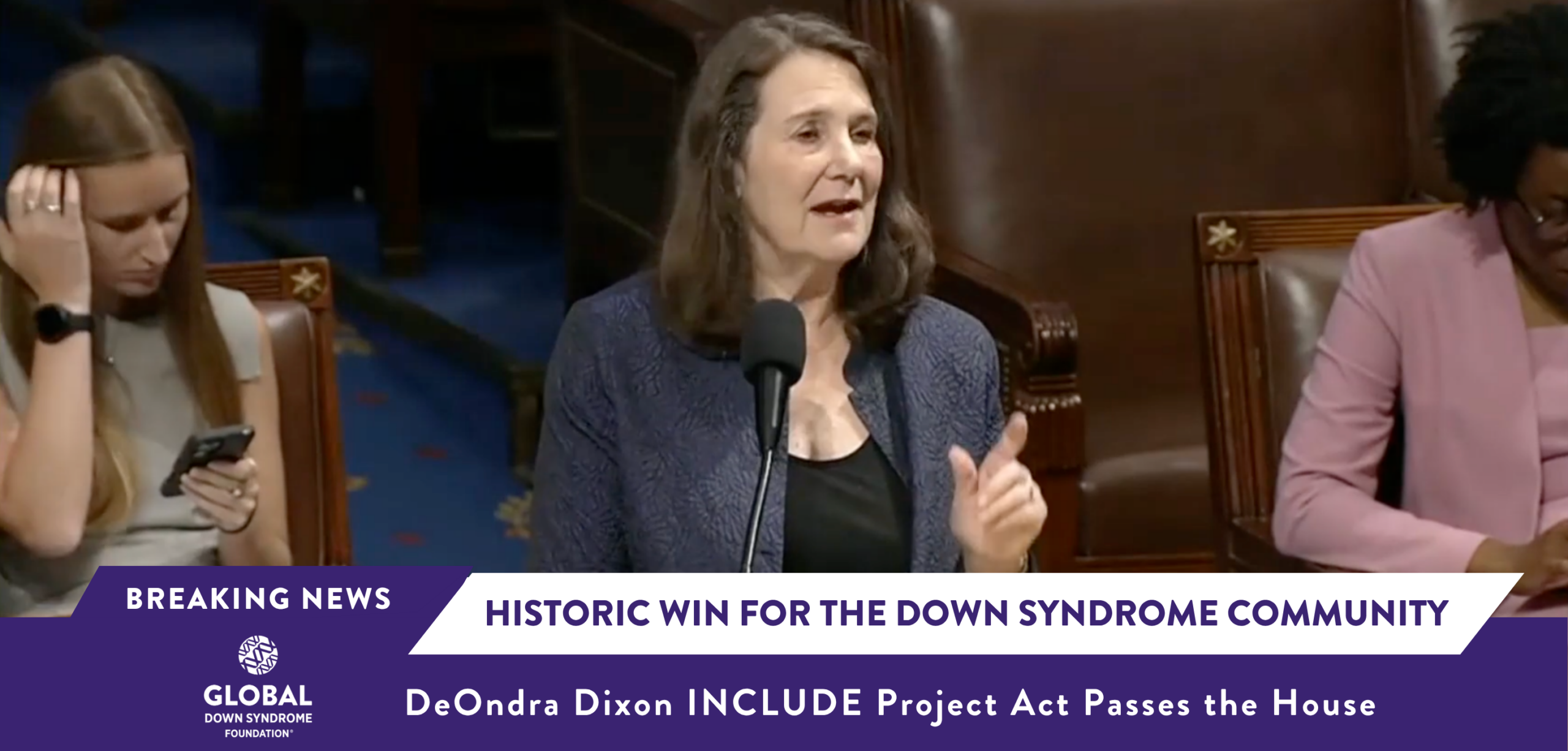
WASHINGTON, D.C., July 21, 2026 — Following unanimous passage by the House Energy and Commerce committee in late May, the U.S. House of Representatives unanimously passed the DeOndra Dixon NIH INCLUDE Project Act (H.R. 3491) Monday evening.

Led by Representatives Diana DeGette (D-CO) and Richard Hudson (R-NC), the bipartisan legislation would permanently authorize the National Institutes of Health’s Investigation of Co-occurring Conditions Across the Lifespan to Understand Down Syndrome, known as the INCLUDE Project.

The NIH INCLUDE Project is the first-ever NIH-wide initiative dedicated to advancing research to improve the health and quality of life of people with Down syndrome while accelerating scientific discoveries that benefit all Americans. The INCLUDE Project was originally established and appropriated through the bipartisan leadership of Chairman Tom Cole (R-OK) and Ranking Member Rosa DeLauro (D-CT). It has catalyzed discoveries related to Alzheimer’s disease, autoimmune conditions, sleep apnea, cancer, heart disease, liver dysfunction, and other co-occurring conditions that disproportionately affect individuals with Down syndrome.

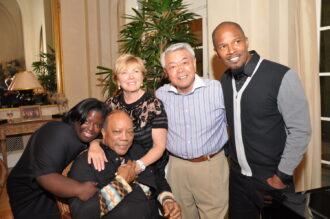
The bill honors the life and legacy of DeOndra Dixon, who inspired people across the country and around the world through her advocacy, talent, warmth, and determination. DeOndra served as a GLOBAL Ambassador and was the inspiration for GLOBAL’s highest honor, the Quincy Jones Exceptional Advocacy Award. A gifted dancer and musician, she performed at the 52nd Grammy Awards, delivered keynote speeches at national and international conferences, and was a beloved presence at GLOBAL events alongside her big brother, Jamie Foxx, and their family.

“There isn’t a day that goes by that our family doesn’t miss DeOndra, but today I know she is dancing in heaven,” says Academy Award-winning actor and Grammy Award-winning musician, Jamie Foxx. “My little sister brought so much love, joy, and light into this world, and she was really dedicated to helping people, checking in and seeing if they were okay. Seeing the House unanimously pass a bill bearing her name is an incredible honor and knowing the DeOndra Dixon INCLUDE Project Act will help people with Down syndrome live longer, healthier lives ensures that DeOndra’s legacy will continue to make a difference for generations. I am deeply grateful to GLOBAL and to the bipartisan leaders working to make this bill law.”

“GLOBAL is incredibly grateful for the overwhelming bipartisan support for the DeOndra Dixon INCLUDE Project Act and for the unanimous House passage,” says Michelle Sie Whitten, President and CEO of the Global Down Syndrome Foundation. “It is so important that we honor GLOBAL Ambassador DeOndra Dixon. This legislation will help preserve her extraordinary legacy by making the NIH INCLUDE Project permanent and ensuring that life-saving Down syndrome research will continue and grow. GLOBAL helped catalyze INCLUDE into existence as the first NIH-wide Down syndrome research program, and it is already transforming the field and improving health outcomes. We deeply appreciate the leadership and tenacity of Representatives Diana DeGette and Richard Hudson, and their bipartisan colleagues. Now we need the Senate to act so that this transformative bill can become law.”

GLOBAL advocated for an NIH-wide Down syndrome research program from its founding in 2009. In 2017, three GLOBAL leaders—Michelle Sie Whitten, Dr. Joaquin Espinosa, and self-advocate and GLOBAL board member Frank Stephens—testified before the House Appropriations Subcommittee on Labor, Health and Human Services, Education, and Related Agencies at a landmark hearing on the state of Down syndrome research and its potential to advance understanding of other major diseases.

Following years of advocacy by GLOBAL, its families, self-advocates, scientists, medical professionals, and bipartisan congressional champions, Congress began funding the NIH INCLUDE Project in 2018.

“Today’s passage of the INCLUDE Project Act shows what we can achieve when we make Down syndrome research a true bipartisan priority,” says Congresswoman Diana DeGette. “By advancing this critical legislation, we are showing our commitment to improving health outcomes for individuals with Down syndrome. Colorado is already leading the way as home to the Global Down Syndrome Foundation and their affiliate, the Linda Crnic Institute—the largest institute for Down syndrome research in the world. When this bill becomes law, we will be doubling down on our commitment to groundbreaking science and to the Down syndrome community.”“People with Down syndrome enrich our families and communities in so many ways,” says Representative Richard Hudson. “I’m proud the House passed my bill to support research that can help them live longer, healthier lives and reach their full potential without barriers standing in their way.”The DeOndra Dixon INCLUDE Project Act was advanced by House lead sponsors DeGette and Hudson, together with original cosponsors Representatives Rosa DeLauro (D-CT), Tom Cole (R-OK), Eleanor Holmes Norton (D-DC), and Pete Stauber (R-MN), as well as additional bipartisan cosponsors: Paul Tonko (D-NY), Brittany Pettersen (D-CO), Angie Craig (D-MN), Jason Crow (D-CO), Joe Neguse (D-CO), Mark Pocan (D-WI), Ann Wagner (R-MO), Deborah Ross (D-NC), David Kustoff (R-TN), Suhas Subramanyam (D-VA), Jerry Nadler (D-NY), James Walkinshaw (D-VA) and Rob Wittman (R-VA).

GLOBAL recognizes former House Energy and Commerce Committee Chair Cathy McMorris Rodgers, whose leadership and personal commitment as the mother of GLOBAL Ambassador Cole Rodgers, helped build bipartisan momentum for the legislation in the previous Congress.

The legislation now moves to the U.S. Senate, where Senators John Hickenlooper (D-CO) and Jerry Moran (R-KS) are leading the bipartisan effort to secure passage.


GLOBAL urges the Senate to pass the DeOndra Dixon INCLUDE Project Act without delay and send it to the President’s desk.

Members of the public can learn more and contact their U.S. Senators at: https://www.globaldownsyndrome.org/deondra-dixon-include-project-act/

About the Global Down Syndrome Foundation
The Global Down Syndrome Foundation (GLOBAL) is the largest non-profit in the U.S. working to save lives and dramatically improve health outcomes for people with Down syndrome. GLOBAL established the first Down syndrome research institute and supports over 400 scientists and over 2,700 patients with Down syndrome from 40 states and 11 countries. Working closely with Congress and the National Institutes of Health, GLOBAL is the lead advocacy organization in the U.S. for Down syndrome research and care. GLOBAL has a membership of over 130 Down syndrome organizations worldwide, and is part of a network of Affiliates – the Crnic Institute for Down Syndrome, the Sie Center for Down Syndrome, the University of Colorado Alzheimer’s and Cognition Center – all on the Anschutz Medical Campus, and the GLOBAL Adult Down Syndrome Clinic at Denver Health.

GLOBAL’s widely circulated medical publications include Global Medical Care Guidelines for Adults with Down Syndrome, Prenatal & Newborn Down Syndrome Information, and the award-winning magazine Down Syndrome World TM. GLOBAL also organizes the annual AcceptAbility Gala in Washington DC, and the annual Be Beautiful Be Yourself Fashion Show, the largest Down syndrome fundraiser in the world. Visit globaldownsyndrome.org and follow us on social media: Facebook, X, Instagram, LinkedIn, and YouTube.

Media Contact:
Alex Lee, alee@globaldownsyndrome.org, 720-548-5631


The Down Syndrome Association of the Northern Territory of Australia has a range of information, services and supports for families and people with Down syndrome.

Recently, GLOBAL Vice President – Strategic Alliances, David Tolleson, met with Rachel Kroes, Executive Director of Down Syndrome Association of the Northern Territory (DSANT), to learn more about how they connect families and promote community inclusion.

DAVID: G’day and thank you for joining us from Australia! To begin with, please tell us a bit about yourself.

RACHEL: I have a daughter with Down syndrome, Molly. We live with my husband, John, here in Darwin. I have another daughter who lives in our national capital, Canberra. We’ve lived in the Northern Territory for nearly 35 years. I came from England in the 1980’s to discover what Australia was all about and fell in love with the country and with Darwin. We’re in the very northern part of Australia. In fact, some Australians don’t even visit Darwin, so it’s understandable if people elsewhere in the world don’t know where we are. Our geography makes a very remote and vibrant community, self-sustaining and independent. I run the Down Syndrome Association here and we cover a vast territory. My husband is a train driver on the Darwin to Adelaide route, so he goes back-and-forth through the center of the country.

DAVID: Wow, that’s a long route! How long does it take to make that round trip?
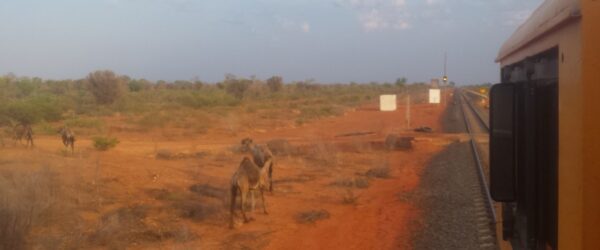
RACHEL: It takes six days to go up and down, so he spends a lot of time in the real Outback bush. We live on the coast, which is lovely, but we don’t go swimming because of the crocodiles. Ironically, we do a lot of fishing, but you have a lot of red eyes staring back at you in your boat!


DAVID: How old is Molly?
RACHEL: Molly is 30 now. Her younger sister, Jane, works for the Federal government in Canberra, which is an amazing capital and a beautiful place to visit. She comes home from time to time. Molly misses her. I think that can be hard for people with Down syndrome, when their sibling moves on. It leaves a spare bedroom and an empty place at the dinner table, which can be hard to adjust to. Routines are important and when one goes away, we normally replace it with another. But there’s no replacement for an absent sibling or other loss. I wish I had the magic elixir for that. We are working on independence for Molly, but we’re not quite there, yet. We’ll get there.
DAVID: Can you please tell us a bit about Darwin and why you love it so?
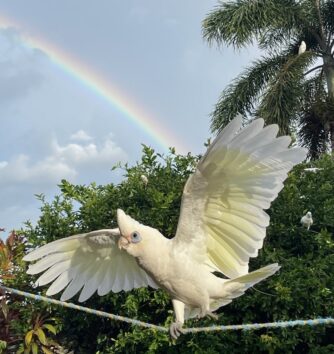
RACHEL: We’re Australia’s tropical capital. It’s beautiful. The flora and fauna are amazing, though the wildlife is definitely wild. There are only about 250,000 people in the entire Northern Territory, which is about twice the size of Texas or four times the size of California. We have the greatest number of aboriginal communities in Australia. We live relatively quiet lives because we’re so spread out. People often move here to get away from the weather in the South. Here we have a wet season (November – April) and a dry season (May – October). There’s a certain resilience to the people who live here.

Australia has 6 states and 2 territories. We’re one of the latter, which means we don’t have as much local control over our affairs. However, this gives us very good access to our national and local leaders. DSANT, like many other non-profits here, doesn’t have any competition – we’re the only ones doing our work – so local officials value us and give us access.

DAVID: So, if I get a diagnosis in Alice Springs, am I calling you?

RACHEL: Yes, and we’ll be visiting you. We go to Alice Springs about 4 times a year.
DAVID: That’s quite a distance, isn’t it?

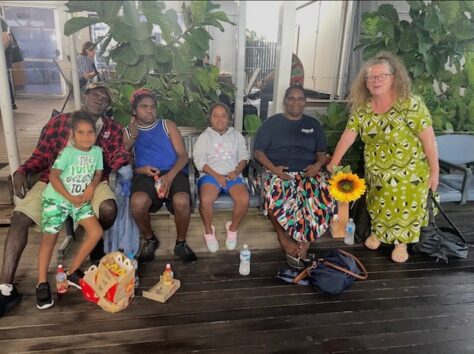
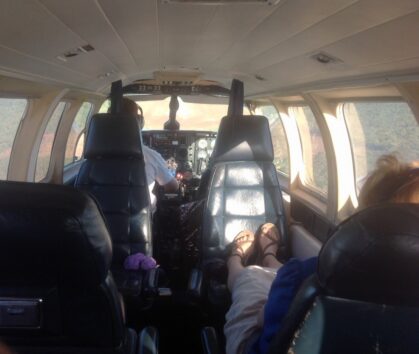
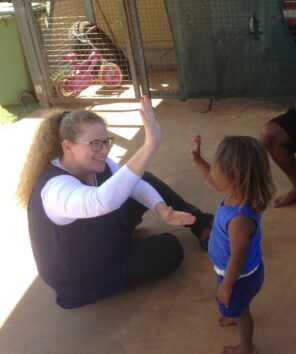
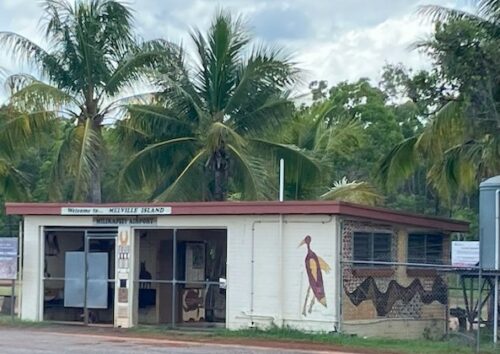
RACHEL: Yes, it would take about 17 hours to drive. The flight is just over 2 hours. It’s part of our services. My colleagues and I visit 9 indigenous communities. The furthest away, we have to fly into Alice Springs and then drive another 4 to 5 hours towards the Queensland border, at which point you arrive in about the most remote place you could possibly get to. We sleep in a shipping container. There are no streets, but lots of donkeys. We find the school and the mother of the child with Down syndrome. Our ability to communicate through language is compromised, but your visual capacity to be a peer and to share is as clear as with any mother I sit with. Their concerns for their child are exactly the same as mine for Molly, so you can instantly speak in that shared language we have. Over time and multiple visits – which the culture requires – if you’re accepted, someone will invite you to see the baby. They’ll take you an hour or so down the road in a truck and you get to meet the baby with Down syndrome. There are a lot of people in the aboriginal communities who are undiagnosed. That they’ve survived and lived a life that is pretty hard is both stunning and heartwarming.
DAVID: Just again for folks to realize the distances involved, how long does it take to fly from Darwin to, say, Sydney?

RACHEL: About 6 and a half hours. When I flew across America, it was really interesting looking down at the changing geography. We do that, too, but we’re flying over masses of nothing – just mile after mile of red bush. We’ve done everything. We’ve traveled through creeks with crocodiles at window level. We’ve been in small planes that have cracked windshields from bird strikes and had to land. We’ve been through floods and whirlies. We’ve had a lot of adventures!

DAVID: Well, God bless you for going where you’re needed.
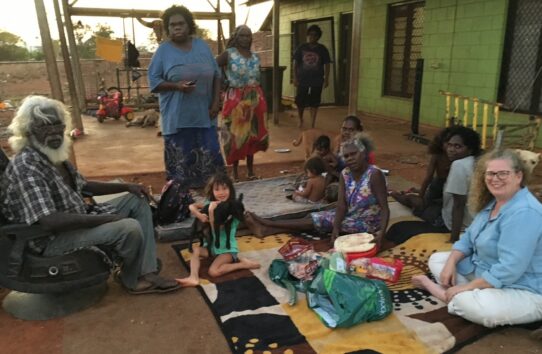
RACHEL: It’s been a privilege. When people fly in and fly out of Darwin for business, no one thinks anything of it. But when you drop in on an aboriginal settlement, it’s critically important that you’re culturally aware. If you don’t get the relationships right, the locals won’t engage with you. You’re coming to tick your box, not theirs. You want to make yourself feel better, but you have nothing to offer them. I’m grateful for the woman who fly down with me and before me. If we can go and stay overnight, we do. Like I said, I’ve slept in a shipping container, a school, a church, a teacher’s home just trying to be accepted with the information we bring about Down syndrome. The families we serve often don’t know the words “Down syndrome”. But they know what it’s like to be different and to be alienated within their community. And, if your community only has 120 people, that’s tough for that mom. Lots of aboriginal communities don’t even have a word for disability. It’s not seen culturally the way we see it, so we help how we can. We always take things – toys, food, gifts. We took a bed once to a lad who, years later, still shows us his bed. The rest of the family sleeps on the floor, but he has a bed. I’ve been doing this for 17 years, so now I’ll see teenagers that I held as babies. Their parents will literally walk for hours if they hear we’ll be in the nearest town because they know us, so we count that as a success. I feel comfortable serving the populations I work with. I’m not sure I’d feel the same in a city where every event has 60 people, though I suppose I’d have more people to help me.

DAVID: You’re flying across the Outback, sleeping in a shipping container and bouncing across the bush in a truck, dodging crocs in the creek, and I complain about going downtown because there’s too much traffic. I’m such a lightweight next to you. You’re doing God’s work!

RACHEL: You live at both a slow and fast pace when you have a child with Down syndrome. The slow kind of suits me. From birth I was hearing impaired and that has gotten worse as I’ve gotten older. I temper my own exposure to the world and the city because I have to pace myself just to get through the day and communicate. I’m ideally suited for what I do – a slow pace works for me. I lived 7 years – the “Yuppie” years in the 80’s – in London before moving here and I don’t need to do that anymore.
DAVID: How did you get involved with DSANT?

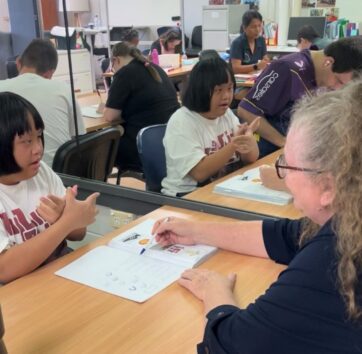
RACHEL: My first contact with the organization was when a mom came to visit me in hospital 30 years ago when I had Molly. She’s still my dear friend now. Her advice at the time was to just go home, love my baby, and get on with it, not to necessarily get involved with an organization. It was good advice, because primarily you’re a mother to a baby and she was my first, so you need to let that settle and not good too overloaded with everything else. I got involved with DSANT when Molly was around 4 or 5, when I realized, school wasn’t going to look the way I thought it should look. Later, after I quit working, I started volunteering with DSANT. My first project was to develop a program for our schools. I developed a presentation and went to the government and said I need some money. Luckily, they agreed and so around 2010 we started our Down Syndrome School Support Program, which joined our existing Computer Aided Learning Program, which worked on literacy and mathematics through apps.

When the storefront next to our office became vacant, we opened WIMS (Walking in My Shoes), which sells recycled shoes. Our DSANT families started giving us all their secondhand shoes. I couldn’t believe it, but people started coming to buy those secondhand shoes! More importantly than the money it generated was the retail sales experience it provided the self-advocates in our community. It was fascinating watching people give their money to a person with Down syndrome as a transactional equality. We’ve really lost something with the tap to pay.

DAVID: That sounds like a great approach to fundraising and providing real work experience and community interaction.
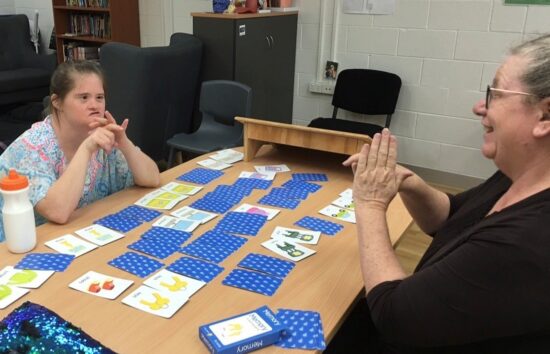
RACHEL: We had to find more ways to make money. My husband had been doing barbeques to raise funds, and he said he wasn’t going to do them anymore. Our next venture was to gather plastic bottles for the 10-cent recycling refund. We thought that would be better than doing barbeques – they’re too much work and too hot! That little project is now a recycling depot with 12 or 13 employees. We call it Cash for Containers (C4C). It provides work and income, but also awareness, because we’re going to people’s homes every week.

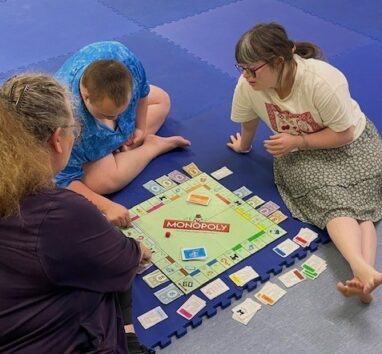
We started seeing too many of Molly’s friends be underemployed or hitting too many barriers related to attending college, so we started our own college. We found the space, developed it, and then brought in people from the government and got their support. Before that, we didn’t have a transition to independence program for people in Darwin. Now we do – Project 21 – that serves adults from high school graduation to age 30. People have come from other states wondering how to replicate what we have, but it’s hard for them in the bigger cities. There are too many barriers and perceived competition that makes it difficult to do what we’ve done because we’re so isolated. We don’t have those boundaries up here. We create it, open it, then bring the government in to help support it. We’ve gone from a separate, store front operation to now having a suite of classrooms in our local Charles Darwin University, where our students have been accepted as an integrated part of that community, taking classes across campus, using the library, canteen, and buses. I’m very proud of that.

DAVID: You should be! Not only is it important to the people you’re serving, but that representation is having an impact on the other people on campus and in your community. They’re seeing people with Down syndrome, and it becomes normal. It’s not something unusual, it’s just one more student who happens to have Down syndrome.

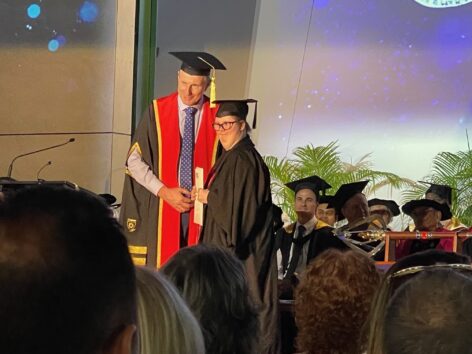
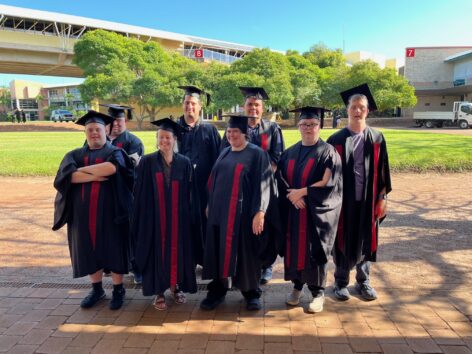
RACHEL: That’s right. And we go to the parties, and they walk across the stage at graduation to get their Certificate One in Hospitality alongside people getting their PhDs. The Vice Chancellor says that’s one of his proudest moments, seeing Project 21 students can walk along just like everyone else. I loved seeing the photo in the lobby of GLOBAL headquarters of Regis University students in their caps and gowns, because we’re a tiny little pinprick in the world, but we do that, too. I have a real affinity with GLOBAL because you’re proud of the GLOBAL Inclusive College Certificate Program at Regis, just as we are of Project 21.

DAVID: We don’t think you’re small at all. You’re doing amazing, amazing work. We’re very proud and grateful to be connected to you as a GLOBAL Organization Member. I believe you also have other programs. Anything else you’d like to share?

RACHEL: Thank you – that’s kind of you to say. Yes, we’ve really returned to basics in some ways. As younger generations are moving from handwriting to using devices and apps, we are seeing a decline in both hand dexterity and verbal communication skills from one generation to the next. We’re too reliant on emojis, so we’re concentrating again on learning to sign, to read, to speak. Back to the basics.

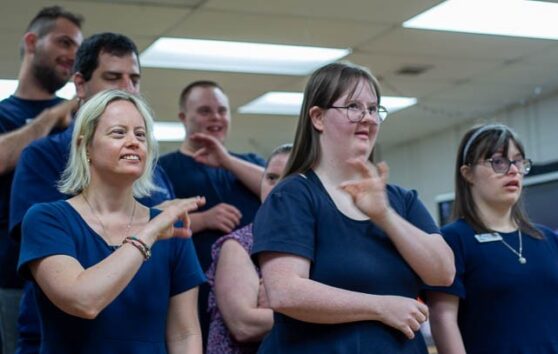
We also have our Sing Song Signers, a signing choir I started back in 2000. It initially began as a group of Molly’s friends from her transition class at school who wanted to learn how to communicate with her, and grew into a strong friendship group of young people who meet every Saturday to learn the art of sign and of performance to familiar songs and carols.  Each year, the Sing Song Signers perform at the Darwin Carols by Candlelight event in front of an audience of 5,000 locals.  This year for the first time we held it in our convention center.  Many choir members without disabilities have gone on to pursue careers in allied health, teaching, advocacy and the wider disability community.  For now, approximately 20 young people gather at Project21 each Saturday and it’s a really fun class to be in. 
DAVID: Last year, you and several folks from your community had the opportunity to visit Denver and tour GLOBAL’s headquarters, as well as our affiliates, the Linda Crnic Institute for Down Syndrome and the Anna & John J. Sie Center for Down Syndrome. What did you think?

RACHEL: Oh, I was blown away. First of all, the quality of all 3 places – their presentation, their intent, the staff we met who were both knowledgeable and at ease with talking about things that are so close to our heart. I have to credit everybody that we met and every building that we went in with thoughtfulness, good intention, and quality.
Also, just an aligned kinship. Here’s something that structurally operates and exists which I live and breathe in my daily life. This is what I was invented to do, so there was a real affinity when meeting person after person who could all articulate what they were doing and why they were doing it. As a mother, it was wonderful to know that you’re doing it for people like my daughter.

Perhaps the best thing is that the messaging there is around the future. The intention for scientific research is a proactive approach to what the future will look like. The future is my biggest fear. I’ve lived the 30 years Molly has been alive and we’ve survived, but what happens next? Let’s discover what that looks like and how to protect it, augment it, strengthen it, stabilize it, and make it safe for those with Down syndrome in the future and their parents. To see somewhere filled with people who want that and are working toward that is what I’ve dreamed of and wanted and prayed for. Those are my first three impressions.

One interesting development – when I was in America, I was given an Oura ring. When having lunch with GLOBAL President, Michelle Whitten and Crnic Institute’s leader, Dr. Joaquín Espinosa, we discussed the rings he and I were wearing. That led us into a discussion about women’s health and me wondering if during pre- or peri-menopause or menopause we should be giving women with Down syndrome Hormone Replacement Therapy. The next step we discussed was to get some rings and have a small cohort of women wear them and map sleep first, and then daytime activity. It looks like my benefactor wants to supply those rings. It’s really ideal – we’re a closed, small cohort and we see one another every day. I’m excited to work with Dr. Espinosa, Crnic, and GLOBAL to see where that goes. Perhaps a new breakthrough!

DAVID: We are very grateful for your support as a GLOBAL Organization Member. Why is it important to you to support our work even though we’re just about on opposite sides of the planet?

RACHEL: It’s important because you’re leading where I can’t, but I’m applying what you’re doing. So, we might be on opposite sides of the planet, but we’re part of a circle and it makes absolute sense to support GLOBAL, to support those who are passionate about what I’m passionate about. I wish we had more to give, but whatever we give is given with full support, intent, and appreciation for what you’re doing.
DAVID: Thank you again for your support and your time today. Is there anything else you’d like to share?

RACHEL: The fact that we have families who live in the Northern Territory with children with Down syndrome who are passionate about sharing that with their communities is phenomenal. I also want to give a shout out to all the families who came before me. DSANT is 45 years young, so I’m standing on their shoulders.

Additionally, I want to recognize our Ministers around disability and health. People don’t always compliment their governments enough but given that the population of people with Down syndrome is small, we are still given the respect, affirmation, and inclusion that we want for our young people, so I’m grateful to them. I’m grateful to the teachers in our schools as well. We don’t have many special schools so many of our students are mainstreamed, and the teachers work very hard for our families.
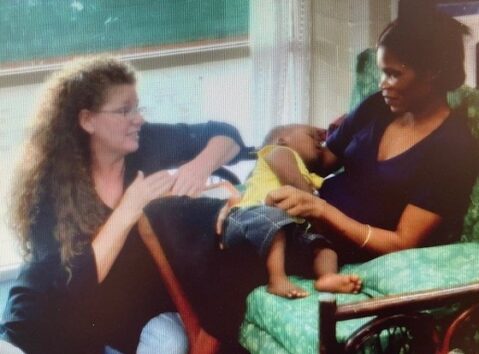
Internationally and nationally, it’s about GLOBAL, and Down Syndrome UK who provided me all the resources when Molly was born back in the 1990’s. I don’t know what I would do trying to Google search everything now. That would scare me. It would be overwhelming seeing every possible thing that could happen when she was just a newborn. That’s why our resources need to be spot on and appropriate. We don’t want to stop people from looking ahead into their future life, but it needs context, so you don’t stop the thing you want to encourage – the strength and support throughout their lives.

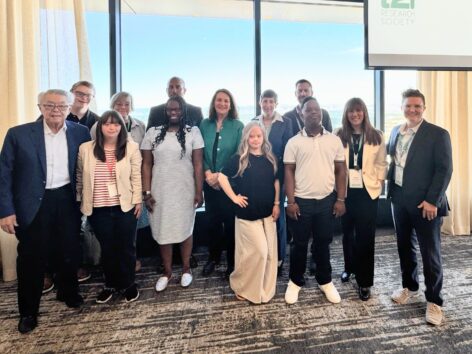
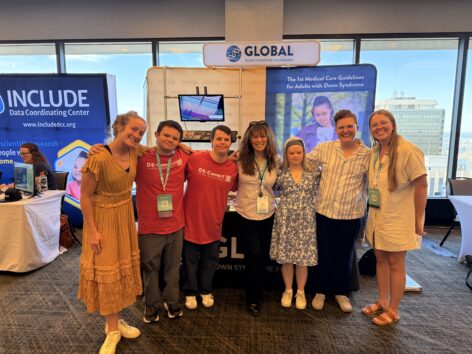
More than 400 leading Down syndrome researchers, clinicians, self-advocates, and family members from over 20 countries gathered in Denver this month for the 6th Biennial Trisomy 21 Research Society (T21RS) International Conference, a week dedicated to advancing research and improving the lives of people with Down syndrome around the world.

The conference welcomed attendees from across the globe, including five representatives from the National Institutes of Health (NIH), and showcased groundbreaking discoveries, innovative collaborations, and emerging research focused on helping individuals with Down syndrome live longer, healthier lives.

As a proud founding member of T21RS, the Global Down Syndrome Foundation (GLOBAL) played a prominent role throughout the conference, with experts from GLOBAL and its affiliates—the Linda Crnic Institute for Down Syndrome, the Anna and John J. Sie Center for Down Syndrome, and the University of Colorado Alzheimer’s and Cognition Center—presenting to packed auditoriums.

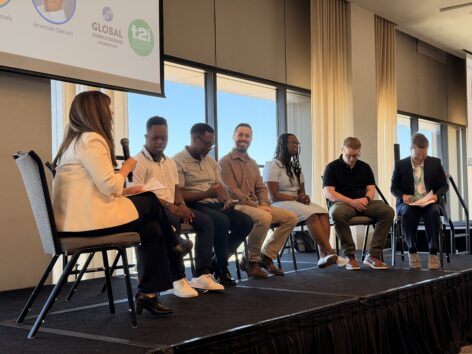
But the true stars of the conference were the self-advocates and family members who took center stage. For the first time in conference history, individuals with Down syndrome and their parents helped open the international gathering by sharing their lived experiences and perspectives on research participation during a moving panel discussion and the conference’s Science & Society program. Their stories, hopes, and calls to action received standing ovations and served as a powerful reminder of why research matters.

Opening remarks featured T21RS leadership and special messages from honorary guests, Colorado Governor Jared Polis and Congresswoman Diana DeGette, sponsor of the DeOndra Dixon INCLUDE Project Act, both of whom emphasized the importance of continued investment in Down syndrome research and advocacy.

Adding to the celebration, internationally acclaimed musician and GLOBAL’s Quincy Jones Exceptional Advocacy Award recipient, Sujeet Desai, captivated attendees with inspiring performances on the clarinet and violin.

GLOBAL Affiliate Sessions Included:

  • Global Family/Self-Advocate Panel – Bryn Gelaro, Michelle Sie Whitten, Sam Levin, Megan Bomgaars, Terrance Daniels, Jeremiah Daniels, Grace Grubb, and Patrick McClellan
  • The Experimental Models of Down Syndrome Researcher Portal – Matthew Galbraith, Linda Crnic Institute
  • Feeding and Swallowing in Children with Down Syndrome: How Clinical Research is Shaping Care – Arwen Jackson, Anna and John J. Sie Center for Down Syndrome
  • DS-Connect Overview – Angela Rachubinski, Linda Crnic Institute
  • Altered Hepatic Metabolism in Down Syndrome – Lauren Dunn, Linda Crnic Institute
  • How Advocacy and Research Just Added a Decade of Life—And Our Roadmap to the Next 10-Year Jump – Michelle Sie Whitten, Global Down Syndrome Foundation
  • Pediatric and Adolescent Health Care Guidelines – Nicole Baumer, Anna and John J. Sie Center for Down Syndrome
  • The Interferonopathy of Down Syndrome: Mechanisms and Clinical Trials – Joaquin Espinosa, Linda Crnic Institute

The weeklong conference concluded with a spectacular gala dinner at the Denver Art Museum, sponsored by GLOBAL, where Denver Mayor Mike Johnston delivered closing remarks celebrating the city’s role as a hub for innovation and inclusion. The gala also created a unique opportunity for members of the local community to engage directly with the international Down syndrome research community. Guests enjoyed special performances by Nashville bluegrass trio The Ransom Notes, whose lead fiddle player has Down syndrome, followed by a lively dance party featuring the six-piece Diamond Empire Band.

Founded with the support of GLOBAL, T21RS is the first international nonprofit scientific organization dedicated exclusively to Down syndrome research. The organization promotes basic and applied research, stimulates translational science, and advances new scientific discoveries that improve the quality of life for people with Down syndrome around the world.


Read Michelle Sie Whitten’s Op-Ed in STAT, the Leading National Health, Medicine, and Scientific Discovery Publication

  Read the Full Op-Ed Here   Prenatal & Newborn DS Info  


My Adult Daughter Has Down Syndrome. Her Life is Entirely Different From What Experts Expected

Parents Facing Prenatal Down Syndrome Diagnoses Deserve Accurate Facts, Not Fearmongering

EXCERPTS From the Op-Ed Written By Michelle Sie Whitten, GLOBAL Co-Founder, President & CEO and Proud Mom to Sophia Kay Whitten


The genetic counselor handed me a tissue.

“Don’t worry, Mrs. Whitten,” she said. “Eighty to ninety percent of people terminate these pregnancies. You can, too.”

Twenty-three years ago, my husband, Tom, and I had just received prenatal screening results indicating our unborn child probably had Down syndrome. Instead of offering us actual counseling, she played a video about Down syndrome — and it was terrifying.

Sophia’s Birth & Operation 

I am fiercely pro-woman. Women are fully capable of making difficult decisions, but meaningful choice requires trusted, vetted information. Otherwise, it stops being counseling and becomes coercion.

Then, about 30 weeks into my pregnancy, we learned that our daughter, Sophia, had a congenital heart defect…

What we learned was reassuring. Roughly one-third of congenital heart defects in children with Down syndrome resolve naturally, and many need only a minor intervention. About half need open-heart surgery during infancy. The survival rate for the various open-heart surgeries in all children was and remains between 95% and 99% — the same as with children without Down syndrome.

The diagnosis was frightening, but the facts were not.

Like All New Parents We Built Our Community

Wanting to do everything possible to support my daughter, I asked our pediatric cardiologist which specialist he would recommend. He stared at me in disbelief and said, “Mrs. Whitten, the only thing that is going to influence your daughter’s IQ is the fact that she is mentally retarded.”

We fired him. But I’ll never forget his exact words and his insulting assumptions: that Sophia’s future already had been written, that her life could be reduced to a diagnosis, that low expectations were somehow scientific, and that somehow what is good for a person without Down syndrome is not appropriate for a person with Down syndrome.

Sophia “Firsts”

The progress we’ve made in research and medicine has seen an increase in 10 years of lifespan.
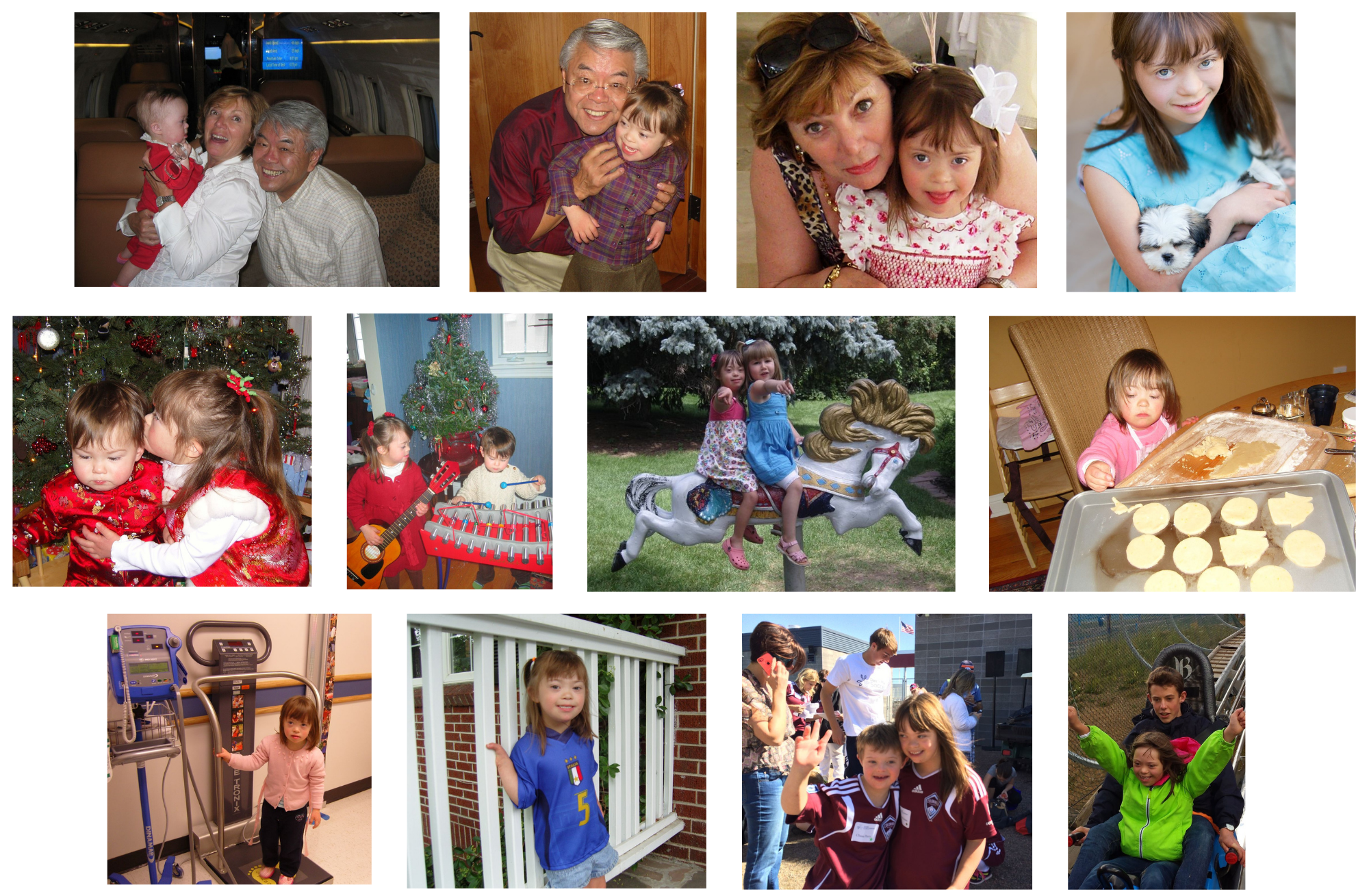
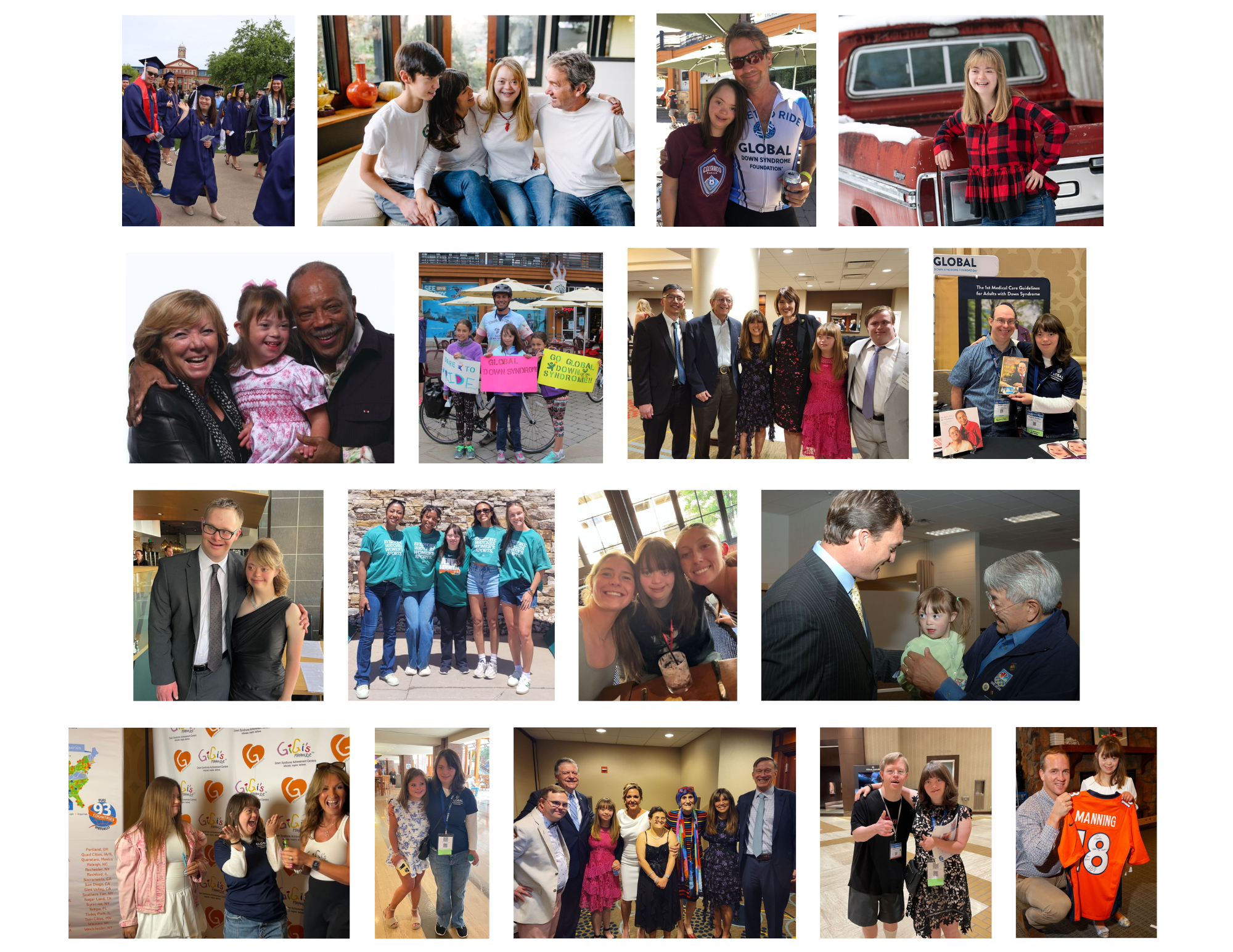
Too often, however, the information given to expectant parents has not kept pace. Families are still receiving outdated information and, in some cases, being counseled as though there is only one reasonable path forward.

That reality is one of the reasons that the Global Down Syndrome Foundation created the Prenatal and Newborn Pamphlet. We had a simple conviction: Parents should never leave their doctor’s office and have to rely on a Google or now an AI search to get accurate information about their child.

Sophia Growing Up

No doctor, genetic counselor, or test could show me her future — they could only tell me that Sophia had an extra chromosome.

Sophia’s Story is Still Being Written…

Read the Full Op-Ed Here  

Color Book star Jeremiah Daniels will also appear before hundreds of the world’s leading Down syndrome scientists at an international conference co-organized by GLOBAL

Check out Color Book In the News:

The Denver Gazette | A Father-Son Story for Netflix … and Fathers Day

The New York Times | ‘Color Book’ Review: Love and Grieving

9NEWS | Local Actor with Down Syndrome Stars in Netflix Movie

CBS Colorado | Jeremiah Daniels Brings Energy & Attention to Down Syndrome

Colorado Public Radio | As ‘Color Book’ Premieres on Netflix, We Catch Up with the Aurora Boy Who Stars in the Movie and His Parents as They Look to the Future

KOSI 101.1, The Kathie J Show | Color Book Movie now streaming on Netflix

Disability Scoop | Netflix to Debut Movie Starring Actor With Down Syndrome 


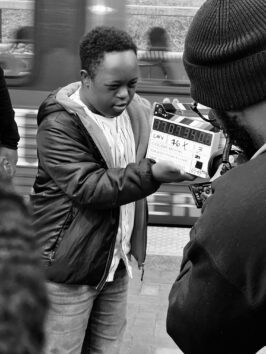
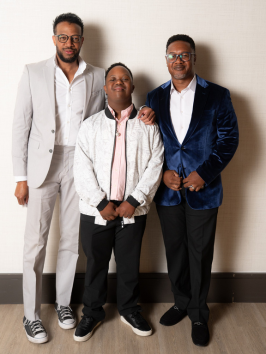
As Father’s Day approaches, Denver-area teenager Jeremiah Daniels is about to have a remarkable week in the national and international spotlight.
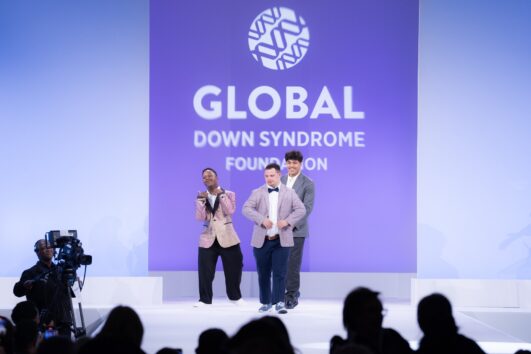
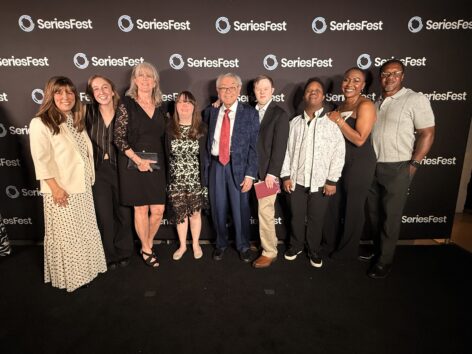
Beginning June 19, the acclaimed feature film Color Book, winner of 30 film festival awards including the American Independent Award for Best U.S. Feature Film at the 2024 Denver Film Festival, will make its highly anticipated Netflix debut, introducing audiences around the world to Jeremiah’s moving performance as Mason, a young boy with Down syndrome at the center of the film’s powerful story.

During the same week, Jeremiah and his father will be featured guests at the 6th International Conference of the Trisomy 21 Research Society (T21RS) which brings together leading Down syndrome researchers, clinicians, industry leaders, families, patient organizations, and advocates from around the globe.

The timing creates a compelling real-life connection between the film’s message and the conference’s mission.

Color Book, written and directed by rising filmmaker David Fortune, tells the heartfelt story of a devoted single father navigating the challenges and joys of raising his son with Down syndrome following the death of his wife. The film, produced by Kiah Clingman, Kristen Uno and Autumn Bailey-Ford, has earned widespread praise for its authentic portrayal of disability and family, with Jeremiah’s performance as Mason serving as the emotional heart of the story.

As researchers and advocates from around the world gather in Denver to discuss advances that improve the quality of life for people with Down syndrome and their families, Jeremiah’s story offers a powerful reminder of the importance of authentic representation and inclusion both on screen and in everyday life.
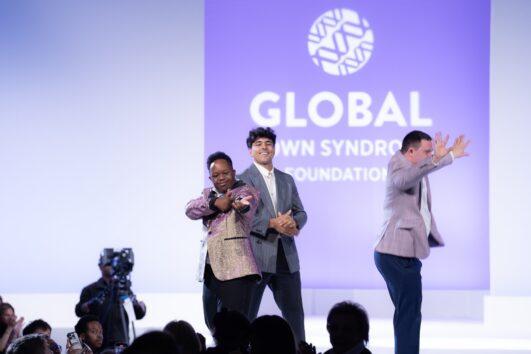
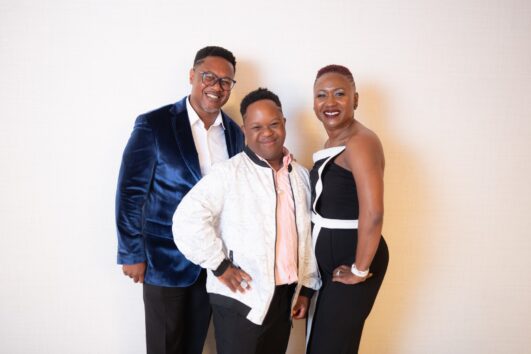
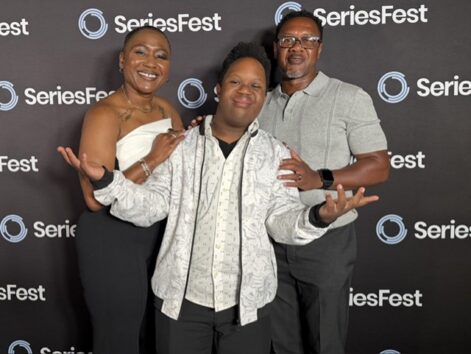
The Father’s Day-week connection is especially meaningful, as both the film and the conference highlight the vital role families, and fathers in particular, play in supporting and empowering individuals with Down syndrome.

T21RS was co-founded by the Global Down Syndrome Foundation (GLOBAL) in 2014 and organizes a biennial conference that has been hosted in major cities such as Paris, Chicago, Barcelona, and Rome. This year’s conference will be held in Denver from June 17-20 at the Grand Hyatt Denver and is co-hosted by GLOBAL and the Crnic Institute for Down Syndrome.

Media interviews are available with Jeremiah Daniels and his father to discuss:
• Jeremiah’s journey from Denver-area student to star of a nationally streaming feature film
• The impact and importance of authentic representation of people with Down syndrome in film and media
• The upcoming Netflix release of Color Book on June 19
• Their participation in the GLOBAL co-organized international T21RS conference in Denver
• Family advocacy, inclusion, and opportunities for individuals with Down syndrome
• The powerful father-son themes at the center of both the film and Father’s Day week

Interview Opportunities Available:
Jeremiah Daniels and his father, Terrance Daniels
Color Book Writer/Director David Fortune
Color Book Producer Kiah Clingman
Michelle Sie Whitten, Co-Founder, President, CEO, Global Down Syndrome Foundation

About Color Book
Winner of 30 awards and another eight nominations across the film festival circuit, including the American Independent Award for Best U.S. Feature Film award at the 2024 Denver Film Festival, Color Book is a moving drama about a single father and his son with Down syndrome as they navigate grief, resilience, and connection. The film has been praised by critics and audiences alike for its sensitive, genuine portrayal of disability and family life. It premieres globally on Netflix on June 19.

About the Global Down Syndrome Foundation
The Global Down Syndrome Foundation (GLOBAL) is the largest non-profit in the U.S. working to save lives and dramatically improve health outcomes for people with Down syndrome. GLOBAL established the first Down syndrome research institute and supports over 400 scientists and over 2,700 patients with Down syndrome from 40 states and 11 countries. Working closely with Congress and the National Institutes of Health, GLOBAL is the lead advocacy organization in the U.S. for Down syndrome research and care. GLOBAL has a membership of over 120 Down syndrome organizations worldwide, and is part of a network of Affiliates – the Crnic Institute for Down Syndrome, the Sie Center for Down Syndrome, the University of Colorado Alzheimer’s and Cognition Center – all on the Anschutz Medical Campus, and the GLOBAL Adult Down Syndrome Clinic at Denver Health.


House Energy & Commerce Committee Unanimously Advances Landmark Legislation as Congressional Leaders Honor DeOndra Dixon, John J. Sie, Michelle Sie Whitten, and GLOBAL’s Decades of Advocacy

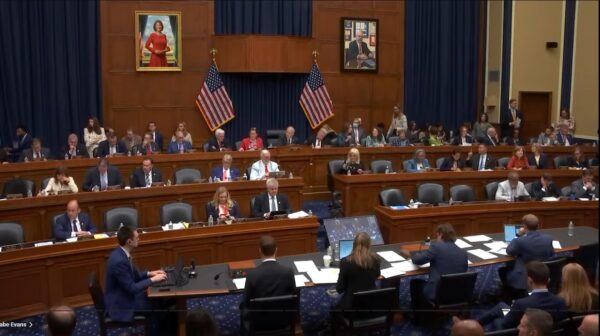
  Watch the Full Committee Markup  


Program Highlights: 

– Opening Statements by Rep. DeGette + Chairman Guthrie [24:14-26:32]

– Opening Statement by Rep. Tonko [28:12-58]

– Full Floor Speeches [4:03:05-4:11:50]

– Floor Speech Rep. Hudson [4:03:05-4:05:29 – 4:06:37-54]

– Floor Speech Chairman Guthrie [4:05:29-4:06:37 – 4:06:54-4:07:07 – 4:09:46-56]

– Floor Speech Rep. DeGette [4:07:07-4:09:46]

– Floor Speech Rep. Tonko [4:09:56-4:11:50]

– Voting Process [4:11:50-4:15:49]


WASHINGTON, D.C. May 29, 2026 — Following a powerful and deeply moving bipartisan markup, the U.S. House Energy & Commerce Committee unanimously advanced the DeOndra Dixon NIH INCLUDE Project Act (H.R. 3491) by a vote of 46-0, sending the landmark legislation to the full House of Representatives.

The legislation, led by Representatives Diana DeGette (D-CO) and Richard Hudson (R-NC), would codify and strengthen the National Institutes of Health (NIH) INCLUDE Project (INvestigation of Co-occurring conditions across the Lifespan to Understand Down syndromE), the most successful Down syndrome research initiative in U.S. history.


For the Global Down Syndrome Foundation (GLOBAL), the markup represents much more than a legislative milestone. Throughout the hearing, Members of Congress from both parties celebrated the extraordinary progress already achieved through the NIH INCLUDE Project, recognized the tireless advocacy of GLOBAL and its President & CEO Michelle Sie Whitten, and paid heartfelt tribute to GLOBAL founder John J. Sie.

During the markup, Representative Diana DeGette recognized Whitten’s leadership and expressed her optimism about the bill, “Even in this fraught political environment, this is an issue that transcends party lines… The INCLUDE Project Act passed the House unanimously last Congress, and this must be the year it’s finally passed into law.”

Representative Paul Tonko (D-NY) echoed those sentiments, stating that the progress being achieved “doesn’t happen without sustained advocacy” and specifically recognizing the “tireless advocacy” of the Global Down Syndrome Foundation. He went on to reflect on the science that GLOBAL and its affiliate, the Linda Crnic Institute for Down Syndrome, has been leading, “Every one of these breakthroughs carries the hope for a brighter tomorrow for individuals living with Down syndrome.”

Representative Richard Hudson (R-NC), who co-leads the legislation with Representative DeGette, thanked Michelle Sie Whitten and GLOBAL “for the tremendous work” they have done to raise awareness, advocate for research, and support caregivers, adding, “They do an amazing job.” His message to people with Down syndrome was heartfelt, “We support you. We love you. We value you. And we are committed to funding the research that will ensure you have a long and healthy life.”


One of the most touching moments of the markup came when House Energy & Commerce Committee Chairman Brett Guthrie (R-KY) recognized the contributions of GLOBAL founder John J. Sie. Referring to Mr. Sie’s role in founding C-SPAN, Chairman Guthrie remarked, “Everybody gets to watch our committee proceedings because your father founded C-SPAN.”

Chairman Guthrie then noted that Mr. Sie, who recently celebrated his 90th birthday, was watching the markup live and waiting to see the legislation advance.

“Your father, who is now 90 years old, is watching C-SPAN now so he can watch us pass the bill,” said Chairman Guthrie. “Thanks for making Congress public to the country, and I’m glad he’s using this time to watch this moment.”

Chairman Guthrie also recognized the deeply personal significance of the legislation for the Sie family, noting that the bill honors John’s granddaughter and Michelle’s daughter, Sophia, whose happens to have Down syndrome and was the inspiration behind the establishment of GLOBAL, the Crnic institute and the Alzheimer’s & Cognition Center on the Anschutz Medical Campus, the Sie Center for Down Syndrome at Children’s Hospital Colorado, and the GLOBAL Adult Down Syndrome Clinic at Denver Health.

Mr. Sie’s lifelong commitment to public service, transparency, hard work, and opportunity has inspired generations of leaders and advocates. His vision helped transform how Americans engage with their government, and his family’s commitment to improving the lives of people with Down syndrome has helped transform the future of medical research and care.

The markup also highlighted the remarkable impact of the NIH INCLUDE Project. Since its launch, INCLUDE-supported research has accelerated discoveries related to Alzheimer’s disease, autoimmune conditions, sleep apnea, cancer, heart disease, liver dysfunction, and other co-occurring conditions that disproportionately affect individuals with Down syndrome.

Representative DeGette highlighted the dramatic progress already achieved through Down syndrome research, noting that life expectancy for individuals with Down syndrome has increased by approximately ten years during the period of expanded federal investment.

“What we’ve done is put science and inclusion in front of politics,” said Representative DeGette. “And it benefits everybody living with Down syndrome and their families.”

Representative Tonko emphasized that every breakthrough emerging from INCLUDE research “carries the hope for a brighter tomorrow for individuals living with Down syndrome.”

The legislation is named in honor of the life and legacy of GLOBAL Ambassador DeOndra Dixon, beloved sister of Academy Award-winning actor Jamie Foxx, whose joyful advocacy inspired people around the world and helped elevate awareness, inclusion, and opportunity for people with Down syndrome. A dancer, artist, advocate, and trailblazer, DeOndra dedicated her life to ensuring that people with Down syndrome were seen, valued, respected, and celebrated. Today, her legacy lives on through landmark legislation that will expand groundbreaking research, improve health outcomes, and create a brighter future for generations of people with Down syndrome and their families.

Michelle Sie Whitten, President & CEO of the Global Down Syndrome Foundation, said:

“We were profoundly humbled by the beautiful remarks shared during this markup and deeply grateful for the extraordinary bipartisan support shown by Chairman Guthrie, Representatives DeGette, Hudson, Tonko, and every member of the House Energy & Commerce Committee.

“To hear congressional leaders recognize my amazing immigrant father, my inspirational daughter, the work of our GLOBAL team and our affiliates, and the legacy of our beloved friend and Ambassador DeOndra Dixon was incredibly meaningful.

“The NIH INCLUDE Project has already transformed Down syndrome research and changed lives. The DeOndra Dixon INCLUDE Project Act will ensure that this progress continues for generations to come. Most importantly, this legislation sends a powerful message that people with Down syndrome matter, their health matters, and their futures matter.”

GLOBAL also expressed gratitude to Representatives Diana DeGette, Richard Hudson, Brett Guthrie, Paul Tonko, Tom Cole, Rosa DeLauro, Eleanor Holmes Norton, Pete Stauber, Cathy McMorris Rodgers, and the many bipartisan congressional champions who have supported the Down syndrome community and the NIH INCLUDE Project over the years.

According to Senate sponsors Senators John Hickenlooper (D-CO) and Jerry Moran (R-KS), movement on the legislation on the other side of the Capitol is not far behind, creating renewed optimism that the DeOndra Dixon INCLUDE Project Act will soon be signed into law.


The unanimous 46-0 committee vote marks one of the strongest bipartisan endorsements received by any health-related legislation this Congress and reflects a growing national commitment to improving health outcomes and quality of life for people with Down syndrome and their families.


To learn more about GLOBAL, visit www.globaldownsyndrome.org.

About the Global Down Syndrome Foundation
The Global Down Syndrome Foundation (GLOBAL) is the largest non-profit in the U.S. working to save lives and dramatically improve health outcomes for people with Down syndrome. GLOBAL established the first Down syndrome research institute and supports over 400 scientists and over 2,700 patients with Down syndrome from 40 states and 11 countries. Working closely with Congress and the National Institutes of Health, GLOBAL is the lead advocacy organization in the U.S. for Down syndrome research and care. GLOBAL has a membership of over 130 Down syndrome organizations worldwide, and is part of a network of Affiliates – the Crnic Institute for Down Syndrome, the Sie Center for Down Syndrome, the University of Colorado Alzheimer’s and Cognition Center – all on the Anschutz Medical Campus, and the GLOBAL Adult Down Syndrome Clinic at Denver Health.

GLOBAL’s widely circulated medical publications include Global Medical Care Guidelines for Adults with Down Syndrome, Prenatal & Newborn Down Syndrome Information, and the award-winning magazine Down Syndrome World TM. GLOBAL also organizes the annual AcceptAbility Gala in Washington DC, and the annual Be Beautiful Be Yourself Fashion Show, the largest Down syndrome fundraiser in the world. Visit globaldownsyndrome.org and follow us on social media: Facebook, X, Instagram, LinkedIn, and YouTube.

Contact:

Alex Lee, alee@globaldownsyndrome.org | 720-548-5631

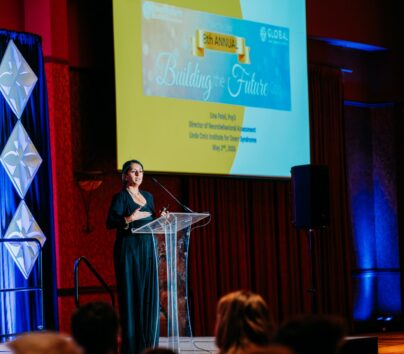
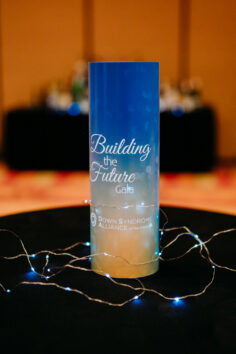
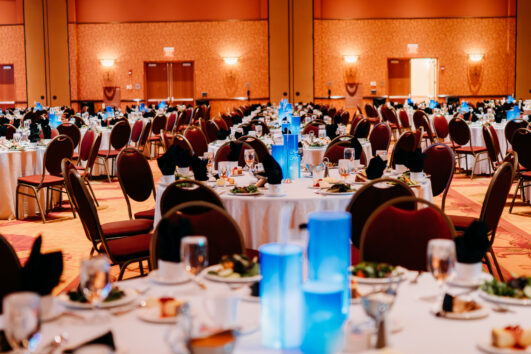
For the fifth consecutive year, the Down Syndrome Alliance of the Midlands–GLOBAL joint “Building the Future” gala in Omaha, Nebraska, was a HUGE success – raising needed funds for amazing local programs and life changing research. Guests were thrilled to hear from world-renowned behavior expert, Dr. Lina Patel, of GLOBAL’s affiliate, Linda Crnic Institute, who shared that funds raised at the event change lives locally – through programs like the Alliance’s Down Syndrome Education Series, adaptive swim, and cooking programs, and more – as well as nationally and internationally.

Dr. Patel shared how every dollar given at the gala has a tangible benefit when it comes to elongating life and dramatically improving health outcomes for people with Down syndrome with transformative, life-saving studies of immune disorders, Alzheimer’s disease, hearing, metabolism, and more.

Dr. Patel provided updates on Crnic’s groundbreaking clinical trial of JAK-inhibitors in adults with Down syndrome which showed the following remarkable results:

  • 86% of trial participants showed improvement in atopic dermatitis     
  • 78% showed improvement in alopecia areata                                   
  • 75% showed improvements in psoriasis
  • 58% showed improvements in hidradenitis suppurativa

Remarkably, 2 patients with Down Syndrome Regression Disorder saw their symptoms reversed, leading to an NIH-funded study of three potential treatments for the Disorder. Trial recruitment for that study is closed, and data analysis began in May.
Dr. Patel shared that a trial of the JAK-inhibitor in people with Down syndrome ages 6-22, will launch soon at Crnic. The purpose of the study is to understand the safety profile and efficacy of early JAK inhibition in individuals with Down syndrome, with the goal of improved outcomes and neurodevelopment. The Crnic Institute also has current studies on early learning and biology, hearing, chronic constipation, early health and motor abilities, communication and play in those with Down syndrome, she noted.

In addition to learning about research, Dr. Patel encouraged families to get involved by participating in Crnic’s Human Trisome Project and by joining DS-Connect®, the National Institutes of Health Down Syndrome Registry.

Finally, Dr. Patel thanked the Down Syndrome Alliance of the Midlands, under the direction of Executive Director Elizabeth Draney, and those in attendance for their generous giving. Over the last 5 years, the gala has raised $50,000 to help update and expand the GLOBAL Medical Care Guidelines for Adults with Down Syndrome. In total, this year’s gala raised over $185,000 to support programs for those with Down syndrome in greater Omaha, as well as the Adult Guidelines. GLOBAL is proud to partner with the Alliance on this amazing evening of fun, learning, and investment in the future of our community!


Global Down Syndrome Foundation Honored Sen. Shelley Moore Capito and Rep. Paul Tonko at Event that Featured Award-Winning Multiplatinum Artist Rachel Platten and Inclusive Dance Team

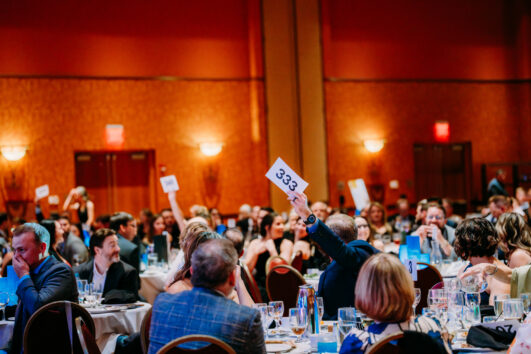
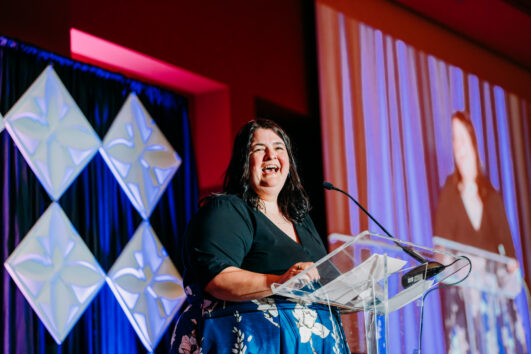
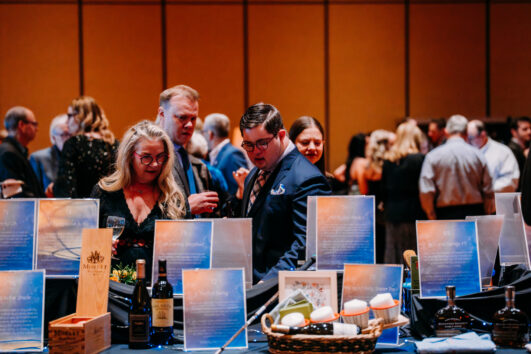
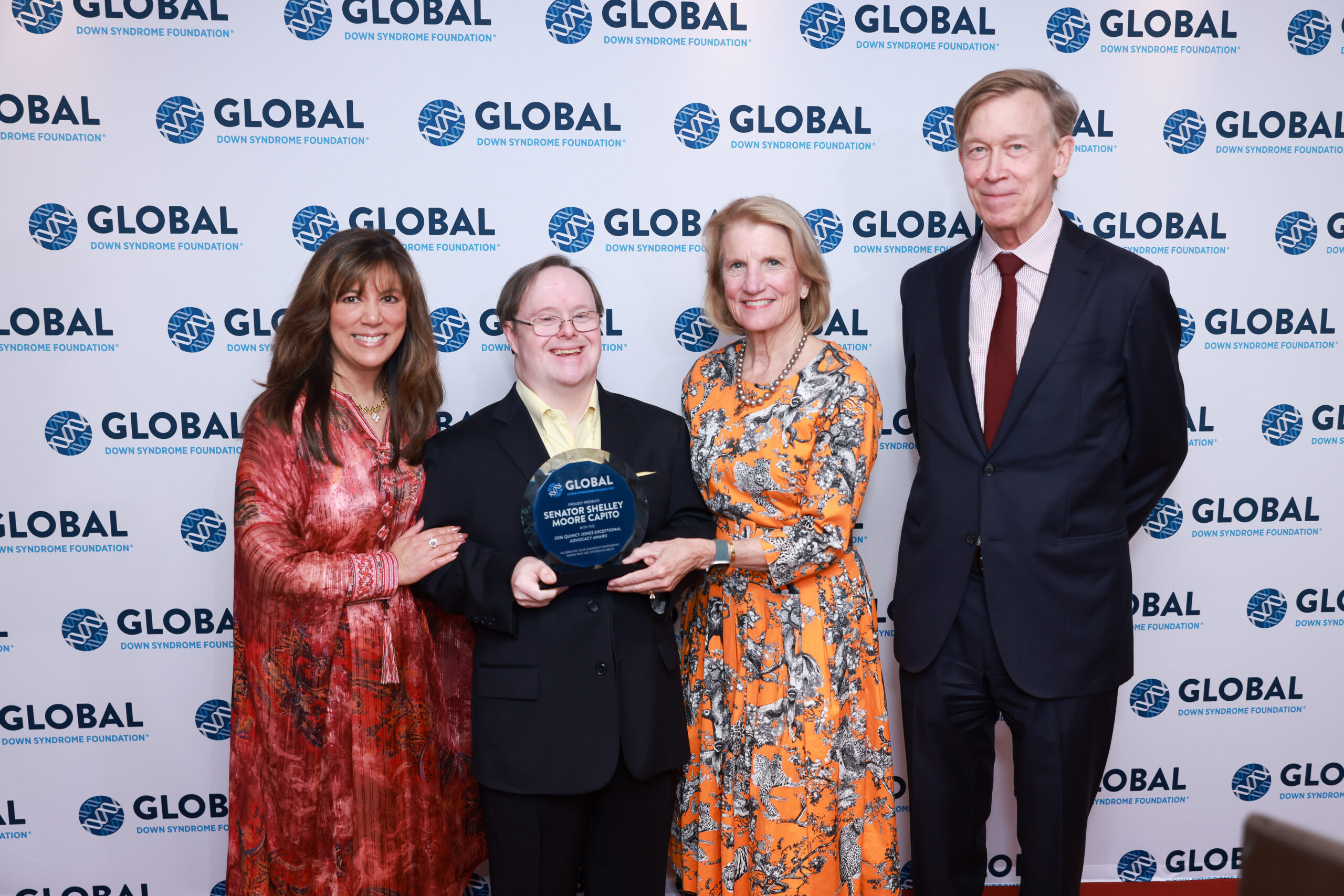
Washington, DC, May 21, 2026 – Last night, the Global Down Syndrome Foundation (GLOBAL) held its eighth annual AcceptAbility Gala, Washington DC’s largest fundraiser for people with Down syndrome, raising $430,000 to support important research and medical care benefiting people with Down syndrome. Senator Shelley Moore Capito (R-WV) and Representative Paul Tonko (D-NY) received GLOBAL’s highest honor, the Quincy Jones Exceptional Advocacy Award, and pledged their continued strong advocacy in Congress to improve the lives of people with Down syndrome.

“Last night’s AcceptAbility Gala shows the world the incredible power of bipartisan unity at an evening of unconditional love,” says GLOBAL President & CEO Michelle Sie Whitten. “GLOBAL is proud to be leading a historic era of Down syndrome research and medical breakthroughs that has already contributed to an extra ten years of life expectancy. Bringing together our congressional and NIH champions, inspirational self-advocates, families, scientists, clinicians, celebrities and supporters all under one roof is absolutely amazing. Watching the world rally around our mission to elongate life and dramatically improve health outcomes for our loved ones is truly remarkable and deeply rewarding.”

“I am so grateful to the Global Down Syndrome Foundation for being recognized with the prestigious Quincy Jones Exceptional Advocacy award at the AcceptAbility Gala,” says Senator Shelley Moore Capito (R-WV). “Spending time with advocates, families, and researchers tonight was a joy and inspiration. I am proud to stand with GLOBAL as we continue to make important investments in the trans-NIH Down syndrome research program, the INCLUDE Project, that is already helping individuals with Down syndrome live healthier, fuller lives.”

“It was such an honor to receive the Quincy Jones Exceptional Advocacy Award at the inspirational AcceptAbility Gala last night,” says Representative Paul Tonko (D-NY). “The self-advocates and families were such an inspiration, and a reminder of why our fight is so important. I am proud of my partnership with the Global Down Syndrome Foundation which is vital to passing the bipartisan DeOndra Dixon INCLUDE Project Act and securing NIH funding specific to Down syndrome in terms of Alzheimer’s and other diseases which impact this community disproportionately. This legislation will deliver the medical breakthroughs and treatments that these families urgently deserve.”

“My thanks to the Global Down Syndrome Foundation for welcoming me and many of my NIH colleagues to this year’s AcceptAbility Gala, a special occasion honoring inspiring self-advocates, families, congressional leaders, and supporters,” says Jay Bhattacharya, M.D., Ph.D., Director of the National Institutes of Health. “NIH remains committed to advancing groundbreaking Down syndrome research and applauds the leadership of GLOBAL, the Crnic Institute, and the broader Down syndrome community for their collaboration through the NIH INCLUDE Project. Together, we are building on the success of this important initiative to advance discoveries that may lead to new treatments for Alzheimer’s disease, cancer, autoimmune disorders, and many other chronic diseases.”

Celebrities passionate about the cause included Emmy Award-winning multi-platinum artist, singer, and songwriter Rachel Platten; award-winning Grey’s Anatomy actress Caterina Scorsone; author, actor, and public speaker Frank Stephens; author and public speaker David Egan; Emmy Award-winning news anchor and podcast host Autria Godfrey; and award-winning journalists Kyra Phillips and John Roberts who emceed the gala.

Held at the JW Marriott Washington, DC, the event was attended by past GLOBAL awardees Senator John Hickenlooper (D-CO), Representatives Richard Hudson (R-NC), Diana DeGette (D-CO), and Pete Stauber (R-MN); Representatives Brett Guthrie (R-KY), Young Kim (R-CA), Jason Crow (D-CO), Gabe Evans (R-CO), Barry Moore (R-AL), and many bipartisan Congressional supporters of the Down syndrome community.

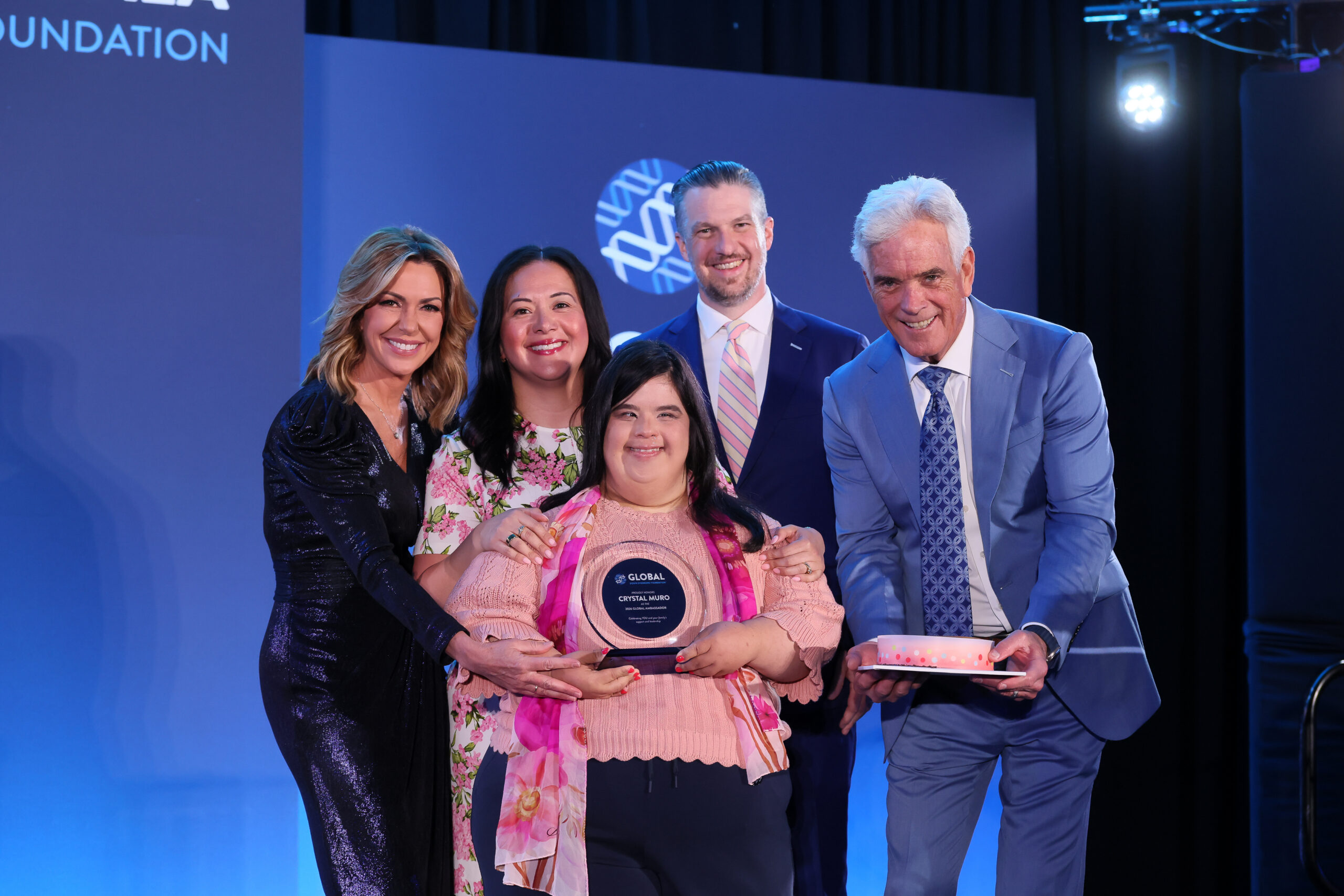
Crystal Muro brought the ballroom to its feet as GLOBAL honored the beloved Ambassador and lifelong self-advocate from Orange County, California, for her transformative leadership and unwavering commitment to inclusion for people with Down syndrome. Celebrating her 40th birthday this year, Crystal inspired attendees with her joyful spirit, passionate advocacy, and dedication to creating greater opportunities for the Down syndrome community.

Representative DeGette, a senior member of the House Energy & Commerce committee, made a major announcement at the gala that the committee is voting today on the GLOBAL led DeOndra Dixon INCLUDE Project Act, to authorize the currently funded trans-NIH initiative. The audience reacted with a standing ovation and applauded the work of DeGette and the bill’s original cosponsor Representative Richard Hudson along with Representative Paul Tonko. Several gala speakers praised House E&C Chair Brett Guthrie (R-KY) who attended the gala for his commitment to advancing the legislation. The DeOndra Dixon INCLUDE Project Act is a legacy bill in memory of GLOBAL Ambassador DeOndra Dixon who is Academy and Grammy Award-winning Jamie Foxx’s younger sister. Jamie Foxx is one of GLOBAL’s international spokespeople. It is also a testament to the dedication of the now-retired Representative Cathy McMorris Rodgers (R-WA).

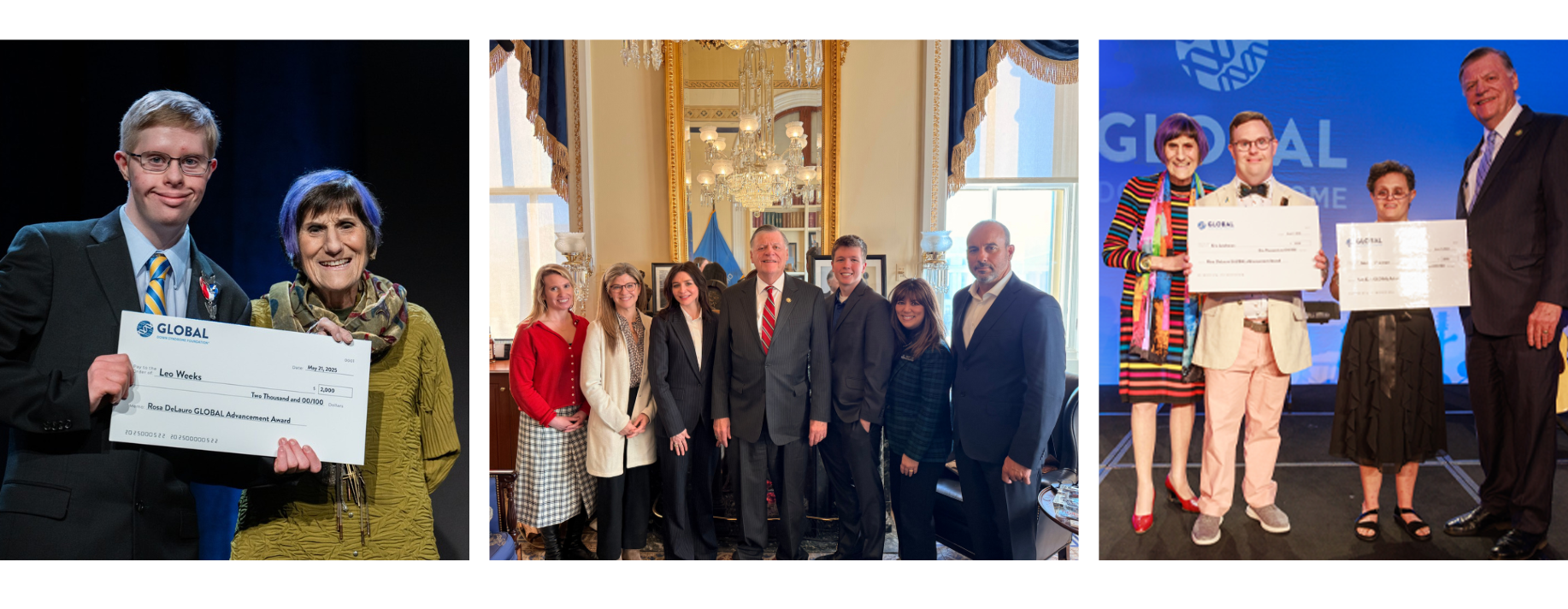
To recognize the transformative leadership of two key Congressional Champions, the Rosa DeLauro GLOBAL Advancement Award with a post-secondary scholarship was provided to Funmi Agbebi from Upper Marlboro, MD and the Tom Cole GLOBAL Advancement Award was provided to Monica Evans from Clarksville, MD. Caitlin Peruccio, Legislative Counsel and Senior Policy Advisor to Representative Rosa DeLauro, and Sofia Deiro, Legislative Director to Congressman Tom Cole, were on-hand to personally present the Advancement Awards.

With the help of GLOBAL Ambassador Crystal Muro and her family, Gala Board Chair Erin Book Mullen, Event Chair Tracy Watkins, and our amazing Sponsors, the inspirational gala attracted 380 attendees and raised $430,000 for GLOBAL’s life-saving research and medical care. GLOBAL supports over 200 researchers on the Anschutz MedicalCampus at the Crnic Institute for Down Syndrome and at the Alzheimer’s and Cognition Center, as well as 2,700 patients from 40 states and 11 countries at the Sie Center for Down Syndrome. For nearly two decades, Down syndrome was one of the least federally funded genetic conditions in the United States. Drs. Joaquin Espinosa and Nicole Baumer, Directors of the Crnic Institute and Sie Center respectively, were both in attendance.

At the end of the evening, Rachel Platten wowed the audience not only with her beautiful voice but by connecting with fans and bringing self-advocates with Down syndrome on stage while performing an intimate, heartfelt performance of some of her biggest hits including Fight Song, Better Place and Stand by You, and solo dancer Robert Wallop and inclusive dance team RhythmXpress delighted attendees with dance performances set to Risk It All – I Just Might Mix by Bruno Mars and Stand by You by Rachel Platten.  

Additional notables in attendance included GLOBAL Ambassadors CC Mullen, Charlotte (Charley) Fonfara-LaRose, Tucker Emry, and Abby Ashbrook; Directors from the NIH Drs. Jay Bhattacharya, Richard Hodes, Nicole Kleinstreuer, David Goff, Rohan Hazra, Jennifer Webster-Cyriaque, Monica Webb Hooper, Jennifer Plank-Bazinet, Anna Mazzucco, and Marishka Brown. Arc of the US CEO Katy Neas, Heather Sachs from the National Down Syndrome Congress, and executives from National Down Syndrome Society, North Carolina Down Syndrome Alliance, Down Country serving MO, IL & IA, Down Syndrome Association of Greater New Orleans, Down Syndrome Association of Delaware, Virginia Down Syndrome Association, and Down Syndrome South Africa.

About the Global Down Syndrome Foundation
The Global Down Syndrome Foundation (GLOBAL) is the largest non-profit in the U.S. working to save lives and dramatically improve health outcomes for people with Down syndrome. GLOBAL established the first Down syndrome research institute and supports over 400 scientists and over 2,700 patients with Down syndrome from 40 states and 11 countries. Working closely with Congress and the National Institutes of Health, GLOBAL is the lead advocacy organization in the U.S. for Down syndrome research and care. GLOBAL has a membership of over 130 Down syndrome organizations worldwide, and is part of a network of Affiliates – the Crnic Institute for Down Syndrome, the Sie Center for Down Syndrome, the University of Colorado Alzheimer’s and Cognition Center – all on the Anschutz Medical Campus, and the GLOBAL Adult Down Syndrome Clinic at Denver Health.

GLOBAL’s widely circulated medical publications include Global Medical Care Guidelines for Adults with Down Syndrome, Prenatal & Newborn Down Syndrome Information, and the award-winning magazine 

Down Syndrome World TM. GLOBAL also organizes the annual AcceptAbility Gala in Washington DC, and the annual Be Beautiful Be Yourself Fashion Show, the largest Down syndrome fundraiser in the world. Visit globaldownsyndrome.org and follow us on social media Facebook, X, Instagram, LinkedIn, and YouTube.

Media Contact:

Alex Lee, alee@globaldownsyndrome.org, pr@globaldownsyndrome.org, D: (720) 548-5631

First-In-Kind National Survey Commissioned by Global Down Syndrome Foundation Reveals Barriers & Benefits to Tapping into the Disability Workforce

  Hotel Business Publication   Research White Paper  


DENVER – April 30, 2026 – A groundbreaking new research report published in Hotel Business reveals that hiring people with Intellectual and Developmental Disabilities (IDD) could considerably mitigate the hospitality industry’s staggering 70-80% turnover.

Commissioned by the Global Down Syndrome Foundation (GLOBAL) with support from the Daniels Fund, the multi-modal research includes a first-in-kind national survey of over 600 hospitality professionals featuring extensive interviews with senior executives, and a 20-week hospitality pilot training program for participants with Down syndrome at three Denver-area hotels: The Jacquard, Hotel Clio and The Clayton.

The national survey, conducted by SIS International Research in conjunction with GLOBAL, identifies a significant “Inclusion Paradox.” While hotel staff at every level acknowledge the reliability and positive impact of employees with IDD against a backdrop of a turnover crisis, actual hiring of people with IDD remains stagnant.

The report, First National Hospitality Industry Survey: The time to hire an IDD workforce is now, highlights that the industry is currently stuck in a “turnover survival mode loop.” This cycle forces managers to focus on short-term staffing needs rather than investing in the stable, long-term workforce that individuals with IDD could provide.

Drawing upon the new research and other evidence-based and anecdotal research on the IDD and hotel workforce, the report provides an action plan consisting of four pillars of support: (1) Training Systems, (2) Leadership Mandates, (3) Awareness and (4) Evidence-Based Frameworks.

“The data is clear: the hospitality industry is facing a chronic labor shortage that traditional hiring isn’t solving,” says Michelle Sie Whitten, President & CEO at the Global Down Syndrome Foundation. “Our research shows that while the desire to hire inclusively is there, managers are stifled by a lack of top-down mandates and specialized training that could be provided by disability and workforce advocacy organizations. At the end of the day, we aren’t just making a social case for hiring people with Down syndrome and IDD; we are making a definitive business case for a more resilient and stable workforce.”

“The data is clear: the hospitality industry is facing a chronic labor shortage that traditional hiring isn’t solving.” – Michelle Sie Whitten

Key findings from the survey of 633 hospitality professionals include:

  • Inclusion Paradox: While 83% of hotel managers believe individuals with IDD can succeed in their properties, 56% are not participating or have never actively participated in inclusion initiatives due to a lack of formal policy and a persistent “survival mode” mentality caused by industry-wide labor shortages.
  • The Directive Barrier: Most managers felt the biggest barrier to employing individuals with IDD is the lack of specific corporate guidelines or “top-down” permission to do so.
  • Confidence Paradox: 95% of hotel staff surveyed feel confident in their ability to lead employees with IDD, yet hiring lags due to lack of an executive mandate and perceived safety concerns and training demands.
  • The Stability Factor: Hospitality staff believe in the evidence-based research indicating that employees with IDD are shown to have longer tenures and higher motivation.
  • IDD Workforce Gap: Other credible and evidence-based research shows that 42% of the IDD community want a job but are currently unemployed.
  • DEI: The hospitality industry emphasizes diversity, equity and inclusion (DEI) in its hiring, but successful inclusion requires moving beyond DEI rhetoric toward leadership mandates and evidence-based training frameworks.
  • Financial Challenges & Benefits: Despite the annual 70-80% hotel industry churn rate and the estimated $5,800-per-employee turnover costs, most hotel professionals are unaware of the potential $2,400+ Work Opportunity Tax Credit or other federal incentives associated with hiring employees with IDD.

The research was made possible by the Daniels Fund, which has long prioritized disabilities as a core funding area. “At the Daniels Fund, we believe every person deserves the opportunity to reach their full potential” says Hanna Skandera, Daniels Fund President and CEO. “Meaningful employment is a critical pathway to earned success and independence. Inspired by Bill Daniels’ commitment to ensuring people with developmental disabilities are never overlooked, we are proud to support GLOBAL’s research, which will help turn awareness into real career opportunities.”
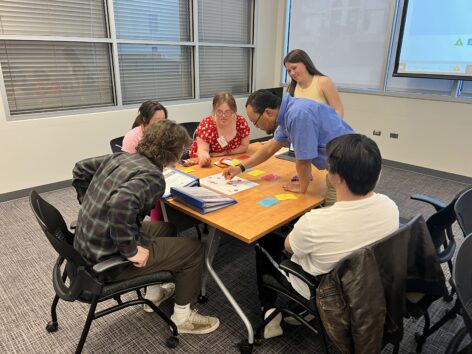
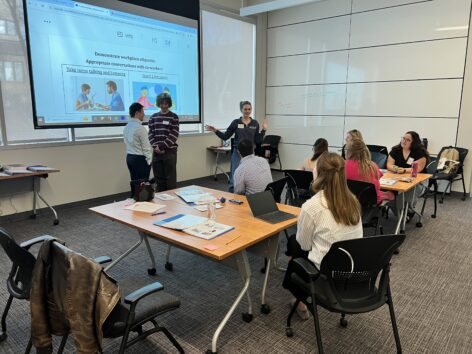
As detailed in Hotel Business, the intensive 20-week GLOBAL Hospitality Pilot Training Program following nine participants with Down syndrome reinforced that successful hiring of an IDD workforce requires a scaffolding methodology, matching tasks to individual strengths, mandating inclusion from the executive level, and leveraging external partnerships for training and support. The program utilized modified instructional materials and dual-focus training for both the hotel professionals and the participants with IDD.

Created with input from a committee of renowned academicians and IDD employment specialists, the program implemented an evidence-based, structured and tiered onboarding model: (1) Off-site training, (2) On-site observation, and (3) On-site practice and implementation. At the end of the program 92% of hotel trainers reported they would recommend hiring a person with Down syndrome.

During the program participants at The Jacquard took on roles at the hotel’s signature restaurant, Narrative, and assisted with front-of-house baggage storage. “Being inclusive is incredibly important, not just for our guests who see themselves reflected in our workforce, but for our staff who gain a broader perspective on teamwork,” says Ashley Dimond, principal at Copford Capital Management, owner of The Jacquard hotel. “We need to think about IDD with the same intentionality we bring to other areas of diversity. It was a great opportunity to participate in this GLOBAL program and to have our interns show that they can thrive in high-touch, guest-facing environments.”

“We need to think about IDD with the same intentionality we bring to other areas of diversity.” – Ashley Dimond

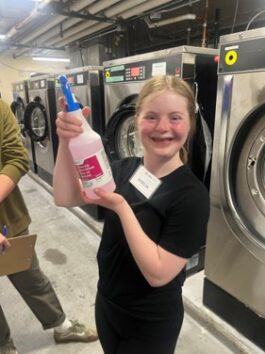
“The GLOBAL trainees with Down syndrome did a truly great job,” says Moana Leger, Human Resources Director at Hotel Clio, who organized trainings in the areas of laundry and housekeeping. “They were reliable, eager to learn, and capable. Seeing their progress over the 20 weeks was inspiring for our entire team. We look forward to being able to apply what we have learned to hiring people with IDD in the not-too-distant future.”

The human impact of the program was evident from surveys and feedback from training program participants. “I look forward to a time where I am able to work and make money,” says Chase Perry, a participant in the GLOBAL Hospitality Pilot Training Program. “The hospitality program prepared me, made me feel included and excited about working!”

“The hospitality program prepared me, made me feel included and excited about working!” – Chase Perry

“This research is a unique milestone because, for the first time, we have looked beyond general disability categories to focus specifically on the nuances of intellectual and developmental disabilities in the hospitality workforce,” says Ruth Stanat, CEO of SIS International Research. “By specifying IDD, we have uncovered the specific operational and psychological barriers—and opportunities—that define this untapped labor market.”

About the Global Down Syndrome Foundation
The Global Down Syndrome Foundation (GLOBAL) is the largest non-profit in the U.S. working to save lives and dramatically improve health outcomes for people with Down syndrome. GLOBAL established the first Down syndrome research institute and supports over 400 scientists and over 2,700 patients with Down syndrome from 40 states and 11 countries. Working closely with Congress and the National Institutes of Health, GLOBAL is the lead advocacy organization in the U.S. for Down syndrome research and care. GLOBAL has a membership of over 130 Down syndrome organizations worldwide, and is part of a network of Affiliates – the Crnic Institute for Down Syndrome, the Sie Center for Down Syndrome, the University of Colorado Alzheimer’s and Cognition Center – all on the Anschutz Medical Campus, and the GLOBAL Adult Down Syndrome Clinic at Denver Health. GLOBAL’s widely circulated medical publications include Global Medical Care Guidelines for Adults with Down Syndrome, Prenatal & Newborn Down Syndrome Information, and the award-winning magazine Down Syndrome World TM. GLOBAL also organizes the annual AcceptAbility Gala in Washington DC, and the annual Be Beautiful Be Yourself Fashion Show, the largest Down syndrome fundraiser in the world.

Visit globaldownsyndrome.org and follow us on social media Facebook, X, Instagram, LinkedIn, and YouTube.

About the Daniels Fund
Established by cable television pioneer Bill Daniels, the Daniels Fund is a private charitable foundation dedicated to improving American life through its grants, scholarship, and ethics programs with particular focus on Colorado, New Mexico, Utah and Wyoming. Throughout its history, the Fund has given more than $1.5 billion, including grants to nearly 6,000 nonprofit partners and higher education scholarships to over 5,600 students. Visit DanielsFund.org to learn more.

About the Participating Hotels

The Jacquard, Autograph Collection

Located in the heart of Denver’s iconic Cherry Creek North, The Jacquard is an Autograph Collection hotel that blends sophisticated style with personalized service. Known for its signature restaurant, Narrative, and its vibrant rooftop, the hotel is a centerpiece of Denver’s luxury hospitality scene.

Hotel Clio, a Luxury Collection Hotel, Denver Cherry Creek

Hotel Clio invites guests to experience a sophisticated yet welcoming retreat in the heart of Cherry Creek North, where elevated design meets thoughtfully curated local experiences. As part of Marriott’s Luxury Collection, the hotel offers a truly inspired and authentic connection to the Rocky Mountain region—blending luxury, comfort, and a sense of place in every stay.

Clayton Members Club & Hotel

The Clayton is a boutique hotel and social club built on the foundation of inclusivity and community, where every individual is valued for their unique contribution. Located in Cherry Creek, the property offers 63 guest rooms alongside a membership experience designed to foster connection and cultivate impact.

About the Research Partner

SIS International Research

SIS International is a leading global market research and strategic consulting firm with over 40 years of experience. Providing comprehensive research solutions across 120 countries, SIS specializes in helping organizations and foundations uncover deep insights to solve complex industry challenges.


Media Contact:

Alex Lee, alee@globaldownsyndrome.org, pr@globaldownsyndrome.org, D: (720) 548-5631